
11:26, 27-Jun-2019
G20 Summit Osaka: Bilateral meetings set to take center stage at summit
Updated
17:07, 09-Jul-2019

Share






Copied
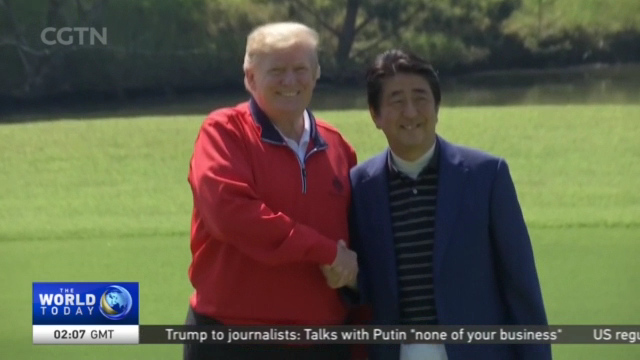
As the G20 summit gets underway, the US-China trade war will be at the forefront of concerns. But the relationship between host Japan and the U.S. won't be far behind. Despite strong personal and security ties, the two allies have much that divides them. CGTN's Nathan King reports from Osaka.
The last time the U.S. president was in Japan, in May, he was the guest of honor. An audience with the newly-enthroned emperor and a front-row seat for a special match of the ancient sport of sumo.
But on this trip, Trump will be wrestling with deep differences between him and his host, Prime Minister Shinzo Abe.
The U.S. is threatening to label Japanese car imports a threat to national security. Negotiating a bilateral free trade deal is only made necessary by Washington's unilateral withdrawal from the Trans-Pacific Partnership. The talks are so sensitive in areas like agriculture that negotiations won't really start until after Japan's legislative elections next month.
JAMES MOORE WASHINGTON INSTITUTE FOR BUSINESS, GOVT. AND SOCIETY "Auto parts is not new. When I served in the Reagan administration, I was very much involved in negotiations on auto parts. So, that's been around for a long time. What's a little bit different now is that there are so many problems that are out there. So, it's one of many. And so, trying to tackle all this at the same time is very difficult."
Abe and Trump are golf buddies, but it's another relationship which worries Japan. Two summits between DPRK leader Kim Jong Un have largely ignored Japanese concerns. Shinzo Abe is among the regional leaders who have not to have met with Un.
Abe has invested time in Trump, but Abe has been embarrassed in public by Trump more than once. Abe is also worried about the economic fallout for Tokyo from the deepening trade war with Beijing.
JAMES MOORE WASHINGTON INSTITUTE FOR BUSINESS, GOVT. AND SOCIETY "The Americans and the Japanese have got to be very sensitive, very empathetic to one another's positions, to come up with an agreement that, ultimately, allows both of us to prosper at the same time."
NATHAN KING OSAKA "Here in Osaka, a lot is at stake here. The G20 countries represent about 90 percent of global economic output and around 80 percent of world trade. Washington's stance with its allies - as well as with its competitors - will be under scrutiny here as Japanese hosts try and minimize global differences and maximize the common ground between two of the world's biggest economies. Nathan King, CGTN, Osaka."