
China
20:07, 07-Feb-2018
Medical service upgrades in Beijing yield positive results
 ["china"]
Share







Copied
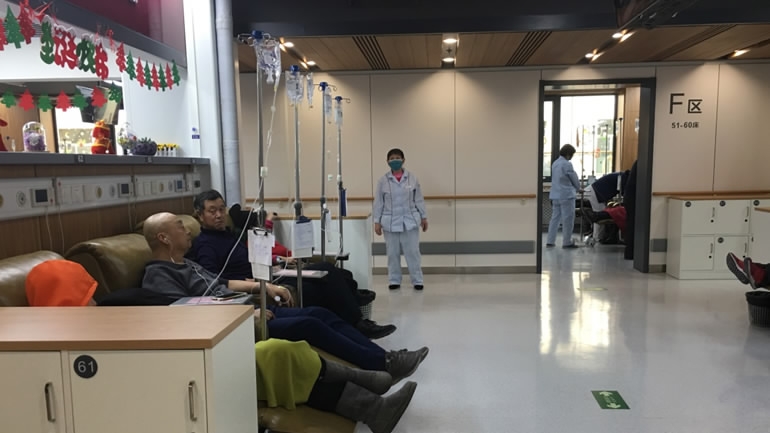
Waiting time in Beijing hospitals has been cut down for a larger number of patients, and pressure on big medical institutions has been reduced thanks to reforms to the medical sector.
China's top health authority said on Wednesday that 61.8 percent of patients in tertiary hospitals, institutions with bed capacity exceeding 500, in Beijing have made appointments before seeing doctors in 2017, an increase of 3.5 percent from a year earlier.
In 2018, most of these big hospitals in Beijing will allow each patient to make an accurate appointment for half an hour, so they know when to visit the institution and save time waiting outside consultation rooms.
Over 4,000 hospitals have already rolled out mobile apps, nearly 3,000 hospitals allow mobile payment, and over 1,000 hospitals have opened daycare services for those who don't need to be hospitalized overnight.
The second three-year action plan, starting 2018, will focus on improving service in community-level hospitals to ease the pressure on big medical institutions.
By the end of 2017, Beijing had 118 first-tier, also known as tertiary or Class Three hospitals, among 10,986 in total.
Gao Xiaojun, vice inspector of Beijing Health and Family Planning Commission said Beijing’s medical reform has met the country's three-year action plan to upgrade medical services.
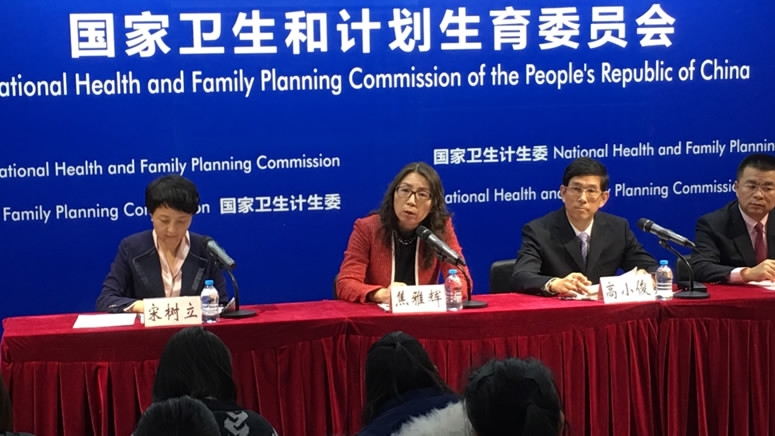
The National Health and Family Planning Commission holds a press conference about upgrading medical service in Beijing, Feb. 7, 2018. /CGTN Photo
The National Health and Family Planning Commission holds a press conference about upgrading medical service in Beijing, Feb. 7, 2018. /CGTN Photo
"Beijing began medical reforms on April 8 last year. During these nine months, the numbers of outpatients and emergency patients dropped 12 percent in Class Three hospitals, three percent in Class Two hospitals, and increased by 16 percent in community-level medical institutions," said Gao.
China is building a three-tier medical service system. Patients will be further encouraged to sign contracts with family doctors at the community level. Doctor unions will be further promoted to help high-end medical services be accessible at community-level clinics and underdeveloped districts.
Jiao Yahui, deputy director of the Administration Department at the National Health and Family Planning Commission, said the first three-year action plan from 2015 to 2017 has seen remarkable achievements.
"According to survey results from nearly six million questionnaire sheets, people gave 90.7 scores to outpatient services and 93.9 scores to hospitalization service in Class Three hospitals. The survey was done through QR code inside hospitals," she said.