
World
18:50, 19-Apr-2018
Inspecting Douma 'attack': Delays, chemical degradation and dodging bullets
 ["other","Middle East"]
Share







Copied
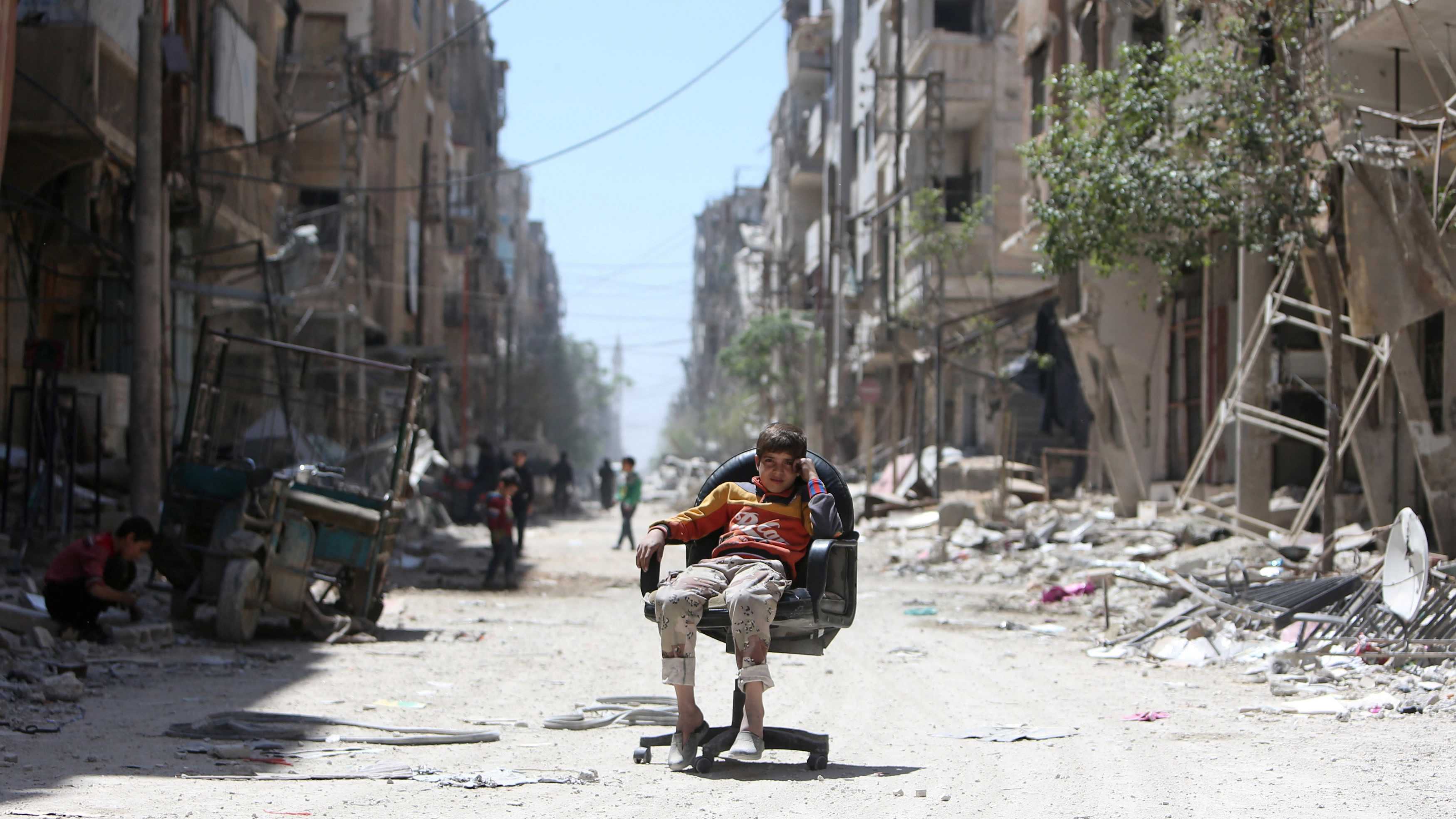
Inspectors from the Organization for the Prohibition of Chemical Weapons (OPCW) are racing against time to get to the bottom of what exactly happened on the night of April 7 in the Syrian town of Douma – the site of a suspected chemical attack.
The international chemical weapons watchdog has dispatched a fact-finding mission to the war-torn country to determine whether banned toxics were used as the US and its allies maintain. Syria and Russia, which have dismissed accusations they were behind the alleged attack and questioned whether it really ever happened, have welcomed a probe into the incident and said they will cooperate with the international team.
But for all the support they’ve received from opposing camps, the investigators have yet to enter Douma, despite being in Damascus – no more than 20 kilometers away – since last Saturday. Accessing the town has proven to be challenging, amid an ongoing blame game between Washington and Moscow over the cause of the delay, but more obstacles await the OPCW personnel once they begin their work in Douma.
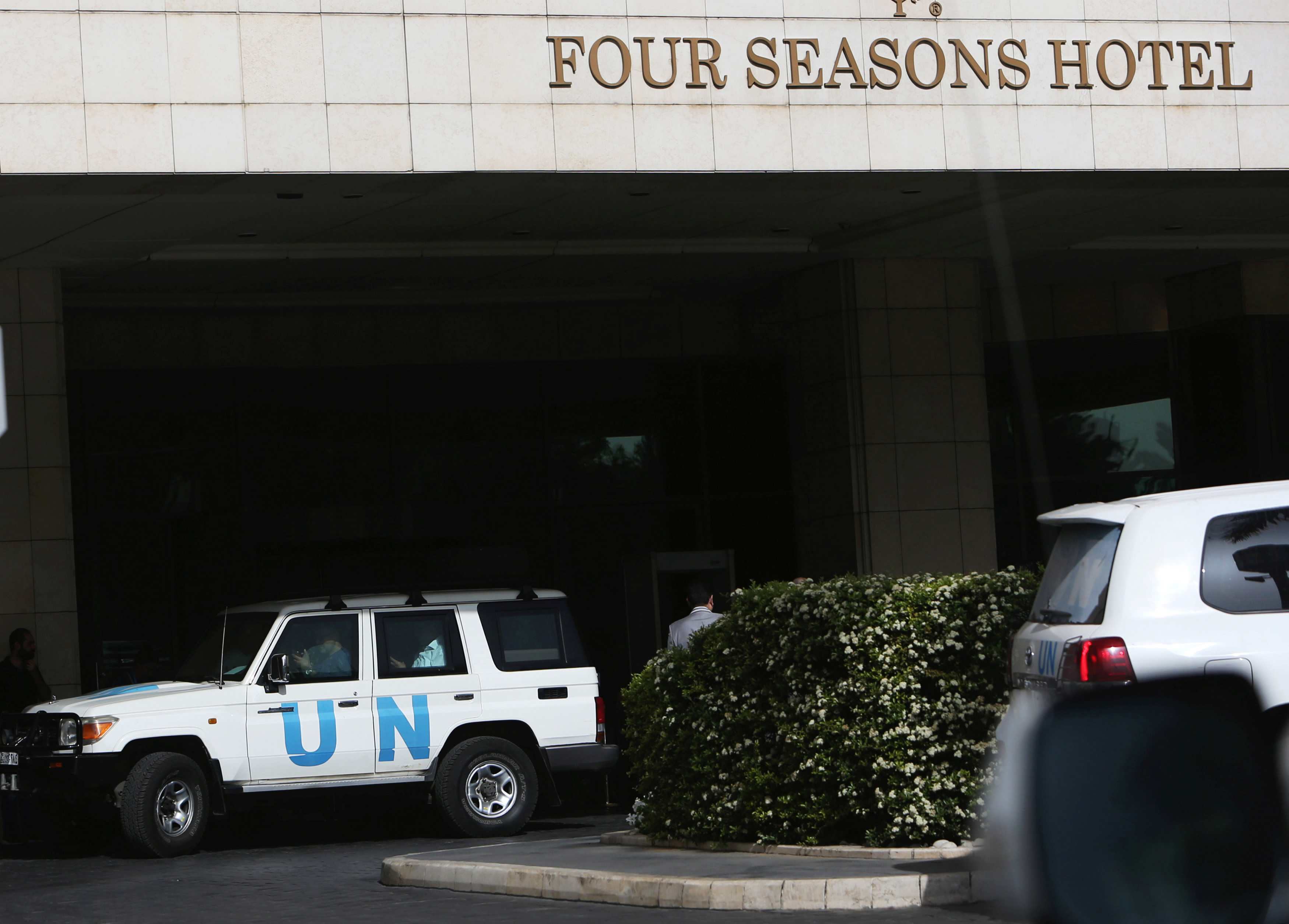
Two United Nations vehicles carry inspectors from the Organisation for the Prohibition of
Chemical Weapons (OPCW) in Damascus, Syria, April 18, 2018. /Reuters Photo
Two United Nations vehicles carry inspectors from the Organisation for the Prohibition of Chemical Weapons (OPCW) in Damascus, Syria, April 18, 2018. /Reuters Photo
Getting in
Almost a fortnight after the alleged incident took place, international investigators are still at the doorstep of Douma.
The Director-General of the OPCW Ahmet Uzumcu admitted earlier this week that "security issues" were behind the delay, at a time when the US and Russia were trading barbs and blame over why it has taken so long for the experts to enter Douma.
Western diplomats alleged Moscow was holding the inspectors back while it tempers with evidence on the ground, and called on Russian authorities to allow experts "unfettered access" to the town.
Moscow said it is demining the roads following the liberation of the town last week from the hands of rebels, and claimed that the US-orchestrated strikes on military facilities in Syria in retaliation to the purported attack were not conducive on the ground. "If you go to a site which was just bombed, I imagine you might have certain logistic problems," Russia's deputy UN ambassador Dmitry Polyansky said.
The inspection team had been expected to arrive in Douma on Wednesday, a day after a UN reconnaissance team was supposed to ensure that the situation was sound for the experts. But news surfaced on Wednesday that the scouting team was "subject to small-arms fire and an explosion" while in Douma on Tuesday, causing a setback to the international inspectors.
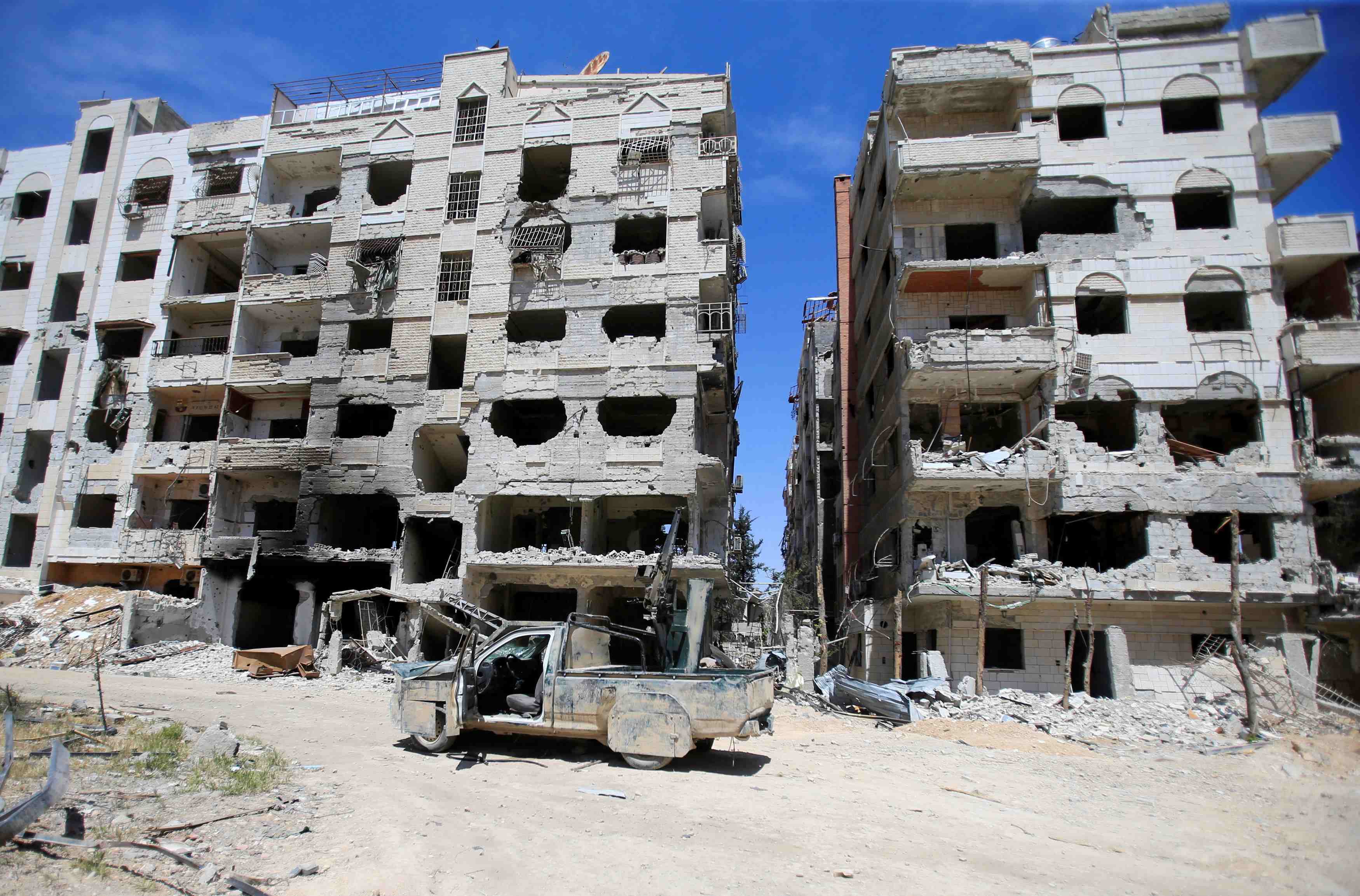
Damaged buildings are seen in Douma, Damascus, April 16,
2018. /Reuters Photo
Damaged buildings are seen in Douma, Damascus, April 16, 2018. /Reuters Photo
The UK's representative to the OPCW, Ambassador Peter Wilson said the OPCW head had told ambassadors in The Hague that it was not clear when the fact-finding mission will be able to deploy to the town.
Collecting evidence
The on-site investigation by the OPCW will see experts collecting and analyzing evidence to either confirm or dispute claims that prohibited substances had been dumped on civilians. The team, however, will not point fingers at anyone as assigning blame is not within the mandate of the OPCW.
Rescue workers and opposition activists claim government helicopters released barrel bombs with toxic chemicals in Douma, and on Tuesday the US suggested that a bomb that struck one site – a three-story residential building – contained chlorine and a nerve agent. Syrian authorities have dismissed the allegations as fabrications, while Moscow said the attack was staged by the "White Helmets" – a controversial network of rescue volunteers operating in rebel-controlled territory in the country.
According to the modus operandi of the Hague-based organization, investigators will be looking for chemical traces in environmental and biomedical samples.
The team will search for canisters, munitions or fragments of explosives and missiles, and collect samples from the soil and rubble. They will also wipe the walls and floors of apartments, and take fabric pieces, including clothes, quilts and pillows.
"If they find any weapon debris they will be swabbing it for samples," chemical weapons expert Hamish de Bretton-Gordon told the BBC, as chemical residues could still be found in delivery mechanisms.
Efforts will also concentrate on retrieving biomedical specimens such as blood, urine, hair and tissue samples for testing of any traces of chemicals.
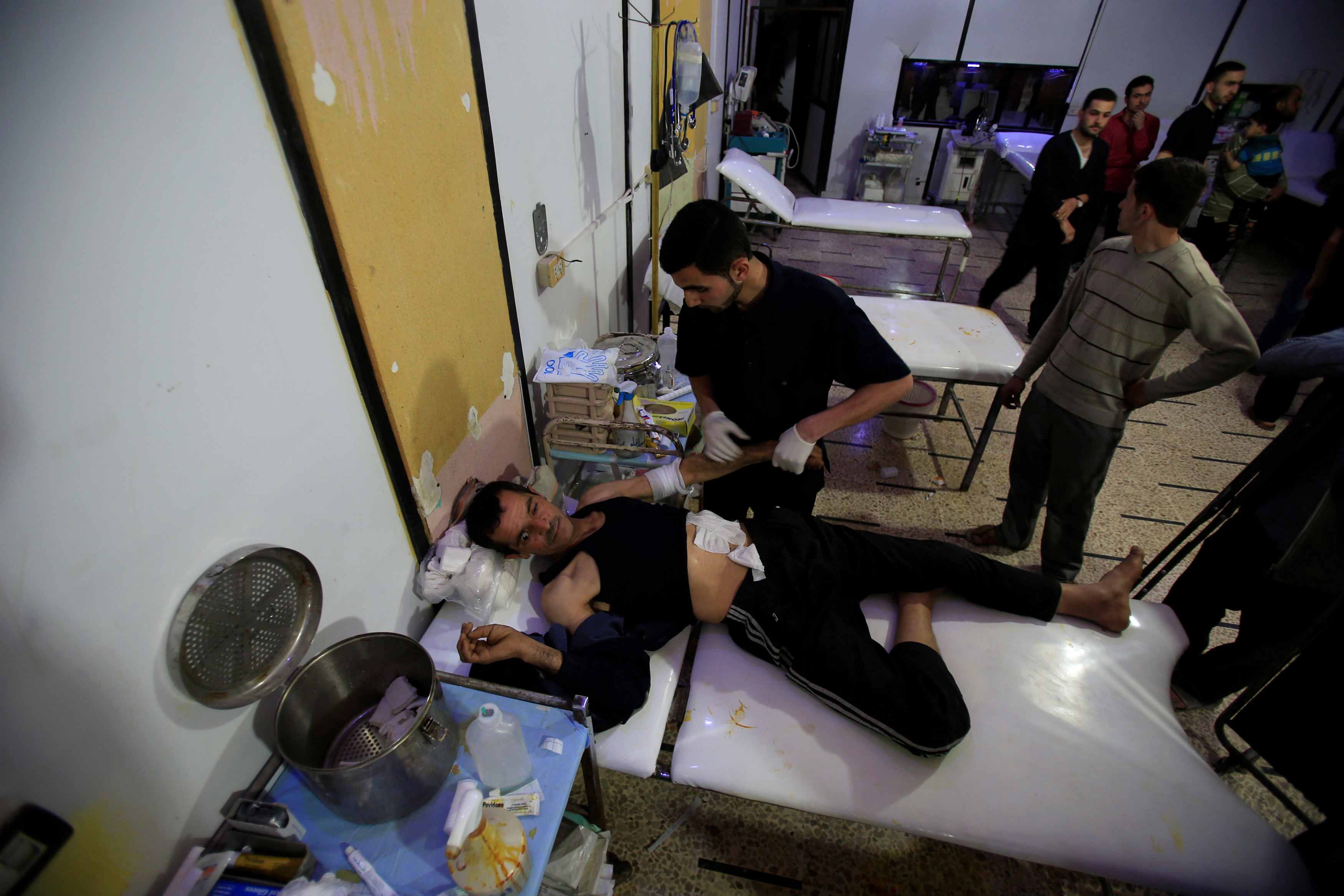
An injured man lies on a bed at an underground field hospital in Douma, Damascus, April 16, 2018. /Reuters Photo
An injured man lies on a bed at an underground field hospital in Douma, Damascus, April 16, 2018. /Reuters Photo
Chlorine, a substance with a pungent smell, could be detected in urine samples, while hair and blood samples can help show the presence of a nerve agent, de Bretton-Gordon said.
"Team members may also interview victims, eyewitnesses and medical personnel and participate in autopsies," the OPCW also said.
The team of experts will look into clues provided by third parties, including the Syrian government and other actors, although questions of authenticity could arise.
Running against time
Specialists worry that the protracted delay in the inspectors’ schedule could have consequences on the effectiveness of their efforts to detect any toxic chemicals, if ever at all.
"Blood and urine will show [Chlorine] for up to a week, maybe longer," the Guardian quoted an unnamed official, whom the newspaper said had investigated samples after the events in Ghouta (2013) and in Khan Sheikhoun last April.
"[Nerve agents] degrade very quickly in situ though. If there was going to be a productive fact-finding mission, they would need to get there immediately," they added.
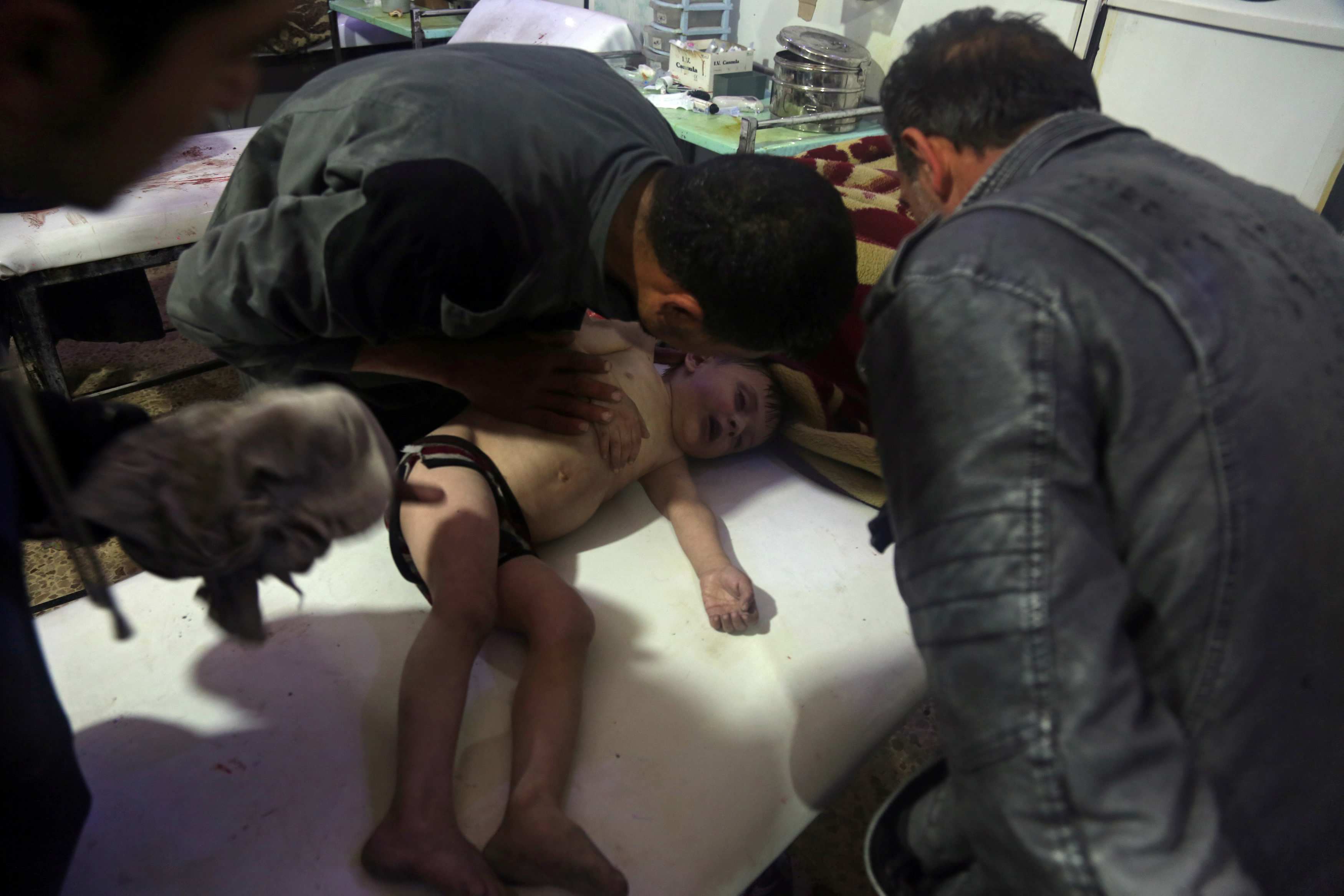
A handout by the "White Helmets" shows a child receiving treatment in a hospital in Douma, eastern Ghouta in Syria, after a suspected chemical attack, April 7, 2018. /Reuters Photo
A handout by the "White Helmets" shows a child receiving treatment in a hospital in Douma, eastern Ghouta in Syria, after a suspected chemical attack, April 7, 2018. /Reuters Photo
In 2013, the OPCW team visited the targeted areas within a week after the attack. This time around, examiners have yet to set foot in the town 12 days after the purported attack.
Coming under fire
Previous fact-finding missions have come under fire while conducting on-site inspections in Syria. The incident with the UN security team on Tuesday is indicative of the potential safety risks facing international inspectors.
In August 2013, a six-vehicle convoy belonging to the UN chemical weapons investigators was targeted while en route from Damascus to Ghouta. "The first vehicle of the investigation team was deliberately shot at multiple times by unidentified snipers," UN spokesman Martin Nesirky said at the time.
Less than a year later, in May 2014, a group of investigators probing claims of use of chlorine gas in Kafr Zita in central Hama Province was ambushed near Teibat al-Imam village. Six OPCW inspectors were abducted by who Syrian news agency SANA, referred to as "terrorists" before they were released soon after.
(With input from agencies)