
13:24, 12-Apr-2019
China-Central & Eastern European Ties: City of Ningbo deepens two-way international education
Updated
13:20, 15-Apr-2019
 []
[]
Share







Copied
03:18
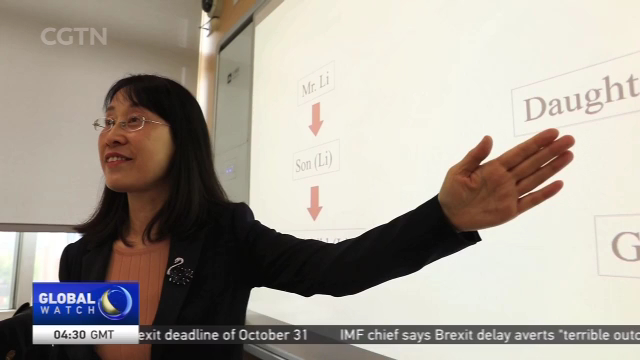
China continues to draw students from Central and Eastern European countries, and vice-versa. And it's not just Beijing and Shanghai that have become second homes to these scholars. CGTN's Tang Bo takes us to Ningbo in eastern China's Zhejiang Province.
Traditional Chinese painting skills, artistry well-performed by Hungarian hands.
This is Sophie Szoko's second year in China, studying Mandarin and getting to know more about the Chinese culture.
SOPHIE SZOKO HUNGARIAN STUDENT "I really liked drawing and painting back home, so I came for the painting class."
Szoko is one of over 2,300 foreign students at Ningbo University who are fascinated by the traditional Chinese culture.
Like many other overseas pupils, she is still pursuing a master's degree back in her home country.
The two-year exchange in China is a big plus for her graduate studies.
And she hopes to put what she's learned in China to practical use.
SOPHIE SZOKO HUNGARIAN STUDENT "It's a big advantage to come to China and learn the language, will try to find a job that I can use the language."
TANG BO NINGBO "Spending two years in Ningbo to learn the Chinese language and get to know the oriental culture for free is a rare opportunity for most Central and Eastern European students. So Sophie is very much the minority. Now, measures have been taken by the city to make the Chinese culture accessible to more people in the region."
For two years, Mo Lili has been part of a teacher exchange program between Zhejiang Wanli University and some partner universities in Poland and Slovakia.
As the head of the school's foreign language faculty, she says she used to focus mainly on cross-cultural communication.
But with the increase of China's global influence, she has had to face more in-depth questions about China's economic and social development.
MO LILI, FOREIGN LANGUAGE FACULTY ZHEJIANG WANLI UNIVERSITY "What I did is not teach them professional concepts but told them what exactly was going on in China. When it comes to China's economic development, for example, I introduced China's different economic development phases with different guiding policies."
Over the past year, 35 educational organizations from central and eastern Europe visited Ningbo, and 19 education groups from Ningbo's universities made the exchange visits.
WANG WEIMIN, DEPUTY DIRECTOR NINGBO EDUCATION BUREAU "We have been corresponding with Ningbo's universities to not only bring in advanced college majors and experts, but also to go out and cooperate with overseas schools. Mutual understanding between the two areas has largely improved by the exchange program."
However, the current education cooperation between the two areas has not yet reached the state level.
Therefore its influence among top education government officials in the region is limited.
That is the gap Ningbo's education authorities are working to fill.
Tang Bo, CGTN, Ningbo, Zhejiang Province.