Knife-edge election: Youth vs experience in New Zealand poll
John Goodrich
["other","New Zealand"]
Share
Copied
New Zealand’s recent general elections haven’t set pulses racing, but ahead of Saturday’s vote there is genuine excitement – a fresh-faced leader has injected vitality into the campaign, and there is uncertainty over who will come out on top.
Televised election debates have drawn record audiences, as New Zealanders ponder whether to stick with the tried and tested Nationalist Party and Bill English or opt for Labour and 37-year-old newcomer Jacinda Ardern.
How will the new government be decided?
New Zealanders will vote twice, once for a local representative and once for a preferred party.
New Zealand's Prime Minister and National Party leader Bill English. /Xinhua Photo
New Zealand's Prime Minister and National Party leader Bill English. /Xinhua Photo
Under the Mixed Member Proportional system, 71 Members of Parliament (MP) will be elected under first-past-the-post to represent districts, and at least 49 will be elected proportionately via a list system. Any party that receives at least five percent of the vote will receive a proportion of seats allocated by the list system.
General elections are held every three years, with at least 120 MPs elected. The party with the most MPs has the right to form the government, but they are normally reliant on coalitions.
Who are the main contenders?
The election has been dominated by the contrast between experience and youth, with immigration, environmental protection and housing the main issues.
National Party
2014 election: 60 seats, 47 percent of vote
Latest poll: 46 percent (+6)
New Zealand's Prime Minister and National Party leader Bill English (R). /Xinhua Photo
New Zealand's Prime Minister and National Party leader Bill English (R). /Xinhua Photo
Key domestic policies: Tighten rules on foreign workers; retain current laws on abortion; infrastructure investment
Key foreign policies: backs Trans Pacific Partnership and Paris climate deal; aims to accelerate bilateral trade deals
Current Prime Minister Bill English has only led the party, which has been in government for nine years, since December 2016, but was previously at the helm in 2002 when he oversaw the party’s worst ever defeat. The socially conservative 55-year-old is the continuity candidate, campaigning for New Zealand’s first four-term government in half a century.
Labour Party
2014 election: 32 seats, 25 percent of vote
Latest poll: 37 percent (-7)
New Zealand's Labour Party leader Jacinda Ardern (C). /Reuters Photo
New Zealand's Labour Party leader Jacinda Ardern (C). /Reuters Photo
Key domestic policies: Infrastructure investment; reduce net immigration; three years’ free tertiary education; decriminalize abortion
Foreign policies: opposes Trans Pacific Partnership; backs Paris climate deal; aims to ban foreign ownership of property
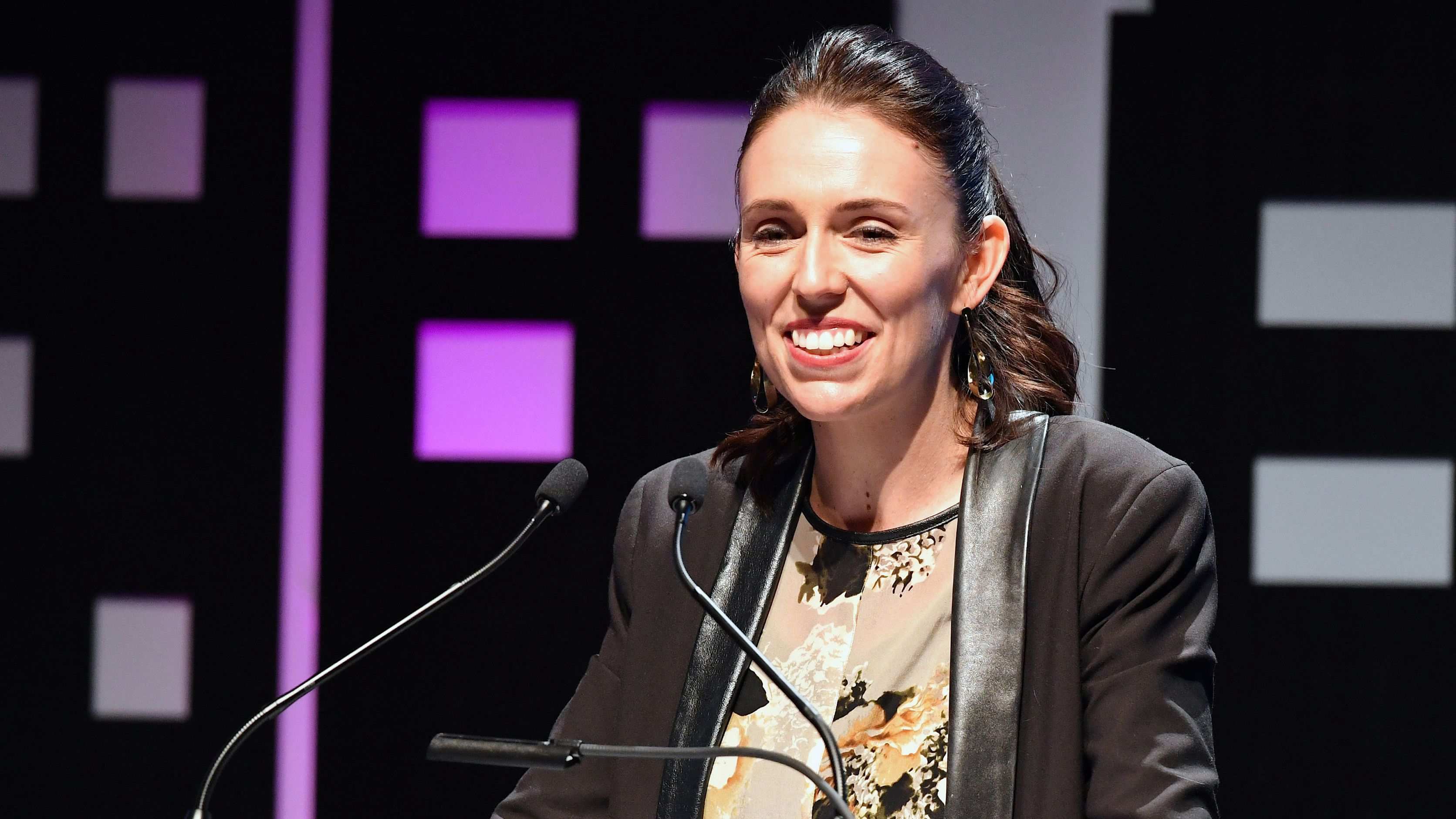
Jacinda Ardern was elected as the new leader just seven weeks ago at the age of 37, and has since turned the campaign on its head. She is popular with the young and women, and Labour has surged into a neck-and-neck race to be the largest party. Although the party dropped in the polls days ahead of the election, around 500,000 votes have already been cast. She is the change candidate.
And the possible coalition partners?
New Zealand has not seen an outright majority since proportional representation was introduced in 1996. Either the National or Labour party will be the biggest grouping, but either will likely need the support of one of the smaller parties to form a government.
Green Party
2014 election, 14 seats, 10 percent of vote
Latest poll: 8 percent (+1)
James Shaw was elected co-leader in 2015 and became sole leader in August 2017, when Metira Turei was forced to resign over a benefit fraud scandal. The Green Party has an alliance with Labour, and with eight percent in the most recent poll is in a strong position to form a coalition.
New Zealand First Party
2014 election, 11 seats, 9 percent of vote
Latest poll: 5 percent (-1)
Winston Peters founded the populist party in 2003, and has served as leader ever since. He has been deputy prime minister and foreign minister in various coalitions. His brand of populism doesn’t seem to have excited voters, but he could once again be a kingmaker. The most recent poll showed support dropping one point to five percent, right on the threshold a party needs to get a seat in parliament through the list system.
Maori Party
2014 election: 2 seats, 1 percent of vote
Latest poll: 1 percent (+0.1)
The Maori Party’s central platform is a support for indigenous rights. The party has backed the National-led government since 2008, and its co-leaders have held ministerial positions outside government.
ACT New Zealand
2014 election: 1 seat, 0.69 percent of vote
Latest poll: 0.3 (-0.3)
The libertarian party hit highs of seven percent in the 1990s, but now typically receives a fraction of the vote. It has backed the National-led government since 2008. Leader David Seymour held the party’s only seat in the 2014 election.
Who’s going to win?
The rejuvenation of Labour has been the most striking part of the campaign, bouncing into contention on the back of the election of Ardern.
UBS said on Thursday in an investor note that there is now a "fair chance" of a change in government.
An election ballot (L) for overseas New Zealand citizens at a branch of the Australian Electoral Commission in Sydney, Australia on September 21, 2017. /Reuters Photo
An election ballot (L) for overseas New Zealand citizens at a branch of the Australian Electoral Commission in Sydney, Australia on September 21, 2017. /Reuters Photo
Key votes may already have been cast. Overseas voting began on September 6, and advanced voting on September 11 -- as Ardern surged in recent weeks, nearly half a million New Zealanders cast advanced votes.
However, the most recent polling suggests the Jacindamania bubble may have burst: support for the National Party leapt six points to 46 percent in a One News-Colmar Brunton poll published on Wednesday, while support for Labour slumped by seven to 37 percent.

 ["other","New Zealand"]