
22:06, 08-Apr-2019
Singapore: The Global Business Haven: With low corporate tax rates and strategic position in Southeast Asia
Updated
22:00, 11-Apr-2019
 []
[]
Share







Copied
03:36
Social media giant Facebook picked Singapore for its regional headquarters and its first-ever data centre in Asia. P&G has a state-of-the-art innovation centre in the city-state. And now British technology firm Dyson is moving its corporate headquarters there as well. So what makes Singapore a haven for both global businesses and startups. CGTN's Miro Lu has the report.
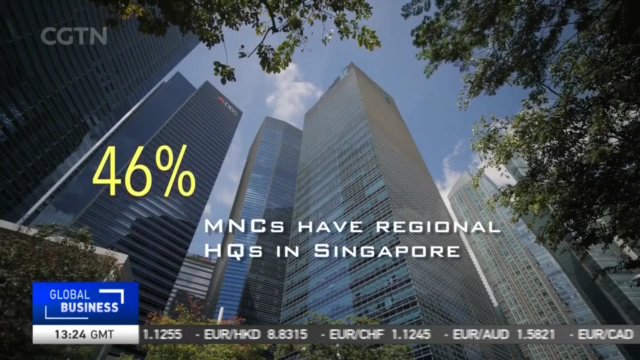
Although small in size, Singapore is a giant when it comes to attracting scores of global businesses looking to ride the wave of Asian growth. Data shows that 46 percent of global MNCs - or multinational corporations - have chosen the city-state to set up their regional headquarters in Asia.
NITIN PANGARKAR, ASSOCIATE PROFESSOR NUS BUSINESS SCHOOL "Singapore is a good expatriate location, good schools, safe, secure, and well connected and so on. Singapore also offers a decent sort of trade-off in terms of availability and cost and productivity."
Take, for example, British home appliance giant, Dyson, which is relocating its corporate headquarters from the U.K. to Singapore.
While some attribute the move to Brexit, most experts believe Singapore was chosen for its low corporate tax rate and its strategic position in Southeast Asia.
Western companies have long used Singapore to tap into the Asian market. Recently, more Chinese companies are using Singapore as a launch pad to go global. Chinese tech start-up Yitu is a pioneer in artificial intelligence. The company has picked Singapore as the location for its first R&D centre outside of China.
JOY XUE, GENERAL MANAGER YITU SINGAPORE "It is a commerce hub, an economic hub and also a technology hub. So by setting up our overseas headquarters in Singapore, it gives us very good reference cases for other regions in south-east Asia and beyond. We have benefited greatly from the Economic Development Board of Singapore which has been a great helping hand in helping us set foot in Singapore."
EDB's help doesn't stop there. It also provides attractive tax incentives to companies moving to Singapore. A concessionary tax rate of 15% is offered to companies that have regional headquarters in Singapore. Those awarded the international HQ status can be eligible for further tax rebates.
Singapore's multiple free trade agreements with ASEAN, China, the EU and the U.S. also add to its attractiveness. These agreements make trading across borders cheaper and easier. But all great successes come with their own set of challenges. One big challenge for Singapore is the steady availability of talent.
NITIN PANGARKAR, ASSOCIATE PROFESSOR NUS BUSINESS SCHOOL "R&D needs a lot of scientific manpower and I think Singapore is trying to develop that scientific manpower. Singapore is very pragmatic, government is very pragmatic, so they will cover shortfall in manpower with inward immigration, so they might allow scientists to come here, work here."
MIRO LU SINGAPORE "A strong business ecosystem and the government's continued push for innovation work in Singapore's favour. But analysts warn that rising costs and a shortage of skilled manpower could hurt the lion city's position as the preferred destination in Asia. Miro Lu, CGTN, Singapore."