
22:04, 16-Mar-2019
Lost Craftsmanship: War in Syria endangering traditional skills
Updated
22:00, 19-Mar-2019
 []
[]
Share







Copied
03:58
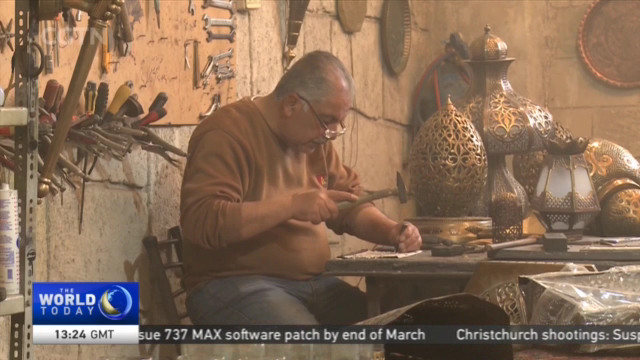
The Syrian conflict has killed hundreds of thousands of people and displaced millions. But, it's also taken its toll on the country's culture and many traditions, such as craftsmanship. Alaa Ebrahim looks at this unfortunate legacy of the eight-year war.
If you do something for long enough, you will become known for it, like Khaled al-Naffakh, a 42-year-old glass blower from Damascus whose last name literally means "the blower".
KHALED NAFFAKH GLASSMITH "Our profession is very old, that dates back to the Phoenicians thousands of years ago and here in Damascus they developed techniques of glass blowing. Our profession is a family one handed down from grandfather to fathers then sons. But I could be the last of them."
Keeping the flame of the furnace going is no easy job nowadays, with the whole country facing a fuel shortage and a new system of rationing being implemented.
KHALED NAFFAKH GLASSMITH "There was a point, when we, a glass workshop, had no windows because of shrapnel and explosions. Yet we tried to go on working. The furnace you see behind me is a much smaller one than the one we used to work with before. We can't have the furnace shutting down at any cost for anytime because then we'll need double the time to reheat and melt the glass. It needs to be on 24 hours. So when the blackouts began we got a generator, and because of diesel shortages we seek any alternatives, even burnt engine oil or anything to keep the flame on."
Just across the street from the glassmith is Ziad Al-Shaieb, the master coppersmith of Damascus. He comes from a long line of skilled workers who created lamps and chandeliers long before there was electricity.
ZIAD AL-SAHIEB COPPERSMITH "This is a replica of the chandelier of the Grand Umayyad Mosque of Damascus. Before electricity they used to lower it like this, fill it with sweet apricot oil and light it."
But the profession that's withstood centuries might now be facing a fatal challenge.
ZIAD AL-SAHIEB COPPERSMITH "This profession dates back to the 16th century. I inherited it from my father and hoped to pass it down to my son someday, but I doubt it. Now we can't get raw brass and there are no young men to work in it. Teaching new people isn't easy, this is more of an art than just labor. I used to have a three thousand square meter workshop in Ghouta that was destroyed in the fighting where 75 workers used to work. Now the workshop is destroyed and the workers are scattered."
These kinds of traditional professions depend on skilled workers not machines, and most of the local young men are either fighting or have left the country. Amid a war that's created inflation and economic hardship, the market for these goods has dried up, too. One of these chandeliers sells for what a government employee makes in an entire year and with sanctions on Syria, exporting goods is no longer an option.
ALAA EBRAHIM DAMASCUS "When the Syrian war ends, history will remember how many soldiers and civilians were killed, what cities were destroyed. But the loss of culture and tradition in one of the world's oldest inhabited countries will likely go unnoticed. Alaa Ebrahim, CGTN, Damascus."