
Politics
08:54, 19-Feb-2018
Munich Security Conference: To the Brink – and Back?
 ["china"]
Share







Copied
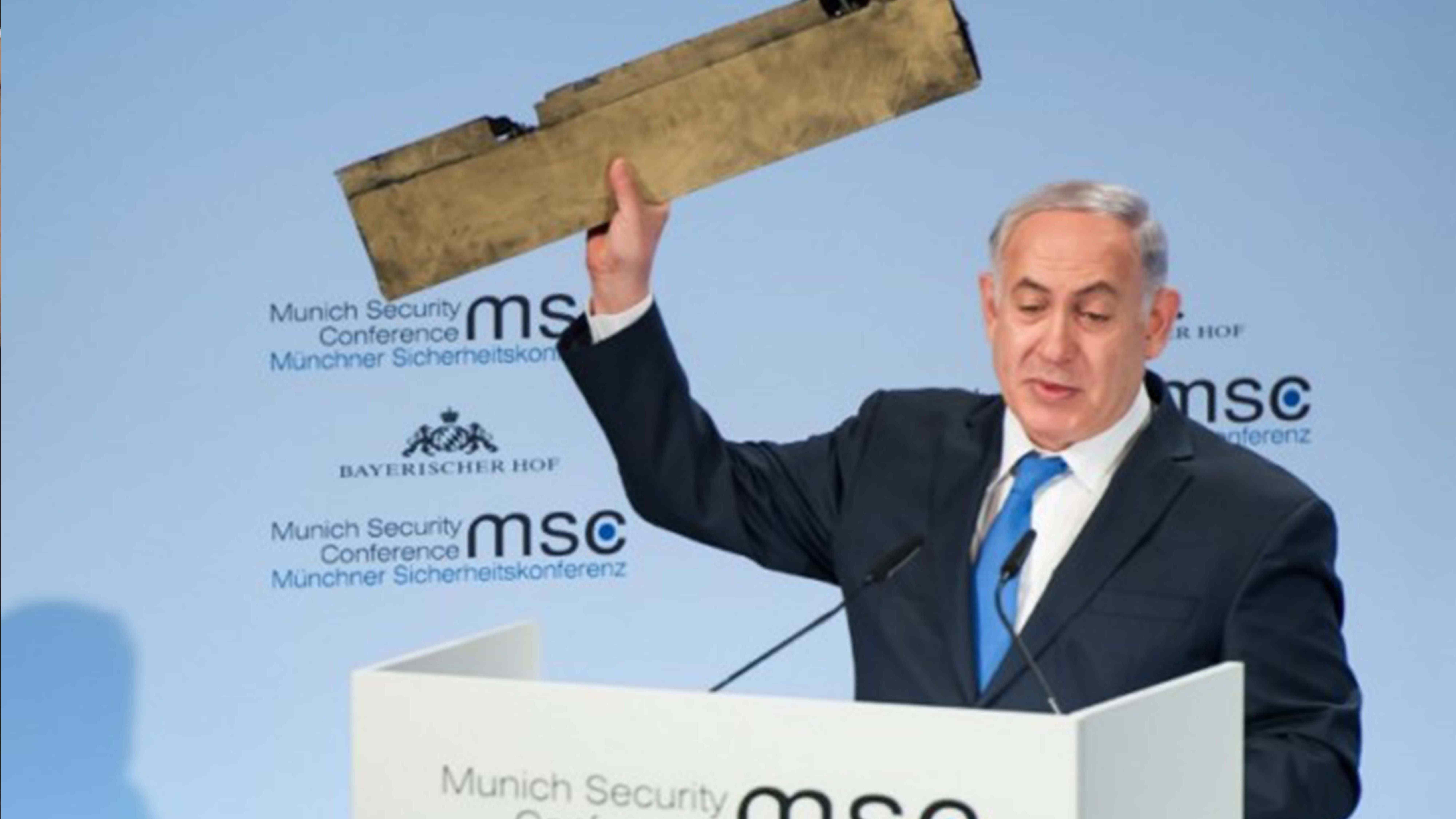
When diplomats, politicians, security experts and journalists from all over the world gathered for the Munich Security Conference in February 2017, there was a sense among many that the world as we know it was at risk of imploding.
The Democratic People’s Republic of Korea (DPRK) had just test fired a missile, and analysts predicted a showdown was just months away. Europe faced a wave of elections that appeared to offer right-wing nationalists a genuine shot at power, with some worrying the European Union itself might unravel.
Donald Trump had just become US president: “An Insurgent in the White House” ran The Economist’s front page.
Here we are twelve months on: the EU has survived and is prospering economically, NATO is still intact, and dialogue may just get another chance on the Korean Peninsula.
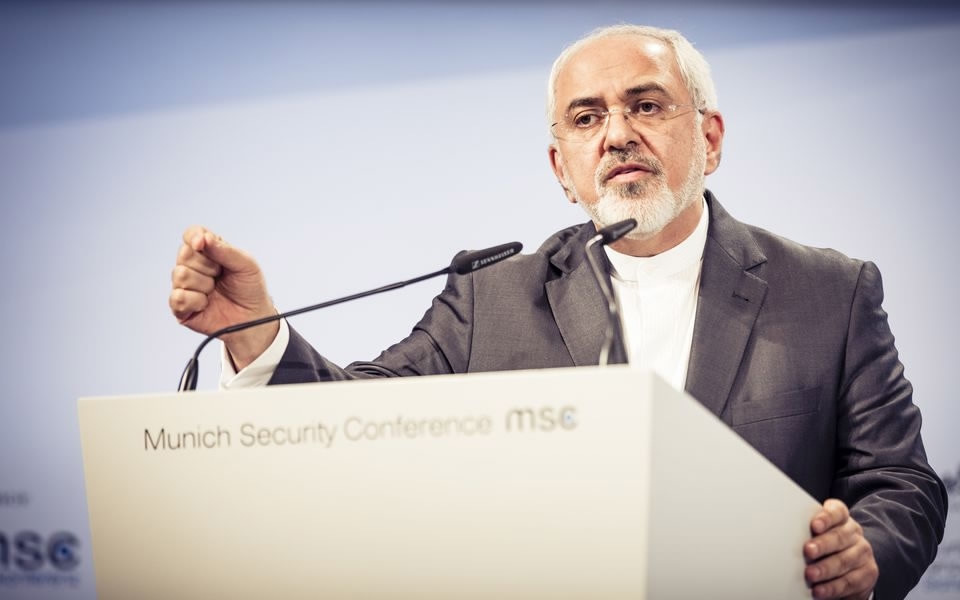
Iranian Foreign Minister Mohammad Javad Zarif speaks during the Munich Security Conference (MSC) in Munich, Germany, February 18, 2018. /Photo via MSC website
Iranian Foreign Minister Mohammad Javad Zarif speaks during the Munich Security Conference (MSC) in Munich, Germany, February 18, 2018. /Photo via MSC website
The theme of this year’s event was "To the Brink – and Back?"
"I’m not fully re-assured," conference chair Wolfgang Isghinger said in his concluding remarks.
Underpinning discussions over crisis points from Asia to the Middle East, is a debate about an apparent change in thinking in Washington, and where it might lead.
One of the architects of the new National Security Strategy, HR McMaster, hopes it will help build peace through strength. US Secretary of State Rex Tillerson’s deputy, John Sullivan, was in Munich as well, and argued that Washington had to raise its game to meet new threats.
Russia, Iran and the DPRK were the focus of their ire.
China is now also a strategic rival in this US doctrine. To Beijing’s most senior diplomat at the conference, what America claims to describe is in fact a prescription.
“Will we turn each other into rivals, as certain American documents suggest?” Fu Ying asked the audience rhetorically.
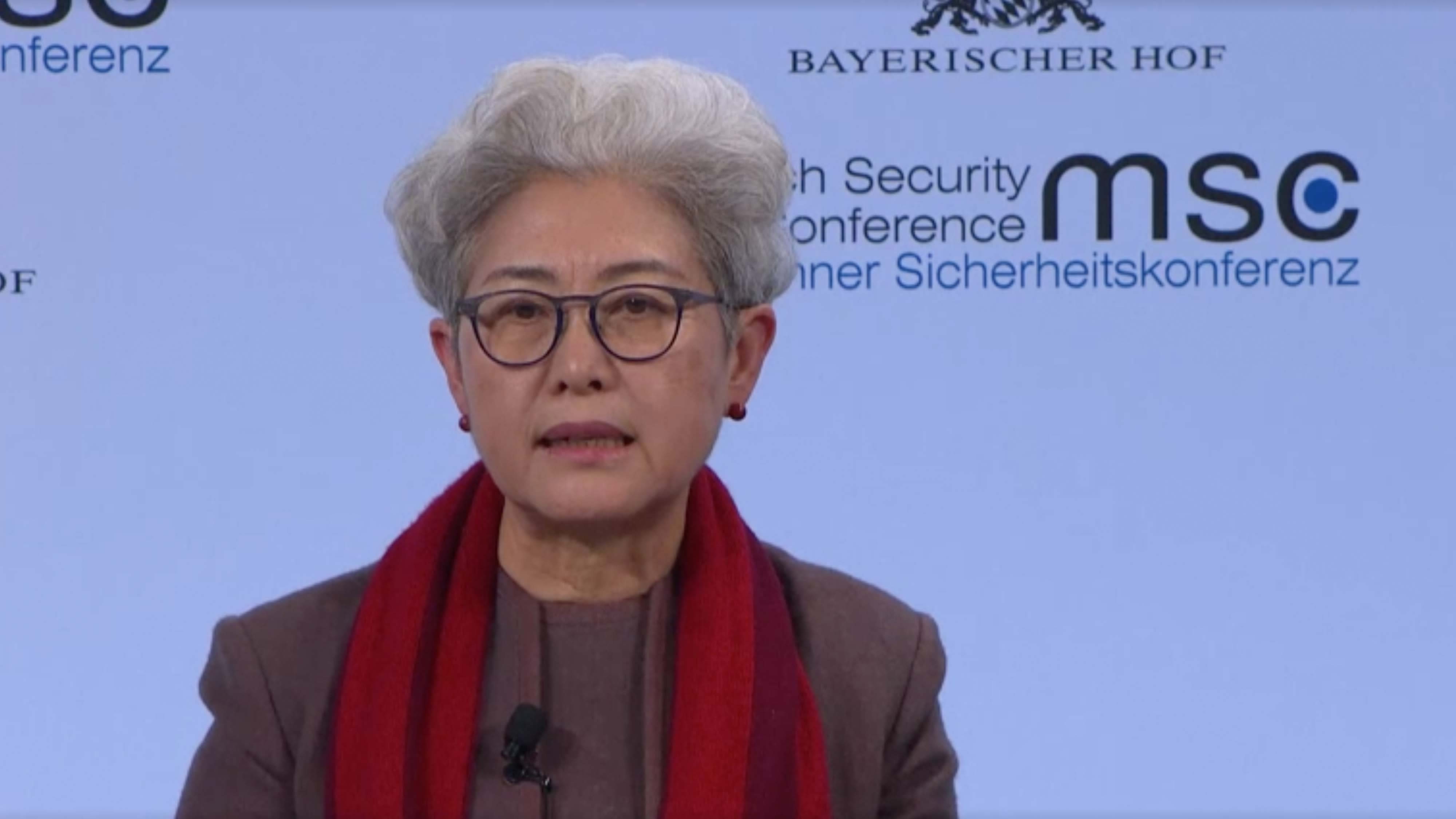
Fu Ying speaks during a panel discussion about nuclear security at the Munich Security Conference, Germany, February 17, 2018. /CGTN Screenshot
Fu Ying speaks during a panel discussion about nuclear security at the Munich Security Conference, Germany, February 17, 2018. /CGTN Screenshot
That could bring Europe closer to a crossroads. As America looks to combat Chinese economic gains, for example, its Trans-Atlantic partners seem more willing to cooperate.
Former NATO Secretary-General and one-time Danish Prime Minister Anders Fogh Rasmussen, told CGTN that Europe should embrace China’s Belt and Road Initiative as an effort to engage.
But critics see the Belt and Road Initiative as a grand geopolitical grab as much as an economic corridor.
As the threat of major conflict rises, diplomats in Munich are divided between those who see a need to push back for fear of being trampled on, and others who worry that makes war a self-fulfilling prophecy.
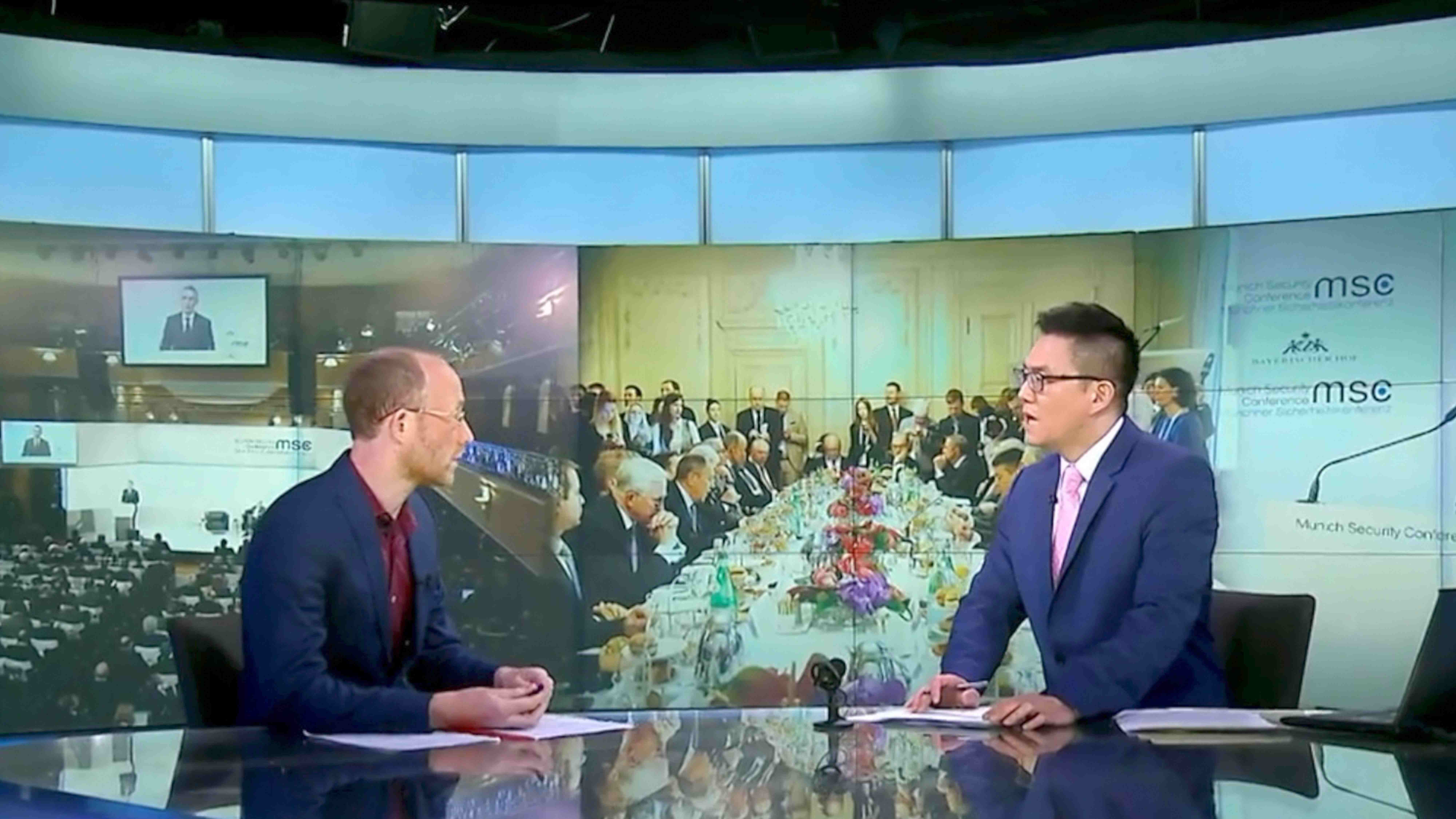
Brian Beary, a Washington-based journalist and contributing editor to European Affairs, said the biggest achievement of the high-profile event was British Prime Minister Theresa May sketching out her idea for a future post-Brexit security relationship with the European Union.
However, beyond the EU context, Beary said the conference saw more frictions than friendliness amid accusations and counter-accusations between Israel and Iran, and Russia and the US.
"Things in the Middle East seem to get worse and worse, and new conflicts open and the older conflicts don't seem to be resolved…There is really no positive movement, even in the subplots, we see some deteriorating elements, notably, Israel and Iran, with the Prime Minister Netanyahu having fierce words for Iran," Beary said.
The analyst added that Russia continued to dismiss the accusations that it interfered in the election that brought US President Donald Trump to power.