
Sports
09:29, 08-Nov-2017
Woman receives heart transplant from athlete killed at Rio Olympics
 ["china"]
Share







Copied

It’s an inspiring story of life after death that starts with the 2016 Rio Olympics – the death of a German Olympian gave a sick Brazilian woman the heart she needs.
Ivonette Balthazar is a 67-year-old Rio resident, mother and grandmother, who is alive thanks to the Rio Summer Olympics.
“I was against the Olympics because we need more hospitals and schools, but strangely enough, the Olympics saved my life,” she said.
She had been waiting for more than a year for a heart transplant after a heart attack left her bedridden.
“My heart was stopping, but today I have an athlete’s heart beating at a rate of 120 beats per minute,” Balthazar said.

Ivonette Balthazar shows her participation medal after a fun run in Rio de Janeiro, Brazil, October 9, 2017. /Reuters Photo
Ivonette Balthazar shows her participation medal after a fun run in Rio de Janeiro, Brazil, October 9, 2017. /Reuters Photo
It is the heart of Stefan Henze, a 35-year-old German canoeing coach who won a silver medal in Athens in 2004. He died in a car crash at the Rio Olympics.
Although the law in Brazil doesn’t allow the disclosure of a donor’s identity, there is only one public hospital in Rio that conducts heart transplants: the National Cardiology Institute. It didn’t take long to discover who the heart belonged to.
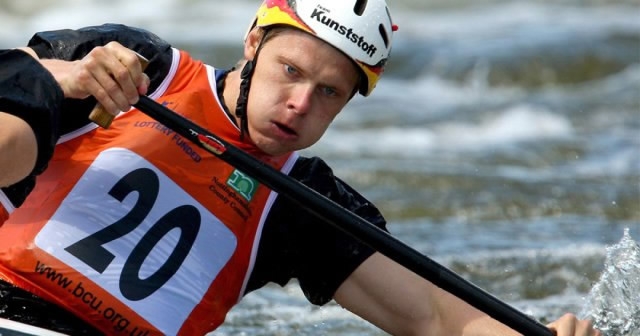
Stefan Henze /Photo via 042express
Stefan Henze /Photo via 042express
Balthazar and the hospital’s heart transplant coordinator, Dr. Jacqueline Miranda, are now good friends. They are still surprised that a German family agreed to donate the heart to a foreigner.
“It was an example for us Brazilians, because our donation rates are very low. For every 100 patients, only 40 receive organs because families say no,” Miranda explained.
Balthazar has become an organ donation advocate. She’s resumed an active life after her transplant, and even took part in a fun run in September on Rio’s Copacabana Beach.