
19:15, 16-Jul-2019
'Longquan of the World': Centuries-old celadon wares on display at Beijing's Palace Museum
Updated
21:08, 16-Jul-2019

Share






Copied
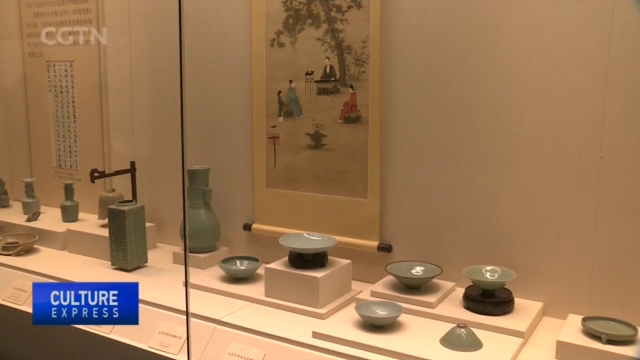
Over 800 pieces of Longquan celadon ceramics are on display at Beijing's Palace Museum. The special exhibit gives visitors a look at the origins and development of the centuries-old pieces of cultural gems.
A showcase of 833 items -- it's the largest number of Longquan celadon wares ever put on display at the Palace Museum.
The collections come from archaeological institutes, such as the Palace Museum and the Zhejiang Provincial Museum. There are also pieces on loan from museums in Iran, Japan, and Egypt, and the United Kingdom.
SHAN JIXIANG CHIEF, PALACE MUSEUM RESEARCH INSTITUTE "In recent years, the Palace Museum has contributed to many international archaeological projects. Many cultural remains related to Longquan celadon were discovered during the process. Aside from showing off the country's centuries-old treasures, the exhibition can also cause a stir among young visitors during the summer vacation."
Longquan celadon are ceramics produced in the kilns at Longquan City in Southeast China's Zhejiang Province. They have a history of more than a thousand years.
CHEN SHUIHUA DIRECTOR & SENIOR CURATOR, ZHEJIANG PROVINCIAL MUSEUM "126 pieces were selected from our museum for the exhibition. We joined a research program led by the National Cultural Heritage Administration, which aimed to trace the origins and influences of Longquan celadon. The exhibition itself is one of the program's achievements."
Longquan celadon wares were unearthed in archeological sites throughout China as well as in digs and ancient shipwrecks along the historic Maritime Silk Road -- a testament to its popularity.
The techniques and styles used for Longquan celadon have been imitated by countries like Iran, Japan, Vietnam and Britain. The spread of the Longquan celadon across the world has -- in some way -- made it a symbol of cultural exchanges and the early stages of globalization.
SHEN QIONGHUA EXHIBITION CURATOR & RESEARCHER AT ZHEJIANG PROVINCIAL MUSEUM "Since 2009, we have been devoted to research on the globalization of the celadons produced in Zhejiang. Then, we discovered the ceramics -- as well as the techniques and the culture they bear -- were widely recognized in many countries along the ancient Maritime Silk Road. I think our research fits well with China's Belt and Road initiative. The celadon acts as a good medium in promoting exchanges between countries."
The exhibit will run until October at the Palace Museum and continue at the Zhejiang Provincial Museum in November.