
12:36, 27-May-2019
Mexico's Influence in Kenya: Mexican food and storytelling grow in Nairobi
Updated
10:30, 29-May-2019
 []
[]
Share







Copied
04:35
While Africa has its own diverse culture, it's also influenced by other continents. In Kenya's capital, Mexican culture is growing in popularity. It can be found everywhere: in dance clubs, on television, and in restaurants. Although the number of actual Mexicans in Nairobi is small, CGTN's Terry Wangari explains why their influence is huge.
Good Mexican food is notoriously hard to find throughout Africa, but in Nairobi, hungry travelers and residents can access it at the heart of the central business district. Burrito Bar is one of the first Mexican restaurants to take center stage in Nairobi in 2017. Mostly known for being one of Nairobi's best-kept secrets, the Burrito Bar is not only popular for its burritos, but also due to the fact that it was started by an unlikely duo.
FAIZA HERSI CO-FOUNDER, BURRITO BAR "It actually came from a craving from my sister and I when we moved back from the UK. I guess we had a lot more options for Mexican food when we lived in London. So when we came back here there were not a lot of options - they were very limited options and they weren't really well done. So we would make it at home for ourselves, for our friends and family, when we have them over and I guess it was a hit with the customers then."
The Mexican restaurant prides itself on bringing a modern Mexican twist to some of the meals included on their menu since many of the ingredients chosen are readily available in Kenya.
KEVIN WANJOHI KAHUTHU WAITER, BURRITO BAR "Basically from our country Kenya, they have accepted Mexican food and the good thing with Mexican food is that it's just our ordinary Kenyan food, the one we put on our dinner table every day but now made in a different setup and presentation."
And while Faiza notes the challenges of starting a Mexican restaurant in Nairobi, she attributes Nairobians interest in trying different cultures a selling point.
FAIZA HERSI CO-FOUNDER, BURRITO BAR "Right now its, there's many options that you can go to and have some good Mexican food in Nairobi. So it's really nice, it's really neat that we were a part of something that grew in Nairobi."
The fusion of Mexican and Kenyan cinema began in the 1980s. Latin American telenovelas, mostly from Mexico, took over Kenyan airwaves. The rights for these soap operas were cheaper to buy than those for United States shows, so networks snatched them up.
CAROLINE MBINDYO-KOROSO CEO, AFRICAN VOICES DUBBING COMPANY "KTN was the first private station and then more stations came up. As more stations came, more Telenovelas were broadcast and so everything that would have been sort of.. A lot of the American soaps and programming were quickly replaced by Mexican Telenovelas in the 90s. We have entire generations who have never even seen the American stuff, they have literally grown up watching Mexican Telenovelas."
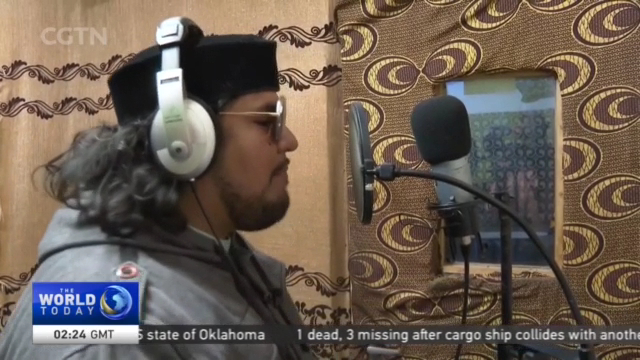
"Ay Tusae Mami, ay tusae papi. I am Romantico. I am from Mexico. So I'm here in Kenya. What I love to do is music."
Born in Veracruz, Mexico, Edgar Manuel Vargas Gallegos came to Kenya in 2015 as a missionary. Upon arriving, he realized he had a different calling.
EDGAR 'ROMANTICO' GALLEGOS MEXICAN-KENYAN MUSICIAN "Why music? Because music comes from the heart. It's part of my passion."
He adopted the stage name Romantico and fell in love with Genge - Nairobi's home-grown music genre that combines traditional hip-hop beats with rap lyrics in Kiswahili and Sheng. Romantico believes that with the fusion of both worlds, his music can be taken to the next level and make it on global platforms.
EDGAR 'ROMANTICO' GALLEGOS MEXICAN-KENYAN MUSICIAN "Right now am the only one who is doing Spanish-Kiswahili."
Over the years, Nairobi has become a melting pot of cultures, partly due to its strategic position in the continent and rapid economic development. And although Mexicans are few in number in this dynamic city, one thing is clear - Nairbobians love Tacos, Tequilas and Telenovelas. Terry Wangari, CGTN, Nairobi, Kenya.