
Politics
22:56, 16-Apr-2018
Djukanovic: Montenegro to join EU within five years
 ["china"]
Share







Copied
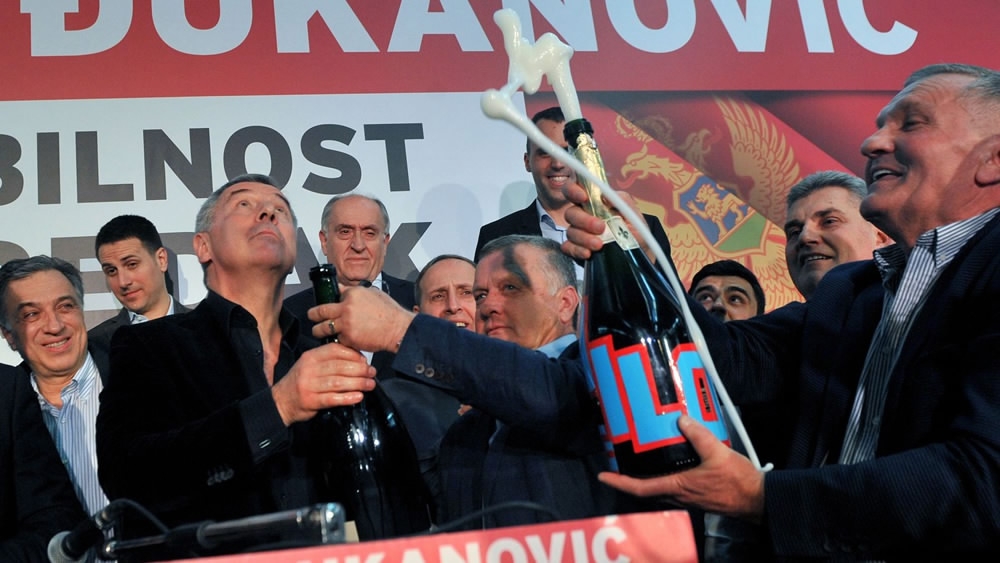
"We are an invincible coalition." Those were the words of the new President of Montenegro Milo Djukanovic at a rally in the capital Podgorica where he proclaimed victory in Sunday's presidential election.
With a turnout of almost 64 percent, Djukanovic won 53.8 percent of the votes, giving him a landslide in the first round against candidates of the divided opposition.
Results, although expected, were greeted with a sigh of relief, particularly in the West, which was a bit concerned that the pro-Russia opposition may have had the upper hand.
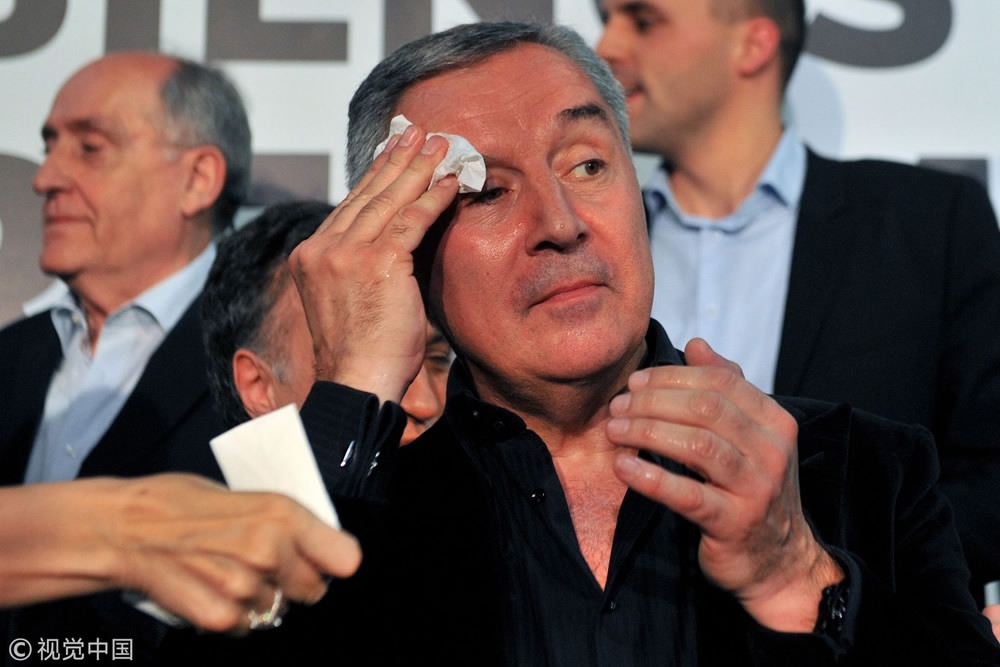
Candidate of the ruling Social Democratic Party Milo Djukanovic wipes his forehead as he addresses supporters after winning the presidential election in Montenegro, April 15, 2018. /VCG Photo
Candidate of the ruling Social Democratic Party Milo Djukanovic wipes his forehead as he addresses supporters after winning the presidential election in Montenegro, April 15, 2018. /VCG Photo
Montenegro – a battleground of East-West influence
Montenegro has a long pro-Russian history dating back hundreds of years. That unique bond and alliance continued even after the breakup of the former Yugoslavia with thousands of Russians buying real estate in Montenegro's Adriatic coastline and major Russian businesses setting up in the Balkan country.
But that period lasted only until Montenegro decided to get out of the union with Serbia back in 2006. Djukanovic, Montenegro's leader at the time, announced that his country will pursue links with the EU and NATO. Soon after, relations with Russia started deteriorating, with the Russian businesses leaving the country and number of their citizens selling their properties.
As Montenegro officially requested NATO membership, Moscow started openly calling on Podgorica not to go that way, resulting in relations between the two countries falling to the lowest point in history.
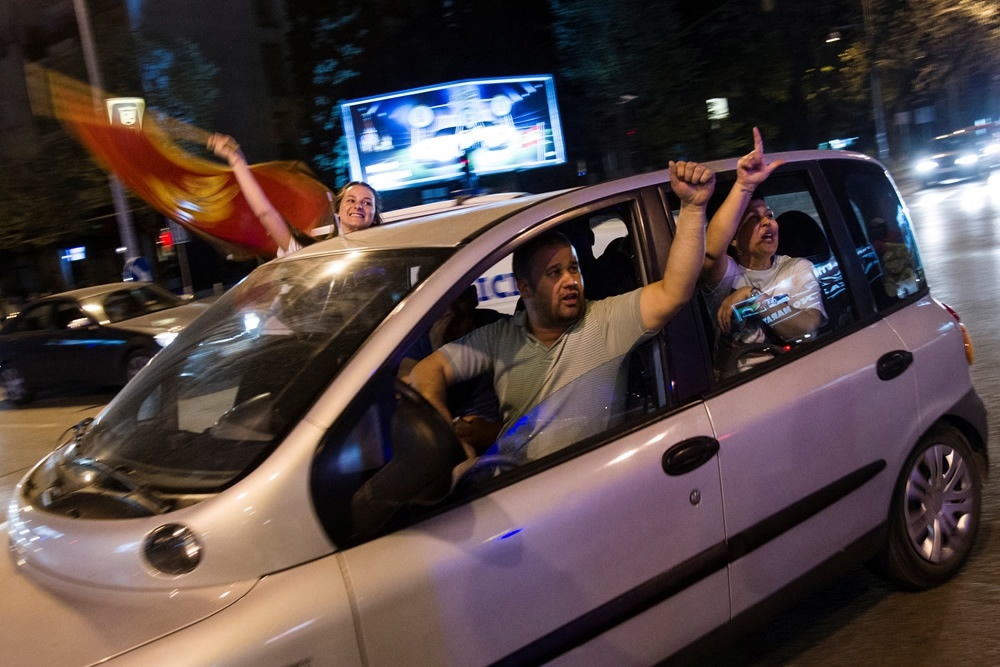
Supporters of Milo Djukanovic celebrate his presidential election victory in Podgorica, Montenegro, April 15, 2018. /Reuters Photo
Supporters of Milo Djukanovic celebrate his presidential election victory in Podgorica, Montenegro, April 15, 2018. /Reuters Photo
At the same time, the US and the NATO countries happily embraced Montenegro and its NATO and EU aspirations, seeing in that move a significant blow to Russian influence in the Balkans.
Military analysts were also saying that the fact that Podgorica is turning its back on Moscow denies the possibility for the Russian Navy to have access to Montenegro's strategically important Adriatic ports.
Djukanovic was and is seen as the architect of that dramatic political U-turn of Montenegro.
Who is Djukanovic?
Djukanovic has been in power in Montenegro for over 27 years and some of his critics are comparing him with Robert Mugabe, the former leader of Zimbabwe who ruled the country for 37 years.
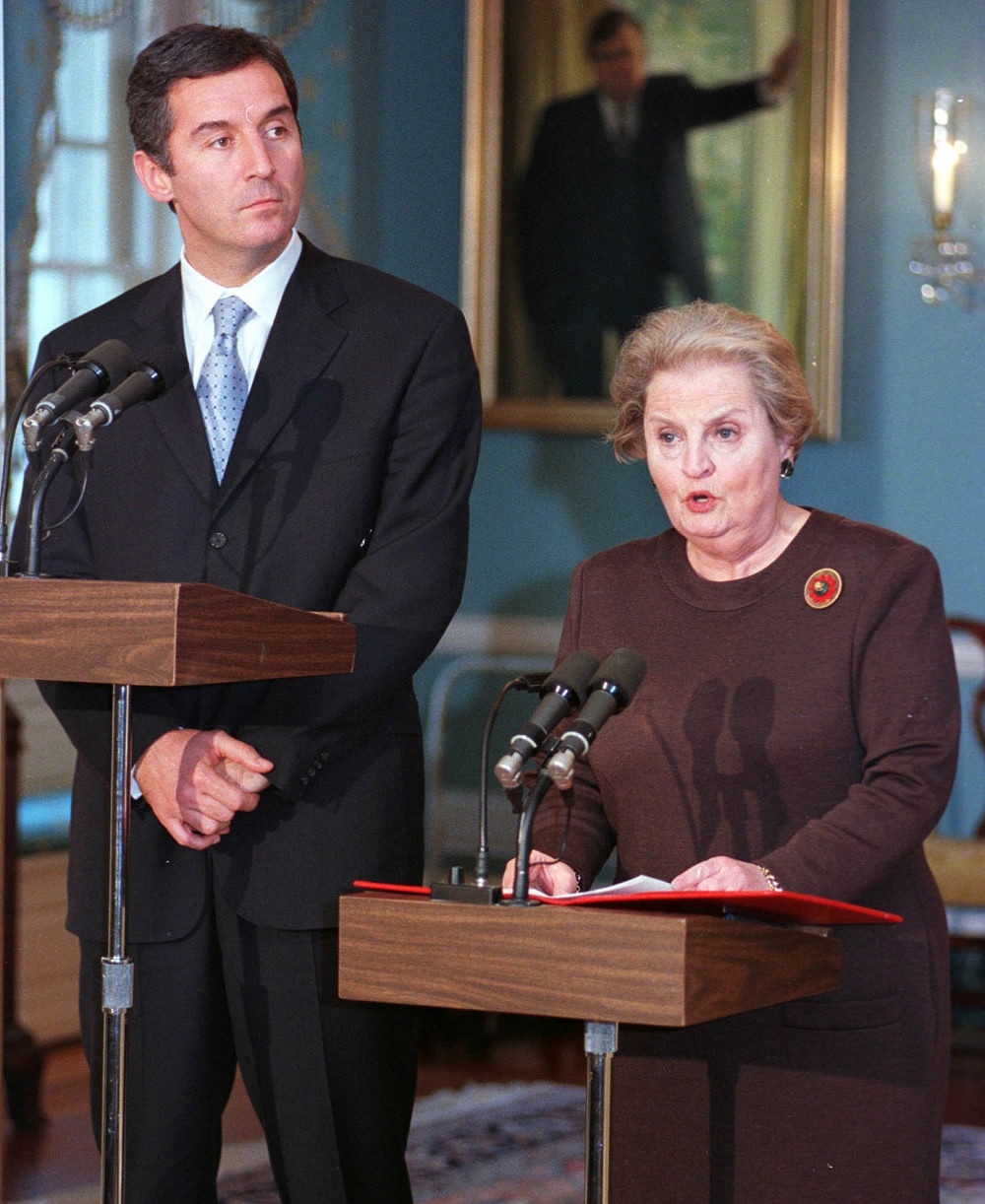
November 4, 1999: President Milo Djukanovic of the Republic of Montenegro (L) and US Secretary of State Madeleine Albright hold a joint news conference in Washington during Djukanovic's visit to the US. /VCG Photo
November 4, 1999: President Milo Djukanovic of the Republic of Montenegro (L) and US Secretary of State Madeleine Albright hold a joint news conference in Washington during Djukanovic's visit to the US. /VCG Photo
Djukanovic started his political life in the Communist Party of Yugoslavia and was a member until the breakup of that country. From 1991 he served either as president or prime minister of Montenegro. Despite announcing a number of times a retreat from the political life, he still decided to run for president in these elections.
The opposition claimed that the only reason for that move was fear of possible investigation in case his political allies lose power in the country.
Accusations by the opposition of widespread corruption and criminal activities surrounding Djukanovc are not new. He was even one of the suspects in the Italian anti-mafia investigation on smuggling cigarettes from Montenegro to Italy back in the 1990s. An investigation against him was dropped by the Italian police in 2009 "because of diplomatic immunity" as stated by prosecutor's office.
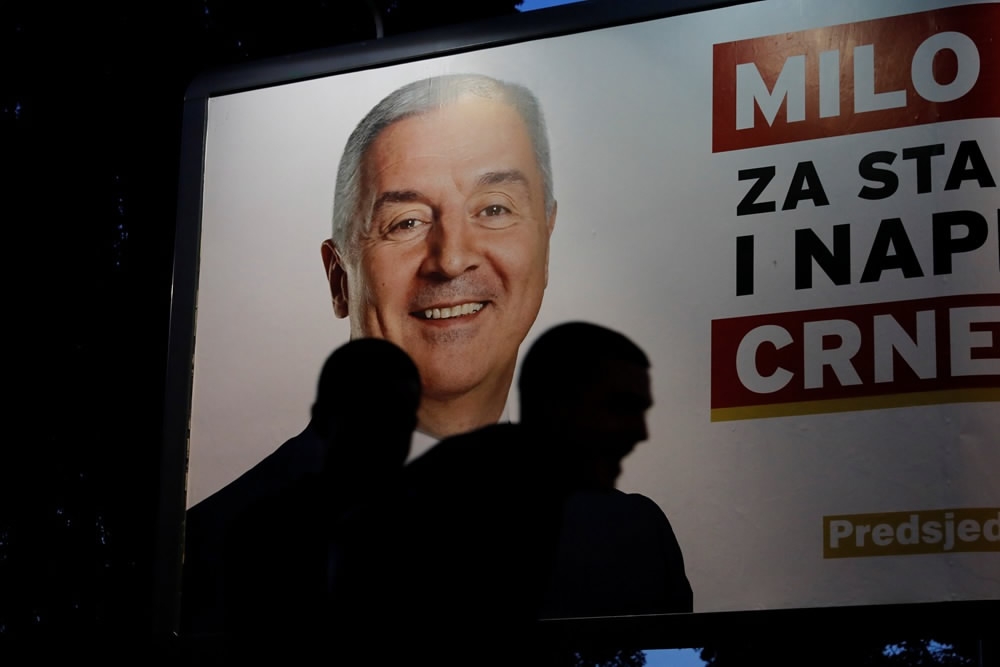
An election billboard of the presidential candidate, Milo Djukanovic, in Podgorica, Montenegro, April 14, 2018. /Reuters Photo
An election billboard of the presidential candidate, Milo Djukanovic, in Podgorica, Montenegro, April 14, 2018. /Reuters Photo
On the other hand, Djukanovic claimed that under his political rule, Montenegro has achieved stability and the livelihood of its citizens has been improved. The GDP is growing as well as average salaries.
In his victory speech in Podgorica, Djukanovic expressed confidence that Montenegro will become an EU member in the next five years. Considering that the EU proclaimed no interest in expansion before the year 2025, it will be a tough goal to achieve.
7653km