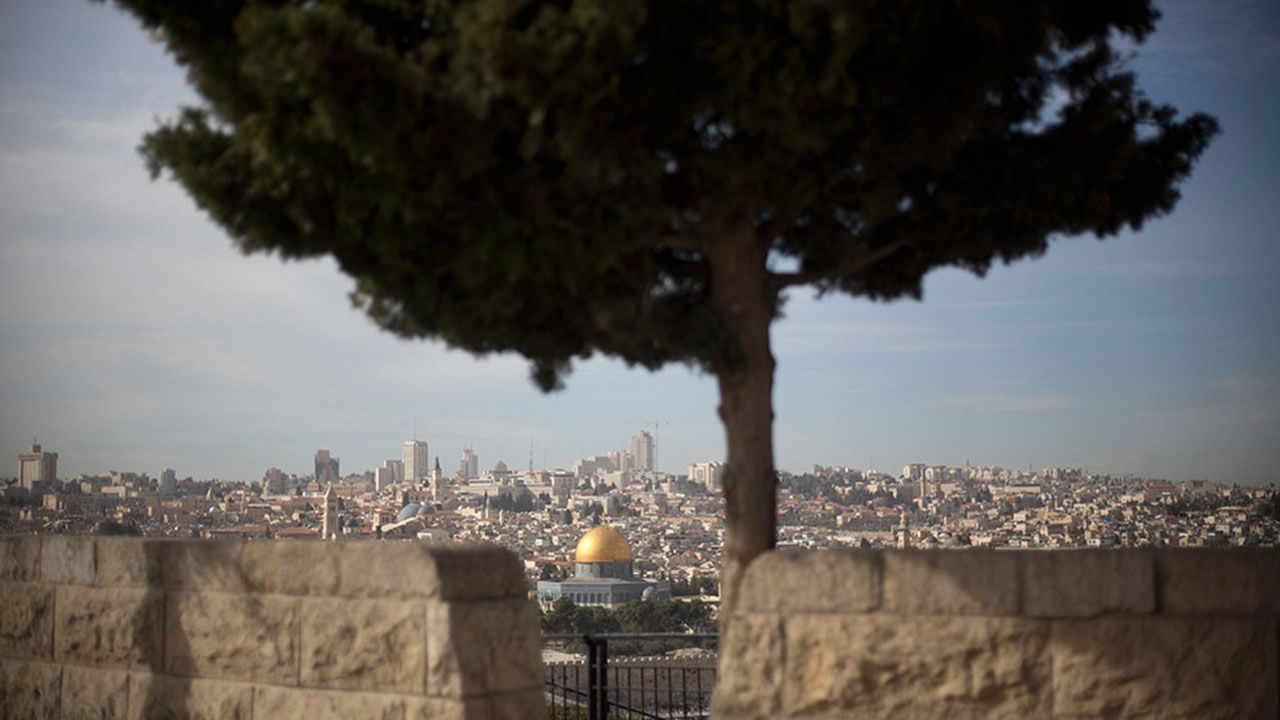
The US vetoed on Monday a resolution supported by the 14 other UN Security Council members that would have required President Donald Trump to rescind his declaration of Jerusalem as the capital of Israel, a vote that showed the depth of global opposition to the US move.
The US was certain to veto the Egyptian-sponsored resolution, but its Arab supporters wanted the vote to demonstrate that countries everywhere and even many US allies such as Britain, France and Japan are against Trump's action.
US Ambassador Nikki Haley called the Security Council resolution "an insult" that won't be forgotten, saying the UN forced the US to cast a veto simply because of its right to decide where to put its embassy. She said the veto — the first cast by the US in more than six years — was done "in defense of American sovereignty and in defense of America's role in the Middle East peace process."
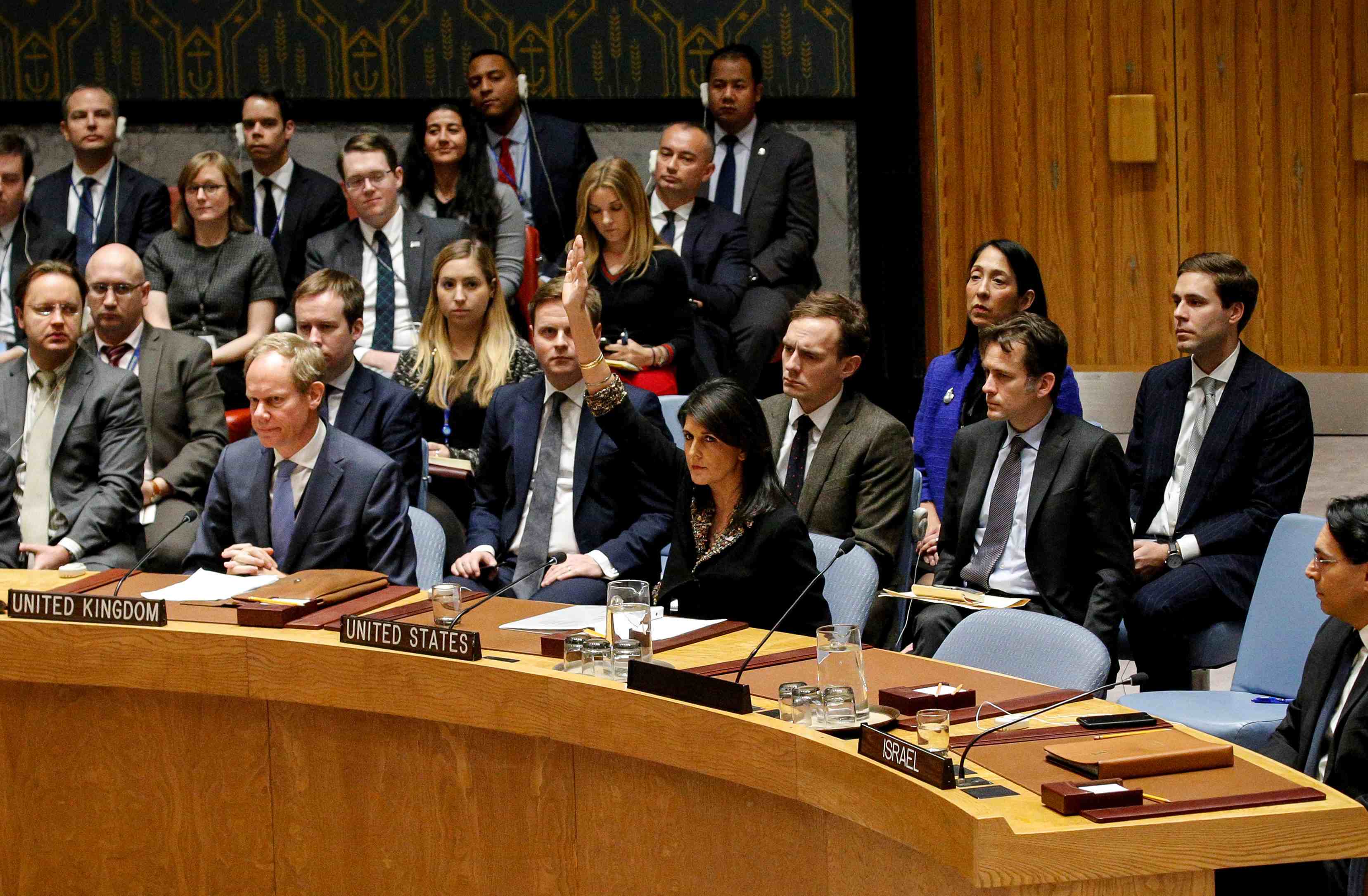
US Ambassador to the UN Nikki Haley vetoes an Egyptian-drafted resolution regarding recent decisions concerning the status of Jerusalem, New York, US, Dec. 18, 2017. /Reuters Photo
US Ambassador to the UN Nikki Haley vetoes an Egyptian-drafted resolution regarding recent decisions concerning the status of Jerusalem, New York, US, Dec. 18, 2017. /Reuters Photo
UN resolution on Jerusalem
The vetoed resolution would have demanded that all countries comply with 10 resolutions on Jerusalem, dating back to 1967, including requirements that the city's final status be decided in direct negotiations between Israel and the Palestinians.
It would also have affirmed that "any decisions and actions which purport to have altered, the character, status or demographic composition of the holy city of Jerusalem have no legal effect, are null and void and must be rescinded."
The resolution would have called on "all states to refrain from the establishment of diplomatic missions in the holy city of Jerusalem," citing a 1980 council resolution.
Haley was adamant that "the United States will not be told by any country where we can put our embassy."
The vetoed resolution would also have reiterated a call to reverse "the negative trends on the ground that are imperiling the two-state solution" that would see the states of Israel and the Palestine living side-by-side in peace. And it would have called for intensified and accelerated international and regional efforts to achieve Middle East peace.
Trump insisted that after repeated peace failures it was past time for a new approach, saying his decision was merely based on reality.
The status of Jerusalem has been a central issue in the decades-long Israeli-Palestinian conflict, and Trump's announcement was widely perceived as taking the side of Israel. It countered an international consensus that Jerusalem's status should be decided in negotiations between Israel and the Palestinians, who claim east Jerusalem as the capital of their future state.
Trump's announcement triggered denunciations and demonstrations around the world.
Palestine: US veto leads to deeper isolation
The Palestinians immediately announced that they will seek a resolution with similar demands in the 193-member General Assembly, where there are no vetoes. But unlike those of the Security Council, the assembly's resolutions are not legally binding.
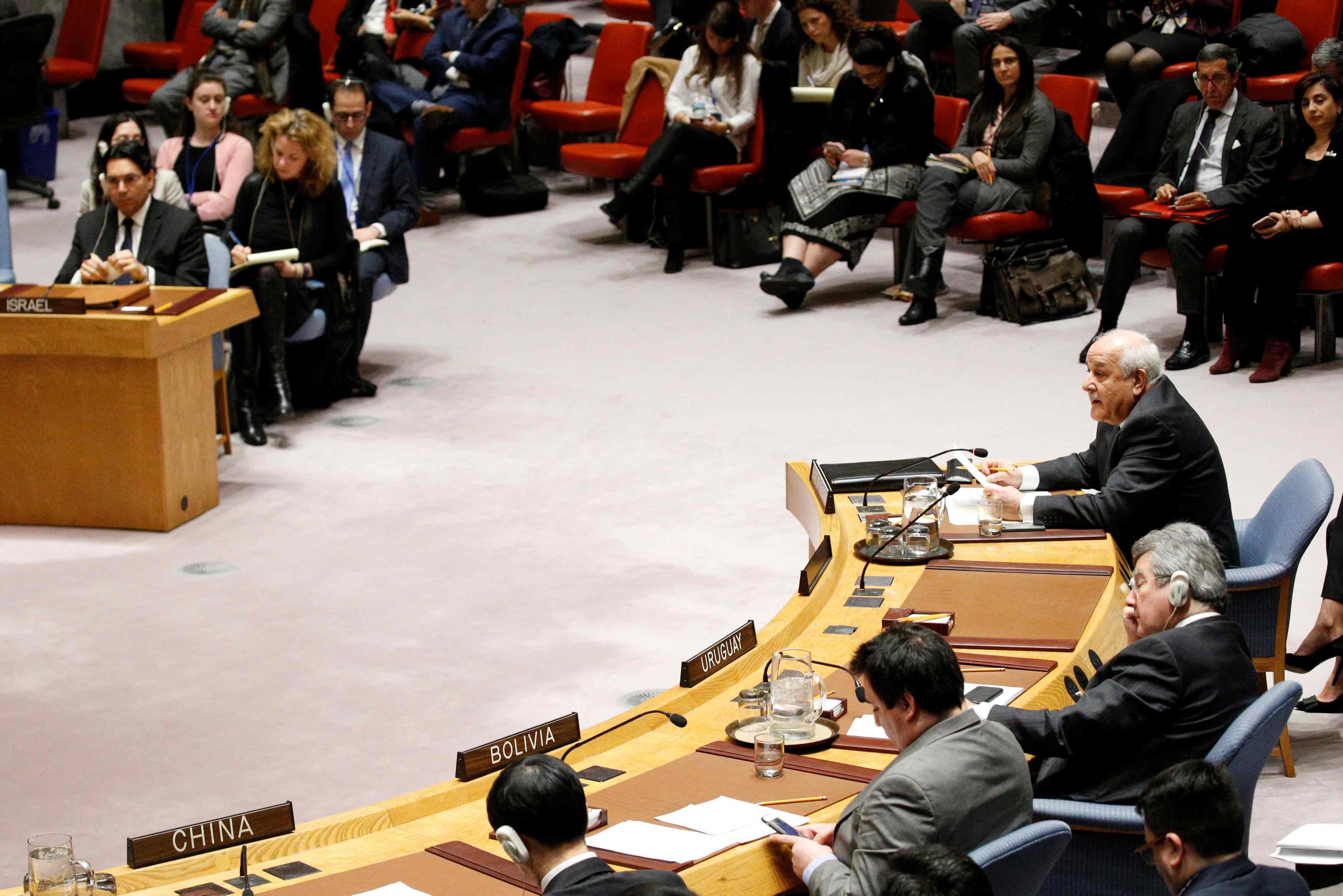
Permanent Observer for the State of Palestine to the UN, Riyad Mansour speaks during the United Nations Security Council meeting on the situation in the Middle East, including Palestine, at UN Headquarters in New York City, New York, US, Dec. 18, 2017. /Reuters Photo
Permanent Observer for the State of Palestine to the UN, Riyad Mansour speaks during the United Nations Security Council meeting on the situation in the Middle East, including Palestine, at UN Headquarters in New York City, New York, US, Dec. 18, 2017. /Reuters Photo
Palestinian Ambassador Riyad Mansour told reporters after meeting with the General Assembly president that he expects a vote this week. He said he hopes for "overwhelming support," telling the Trump administration that the international community doesn't accept the US position, which he said violates international law as well as Security Council and General Assembly resolutions.
The Palestinian Authority said the US' latest action will lead to further isolation in the international community.
Palestinian President's spokesman Nabil Abu Rudeineh said in an official statement that the US veto of the draft resolution "is against the international consensus."
"The US veto violates the legitimate international resolutions and the resolutions of the Security Council. It's a full bias to the occupation and to the aggression," said Abu Rudeineh.
The veto "leads to more isolation of the United States and will provoke the international community," he said, adding "we will carry on with our moves in the UN and all other international agencies to defend our people's rights."
Palestinian President Mahmoud Abbas's Fatah movement and other groups organized mass protests while its rival, the Gaza-based Islamic militant group Hamas, has called for a third violent uprising against Israel.
Abbas announced earlier that the Palestinians will apply to the UN for full membership of the state of Palestine in response to the US move on Jerusalem.
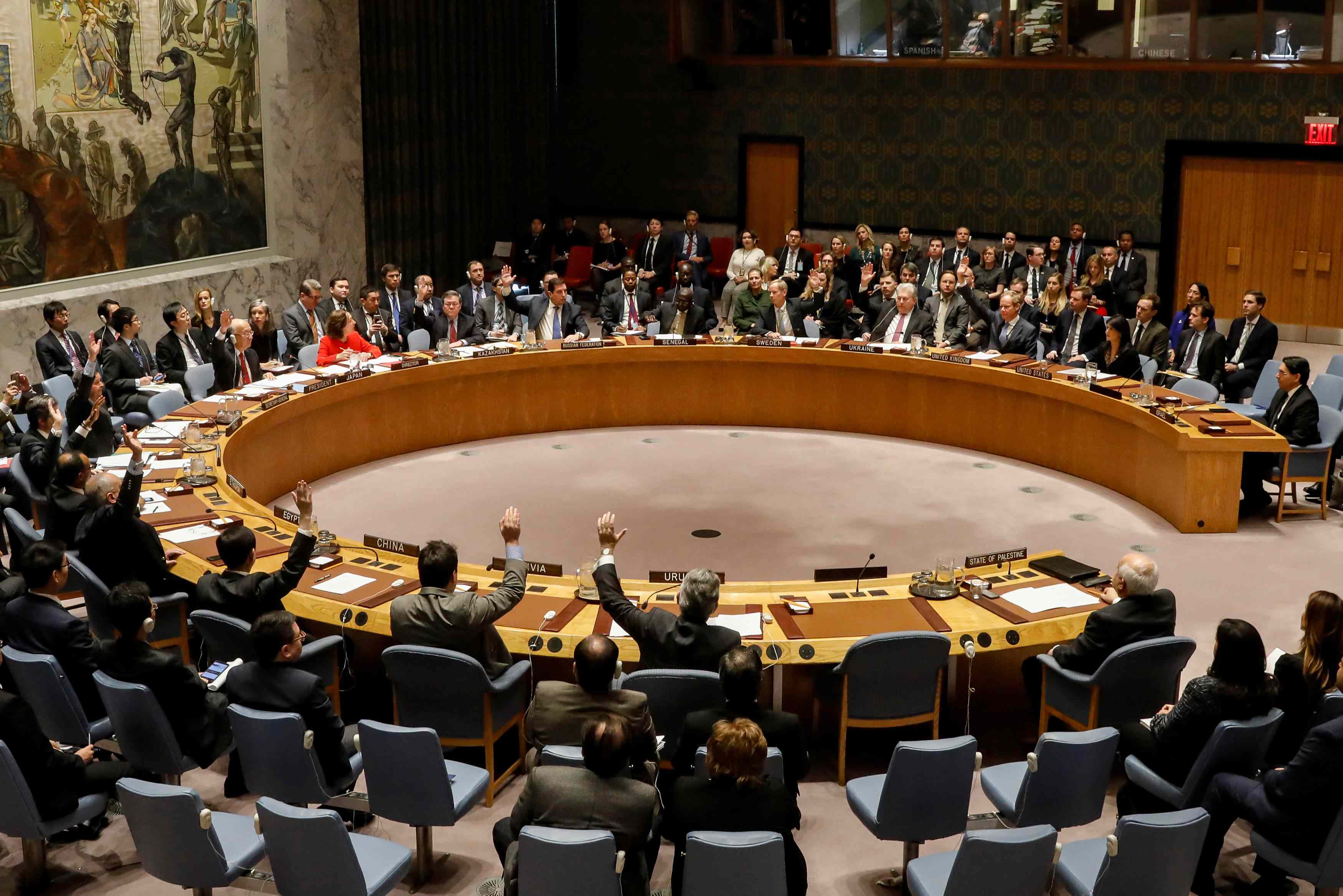
Members of the UNSC vote on an Egyptian-drafted resolution regarding recent decisions concerning the status of Jerusalem, during a meeting on the situation in the Middle East, including Palestine, at UN Headquarters in New York City, New York, US, Dec. 18, 2017. /Reuters Photo
Members of the UNSC vote on an Egyptian-drafted resolution regarding recent decisions concerning the status of Jerusalem, during a meeting on the situation in the Middle East, including Palestine, at UN Headquarters in New York City, New York, US, Dec. 18, 2017. /Reuters Photo
US's position as Mideast mediator
Trump has been working on a new Mideast peace plan and says he remains committed to brokering a deal, despite the Jerusalem move.
Haley told the council "the United States has never been more committed to peace in the Middle East," and called accusations that the US is setting back the prospect for peace "scandalous."
But Palestinian President Mahmoud Abbas, in some of his sharpest rhetoric since Trump's announcement, reiterated in public comments to senior Palestinian officials Monday that he will no longer accept the US as a Mideast mediator.
He said "a crazy person wouldn't accept" that role for Washington after Trump's action.
Haley said Trump "took great care not to prejudge final status negotiations in any way, including the specific boundaries of Israeli sovereignty in Jerusalem," which must be decided by the Israelis and Palestinians. And she insisted that this position "is fully in line with the previous Security Council resolutions."
But one by one, ambassadors of the 14 countries that supported the resolution said after the vote that the US violated council resolutions which make clear that no country can unilaterally decide that Jerusalem is the capital of Israel.
UK: Jerusalem should be a shared capital
British Ambassador to the UN Matthew Rycroft said his country disagrees with the US decisions to unilaterally recognize Jerusalem as the capital of Israel and move the US embassy to Jerusalem from Tel Aviv.
"These decisions are unhelpful to the prospects of peace in the region, an aim that all of us in this council remain committed (to)," he told the Security Council after the vote. "The British embassy in Israel is based in Tel Aviv and we have no plans to move it."
Rycroft said the British position on Jerusalem was clear and long-standing: "The status of Jerusalem should be determined through a negotiated settlement between the Israelis and Palestinians, and should ultimately be the shared capital of the Israeli and Palestinian states."
Britain regards East Jerusalem, which Israel captured in 1967, as part of the occupied Palestinian territories.
Russia ready to take over as mediator
With the Palestinians rejecting US mediation, Russia said it was ready to take over.
Russia's deputy UN ambassador, Vladimir Safronkov, said the issue of "moving as quickly as possible toward direct Israeli-Palestinian negotiations" is becoming more important, and he reiterated Russia's proposal to hold a summit between the Palestinian and Israeli leaders.
"We are ready to become an honest mediator here," he said.
Safronkov said Russia will also "continue to encourage all Palestinian parties to overcome the internal rifts as quickly as possible."
Egypt: Resolution reflects international rejection to US decision
The Egyptian Foreign Ministry expressed regret at the UN Security Council's failure to pass the resolution.
Ministry spokesman Ahmed Abu Zeid said that the resolution reflects the international community's rejection to Trump's decision.
He added that the Arab group in the UN will convene later to assess the situation and determine the next step in order to defend the status of Jerusalem.
Before the vote, the Egyptian Ambassador to the UN Amr Abdellatif Aboulatta had explained that the draft resolution sought to ensure that any attempts to alter the characteristics or demographic composition of the Old City of Jerusalem would have no effect, were null and void, and must be rescinded.
It also called on all parties not to establish diplomatic missions in Jerusalem.
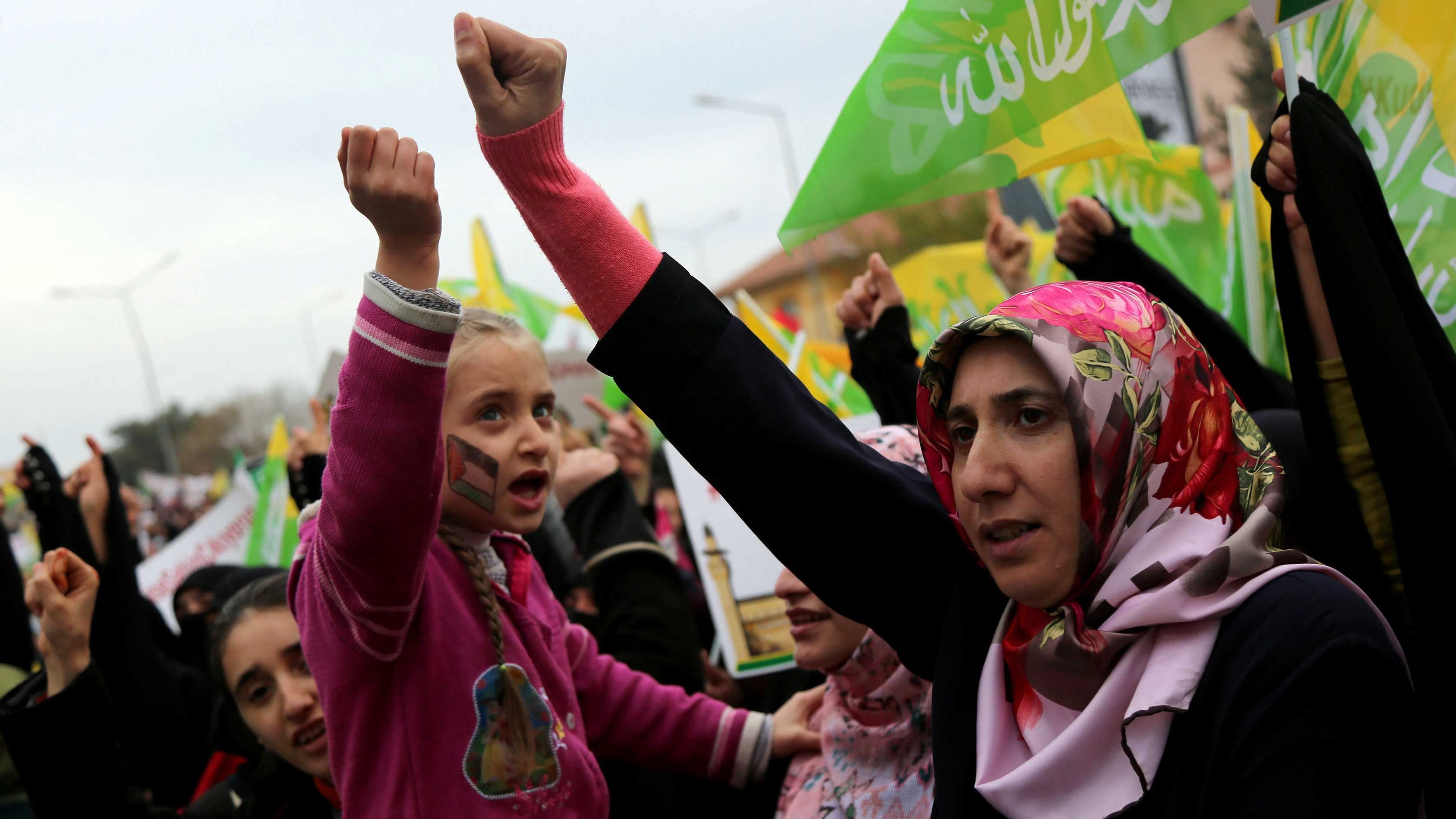
Pro-Palestinian demonstrators shout slogans during a protest against the US decision to recognize Jerusalem as the capital of Israel, in Diyarbakir, Turkey, Dec. 17, 2017. /Reuters Photo
Pro-Palestinian demonstrators shout slogans during a protest against the US decision to recognize Jerusalem as the capital of Israel, in Diyarbakir, Turkey, Dec. 17, 2017. /Reuters Photo
Turkey says regrets to see a veto
The Turkish foreign ministry said Turkey regrets the vetoing by the US.
"The United States being left alone in the vote is a concrete sign of the illegality of its decision on Jerusalem,” the Turkish foreign ministry said in a statement.
It said the US decision to veto the resolution showed once again that Washington had “lost objectivity” and that it was unacceptable for the Security Council to be left “ineffective” with such a move.
Later on Monday, Turkish President Tayyip Erdogan and British Prime Minister Theresa May discussed the blocking of the resolution in a phone call, and agreed that new tensions that could endanger the peace process in the region should be avoided, sources in Erdogan’s office said.
A communique issued after the summit said the participants considered the move to be a declaration that Washington was withdrawing from its role “as sponsor of peace” in the Middle East.
Following the US block on the UN resolution, a spokesman for Erdogan said that the annulment of Trump’s decision would be sought in the UN General Assembly.
"All countries except for the Trump administration acted in unison in this vote. Now the UN General Assembly period will start,” Ibrahim Kalin said on Twitter.
China: Consistent support of the Middle East peace process
Wu Haitao, charge d'affaires of China's permanent mission to the UN, said the issue of Palestine, which is at the core of Middle East peace, is complicated and sensitive.
The draft resolution was in line with previous Security Council resolutions and was a continuation of the contents and spirit of past resolutions, Wu said, explaining China's "yes" vote on it.
China has consistently supported and pushed forward the Middle East peace process, he said.
"We support the just cause of restoring the legitimate national rights of the Palestinian people, support the establishment of a fully sovereign, independent State of Palestine based on the 1967 borders with East Jerusalem as its capital. Such a position of China will not change."
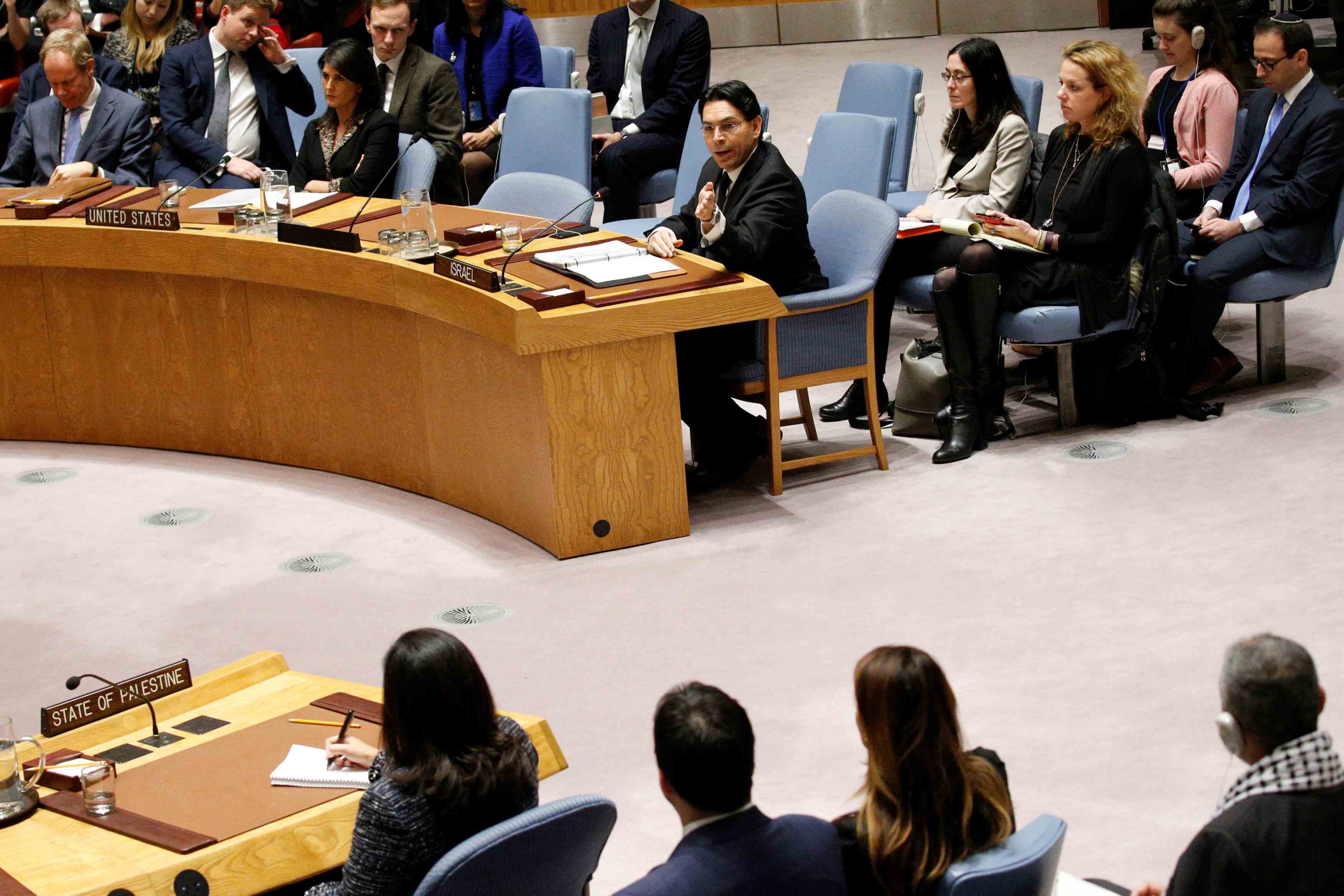
Israel's Ambassador to the UN Danny Danon speaks during the UNSC meeting on the situation in the Middle East, including Palestine, at UN Headquarters in New York City, New York, US, Dec. 18, 2017. /Reuters Photo
Israel's Ambassador to the UN Danny Danon speaks during the UNSC meeting on the situation in the Middle East, including Palestine, at UN Headquarters in New York City, New York, US, Dec. 18, 2017. /Reuters Photo
The only support for the US came from Israel.
Israeli Prime Minister Benjamin Netanyahu thanked the US for using its veto in a video posted to Facebook.
He said Haley "lit a candle of truth" and dispelled "lies."
Netanyahu compared Haley to the Maccabees, Jewish warriors commemorated during the current Jewish holiday of Hanukkah for revolting against Hellenic rulers, rededicating the Jewish Temple in Jerusalem and establishing a Jewish Kingdom in Judea.
In Netanyahu's words, "One defeated the many, truth defeated lies."
Source(s): AP
,Reuters
,Xinhua News Agency

 ["china"]