
14:42, 19-Jul-2019
Targeted Poverty Fight in Tibet: Villagers benefit from relocation and ecological development
Updated
14:55, 19-Jul-2019

Share






Copied
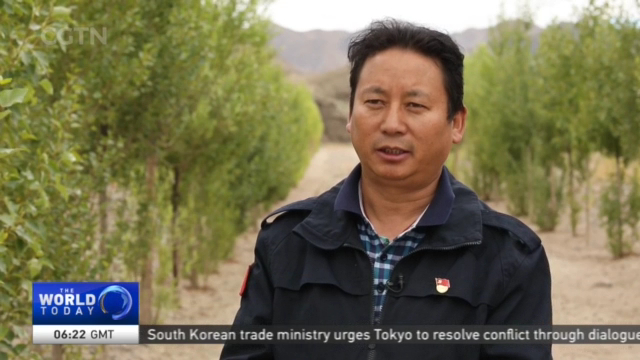
The different counties and villages in Tibet have different geographic and economic conditions. Our correspondent Sean Callebs visited Namling county, where he talked to locals about how relocation has made the environment and their lives better.
Tibet is mysterious to millions. It's a bucket-list destination for tourists from all over the world. Lhasa has famed Potala Palace. But away from the city, the environment is harsh, and working conditions can be even tougher.
CIREN DUNZHU FORESTRY AND GRASSLAND BUREAU, NAMLING COUNTY "Before planting trees -nothing grows here - it is all sand and rubble, - if there was a sand storm we cannot see each other within a meter."
He wasn't. But, as is the director of Forestry and Grassland in Namling County - Ciren Dunzhu knew officials had to try something. The earth was blowing away.
Most Tibetans are nomadic. It's not unusual to see them tending herd to yak or sheep. But it is also a poor region, one that needed a solid economic infusion. So, in 2014 with government assistance, this region began planting the first of some two-million trees.
BAIMA FOREST RANGER "When we started planting trees I had doubts -wondering if they would even grow on this ground."
She told us her name is Baima. And is one of the scores of forest rangers working the region. The effort afforded her a good salary, and the opportunity to relocate from a poor, more rural region.
BAIMA FOREST RANGER "My life is very comfortable now. When I first moved here, the living conditions were very poor. Since I became a forest ranger, I have a stable job and my house has been rebuilt."
Rows of trees seemingly everywhere. Now, they are starting to experiment with fruit trees -hoping for another economic windfall.
Relocation is common for families wanting to flee the angst of working the land. Ozhulatuo, as she is called, moved from rural Ando County about four years ago with government assistance.
OZHULATUO RELOCATED RESIDENT "Before the relocation - our family lived in a dilapidated mud, adobe house with many children and few livestock."
She and her husband both have jobs and her children are now attending school. Something unthinkable before while she volunteered for the relocation - many others still live in poverty, working the way their ancestors always did. A reminder of the work still left in Tibet -to further reduce poverty and environmental degradation. Sean Callebs, CGTN Namling county Tibet.