
20:49, 24-Feb-2018
Russia's Population Decline: Problems mount as steep declining birth rates lead to population drop
 []
[]
Share







Copied
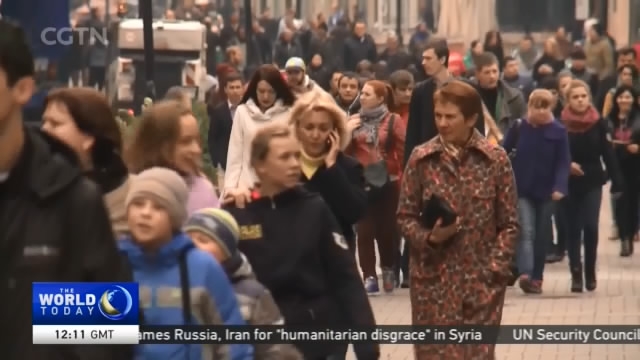
Russia has confirmed a steep drop in birth rates, leading to its natural population dropping by more than 130-thousand people last year. One expert warns the decline in children could last another 10 years. And as Dan Ashby reports, that could have an impact on the economy.
When you're two, it can sometimes feel like you have the world all to yourself. But in Russia, there really are fewer new children to join the fun. Births dropped by more than two hundred thousand last year. And families are smaller than fifty years ago.
MARGARITA SHEREMETYEVO MOTHER "It's completely normal to have one child, if you have more than 3 children, everyone thinks - argggghh how many? How do you manage? So therefore one is normal, two is okay, and three or more - it's too many !"
But fewer mothers, and fewer babies poses bigger problems.
DAN ASHBY MOSCOW "This nursery may be full and chaotic, but in Russia, people are having fewer children and without immigration, the population would be in decline. It means these children will have their work cut out to support the economy."
The population is ageing, and that will hit employment and Russia's tax income. So paying for the elderly will not be easy. Last year alone, Russia shrank by 134 thousand people. Experts say the current decline is due to WWII - and may continue for years.
PROF. ANATOLY VISHNEVSKY DIRECTOR, INSTITUTE OF DEMOGRAPHY NATIONAL RESEARCH UNIVERSITY HIGHER SCHOOL OF ECONOMICS "It started a long time ago, in the Second World War when birth rate was very low. 25 years later there were few parents, and that wave is repeating. Now 75 years later we are seeing this third wave which was made worse by the events of the 1990s. It could last for 10 years or more. The decline in the number of women of child-bearing age is very big, almost 7 million."
The Government has tried measures to encourage bigger families. But demographic changes are hard to change with policies. And so for now, it will be up to these children to ride out the population's slide. Dan Ashby, CGTN, Moscow.