
09:22, 18-Mar-2019
Egypt Talent: Visually impaired students defy odds by learning photography
Updated
09:20, 21-Mar-2019
 []
[]
Share






Copied
04:23
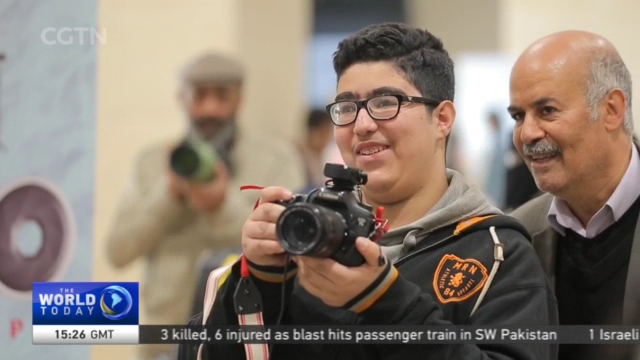
It's almost hard to believe that those with visual disabilities can become photographers. But an Egyptian has just made it possible with a new technology he's developed. Now after weeks of training, professional photographer Khaled Farid takes his group of visually impaired students on a field trip, giving them their first opportunity to take photos outside. Here is Adel El Mahrouky with more.
Photography is one of the most attractive form of visual arts. It's been trending here in Egypt in recent years. And these students are among those who've newly learned that art. Astonishingly, they are all visually impaired.
KHALED FARID EGYPTIAN PHOTOGRAPHER "After five years shooting Ballet concerts, I realized that focusing on rhythms made me take better pictures, I realized that the ear is faster than the eye. I began experimenting, I shut my eyes and focused on the music, I already know how the dancers pose and where they will be from previous rehearsals. It worked. I then decided to work with the visually impaired."
Khalid Farid has been a professional photographer for more than two decades. During the past few months he has been developing techniques which he believes would allow people with visual disabilities become able to take pictures professionally.
KHALED FARID EGYPTIAN PHOTOGRAPHER "Digging deeper I realized that there is something called visual sense, they feel colors, they feel light. If you ask them where the source of light is, most of them would point close enough. And that sense is much stronger in them than regular people. They also are more likely to take the challenge of engaging in photography."
The concept sounds unbelievable. Defying those who believe in limited human capacities, this group of visually impaired students took the challenge. After weeks of training, Khaled took them to their first field trip.
AHMED ABDEL FATTAH PHOTOGRAPHER "I was very excited about the field trip, and anxious at the same time. It's a challenge experience. I always wondered how will I be able to frame a shot, adjust the focus and camera settings. Now, I can even replace and choose lenses for the camera, and adjust it in a any location. Maybe one day with further work and practice. I can become a professional photographer."
NOURA ABDEL MONIEM PHOTOGRAPHER "It was great for us to do what many thought was impossible, Nothing impossible. It was difficult, and to me a bit crazy. I a professor of piano and flute, and act on stage. I've always wanted to take photos of our performances or like many people take selfies with friends."
The same training methods that made Noura capable or fixating her eyes towards a speaker, has been developed to make her and her colleagues hold a camera.
KHALED FARID EGYPTIAN PHOTOGRAPHER "We first worked on psychological approach to the visually impaired. Many of them are cautious in dealing with other people. They can translate your voice tone into feelings and know if you're caring or sarcastic. I planned the course to take three months, with their excitement we've finished in two weeks."
NOURA ABDEL MONIEM PHOTOGRAPHER "It was an impressive experience to me. I loved taking pictures of people. Here we practiced to engage with people and ask to take their photos, that really boosted our confidence. And the reactions of the people we meet when they see our photos, makes us want to do more."
This is still an experimental phase. After all Khalid and his group are among few other people in the world who are attempting to lay the foundation for an approach most people think won't succeed. But the support they got from the public here, and from celebrities on their first trial could be enough to push them further. Soon and after some other field trips, this group is planning to hold their first exhibition in the Egyptian capital.
Adel EL Mahrouky, CGTN, CA.