
20:53, 10-Apr-2019
Air Quality Assessment: Changes in air pollution across China since 2013
Updated
20:50, 13-Apr-2019
 []
[]
Share







Copied
01:12
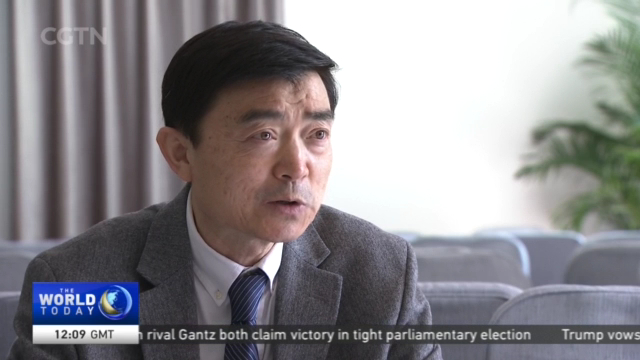
While air pollution is blamed for a whole host of health problems, a report out Wednesday shows that China's air continues to get better. The Center for Statistical Science at Peking University released a study looking at the air quality of 45 Chinese cities. The report showed that sulfur dioxide levels were down, in some cities as much as 50 percent from five years ago. Beijing's numbers are now on par with most developed countries. The study also found that the average concentration of PM2.5 was down about 20 percent across the surveyed areas. Experts say it's due in large part to the Chinese government implementing air quality control policies, like reducing coal consumption. But they also say problems remain.
CHEN SONGXI PEKING UNIVERSITY CHAIR PROFESSOR "Nitrogen Dioxide is directly responsible for ozone pollution. Previously the air quality improvement was driven by a drop in sulfur dioxide. The next step, I feel, is reducing Nitrogen Dioxide to further decrease the concentrations of PM2.5, PM10, and ozone. We should do more to manage vehicle emissions or come up with new solutions that can effectively reduce nitrogen dioxide levels."