
Tech & Sci
20:50, 21-Feb-2018
The Philippines’ frontliners vs. fake news
 ["china"]
Share







Copied
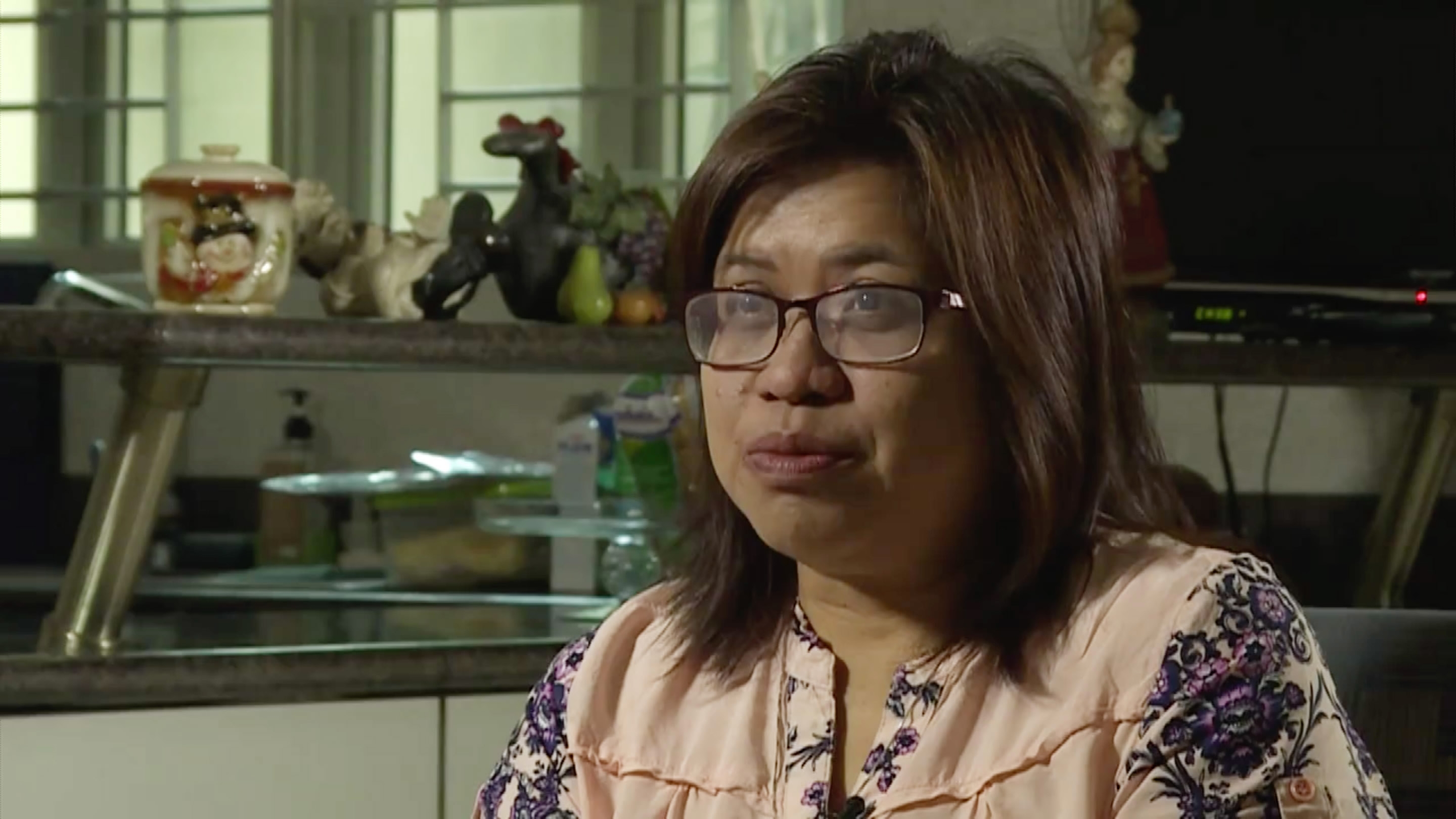
These days 38-year-old law student Jover Laurio never goes out alone anymore, or maybe it’s more accurate to say she can’t go out alone. Last week, on her Facebook page, she joked about going out on a date with her boyfriend – just the two of them – but her bodyguards apparently did not budge.
“Last year, I was just blogging behind the computer. That was all I was doing,” Laurio told CGTN.
In October last year, however, bloggers known to support Philippine President Rodrigo Duterte exposed her identity, meaning the blogger behind Pinoy Ako Blog could no longer be anonymous.
Jover Laurio /CGTN Photo
Jover Laurio /CGTN Photo
That came with a price.
Pinoy Ako Blog, while known to fight fake news with so-called “resibos” or proof of statements, media reports, and documents, is also a fierce critic of the Duterte government and its allies. Laurio has also been accused of being biased for the political opposition. Getting bashed comes with the territory, she says, but now she’s learning, so are death threats.
“Someone visited me pretending to be from the telecommunications company Smart, asking for information about me and all. So I needed to move,” Laurio said.
It’s also the reason she has been provided with bodyguards by a supporter.
“I inhale fear and exhale courage,” Laurio said when asked how she has been coping.
Fighting fake news – or what some define simply as misinformation, disinformation, and lies – has proven to be a risky undertaking in the Philippines. Maria Ressa, chief executive officer of the online news organization Rappler, says journalists like her get intimidated with threats of rape and death.
Her company is also in danger of getting shut down after the Securities and Exchange Commission found Rappler to have violated foreign ownership limits. This is in addition to constant attacks on the news organization’s credibility.
“Data, data, data. Shine the light,” is how Ressa said she and Rappler journalists are fighting fake news.
Fighting fake news has proven to be a risky undertaking in the Philippines. /VCG Photo
Fighting fake news has proven to be a risky undertaking in the Philippines. /VCG Photo
What they have found, after poring through roughly 13 million Facebook accounts and about 350 million comments over the past year, is that while all camps with political agenda may have spread fake news one way or another, only one side has scaled in reach and has succeeded in turning the political tide over to their favor.
A new report published by the Newton Tech4Dev Network, “Architects of Networked Disinformation: Behind the Scenes of Troll Accounts and Fake News Production in the Philippines”, takes it a step further. What researchers found was that beyond fake news propagated by notorious bloggers like Mocha Uson, who is also a Duterte administration official, there is a whole industry behind it.
“While trolling is attributed to the likes of Mocha Uson and other notorious bloggers, the real chief architects of disinformation hide in plain sight. Holding respectable day jobs as top executives in boutique ad and PR agencies, their political hustles on the side – undisclosed and unregulated – are an open industry secret," Jonathan Corpus Ong and Jason Cabanes, authors of the study, wrote in an article.
Trixie Cruz-Angeles, the social media strategist at the Presidential Communications Operations Office, denies hiring trolls and says pro-Duterte bloggers do what they do because of their love and admiration for the president.
She also argues that whatever Uson, who heads the Duterte’s social media office, writes in her blog is her opinion and cannot be construed as information released by her office. But Cruz-Angeles sees nothing wrong with how the Duterte political machinery has used the Internet to win the hearts of many Filipinos.

Trixie Cruz-Angeles, the social media strategist at the Presidential Communications Operations Office /CGTN Photo
Trixie Cruz-Angeles, the social media strategist at the Presidential Communications Operations Office /CGTN Photo
“Propaganda is information that gives a slant towards the sitting government or the administration. Let’s not kid ourselves into thinking that we’re not allowed to do that,” Cruz-Angeles told CGTN.
Some lawmakers may not agree.
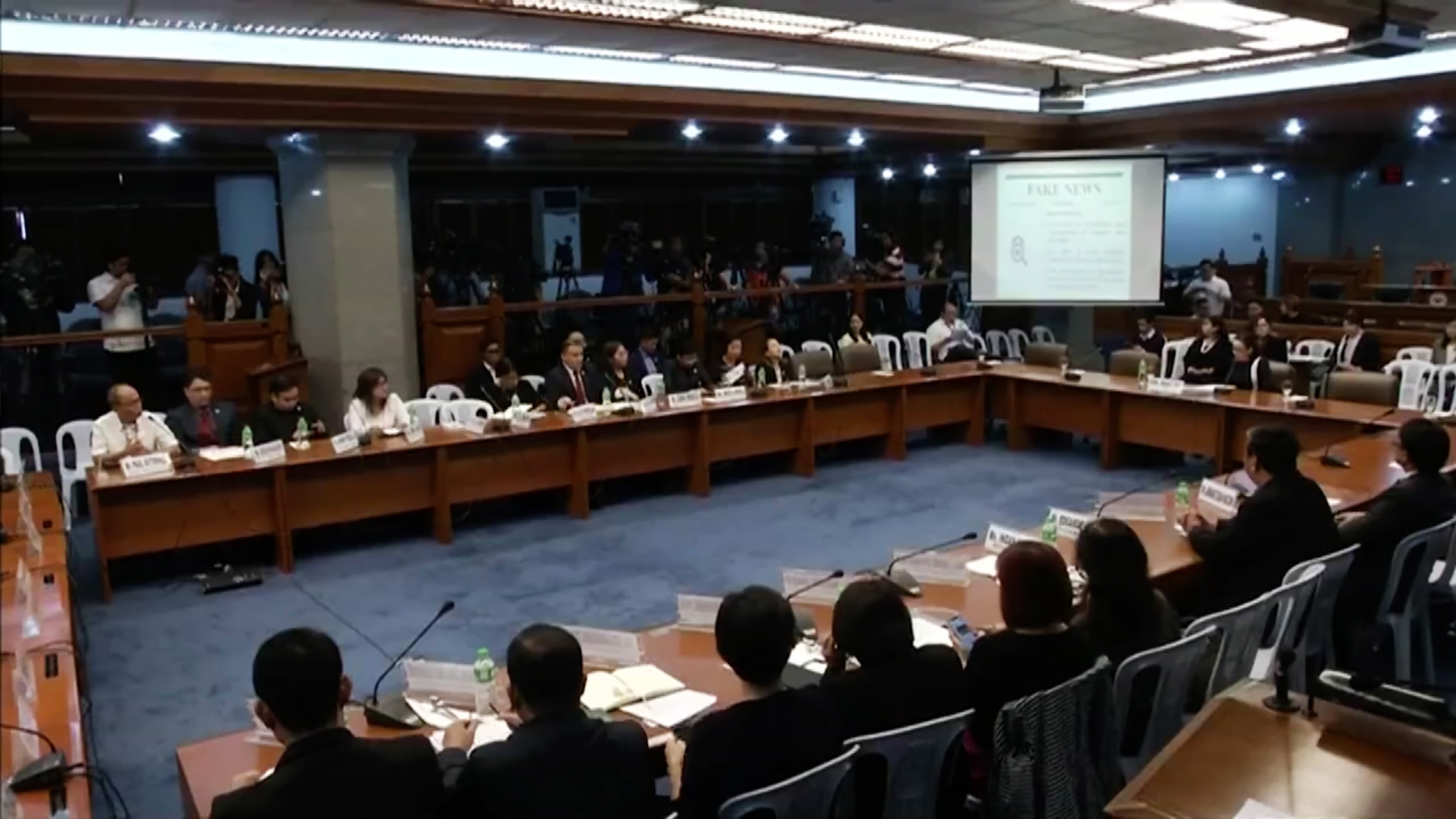
Grace Poe, chair of the Senate Committee on Public Information and Mass Media, has filed a bill that would penalize public officials who peddle fake news.
“I believe that this divisive and destructive phenomenon can only be addressed by a cocktail of solutions, the most potent of which is through an educated and vigilant citizenry, and a government that must cease to be the greatest enabler of manufactured information,” said Poe in one the Senate hearings on fake news.
Media organizations have taken it upon themselves to educate the public on how to spot fake news. For instance, GMA Network, one of the leading Philippine broadcasters, recently launched an online program called “Fact or Fake”. Every week, the show’s host, Joseph Morong, and his team of researchers and producers, go through potentially fake stories and show viewers why they are fake and what the real score is.
“We want to highlight the process by which we arrive at truth because that’s what’s lacking on the other side. Lies can easily be manufactured,” Morong told CGTN.