
19:09, 01-Jul-2019
Camel Herding In Inner Mongolia: CGTN correspondent witnesses rare camel birth
Updated
16:58, 09-Jul-2019

Share






Copied
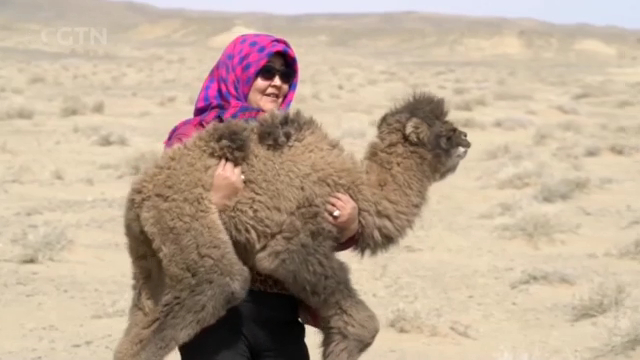
Let's journey to the far reaches of China's northern Inner Mongolia, where our correspondent Tianran He attempts to master the art of raising camels. Along the way, he discovers just how IMPORTANT camels continue to be for the survival of the PEOPLE living in this desert region.
Located among the deserts of north China's Inner Mongolia is Alashan Right Banner. It's home to 60,000 Bactrian camels, earning this place the moniker of "Camel Town". Here, the land is all but impossible to farm, and so for thousands of years, the locals have raised camels for a living. We've come during their busiest time of year – calving season.
MENGGENQIMUGE CAMEL HERDER "A pregnant camel will wander off alone to find a deep gully in which to give birth. It won't give birth in the open desert."
"It needs to find a safe spot."
"That's right."
"Oh my god, yeah, there is a little camel right there!"
In fact, there are two newborn calves, although we must approach cautiously in case their mothers lash out at us.
"I didn't expect a newborn calf to be so big!"
"It's a girl."
For camel herders, each calf is a new addition to their family. They treat them as they would a beloved pet, stroking and kissing them to get the calves accustomed to human touch. Normally, camels will remain in the desert for two weeks after giving birth, but this leaves the calf vulnerable to wolves and other desert predators, so we need to bring them back to the pen.
TIANRAN HE ALASHAN RIGHT BANNER "It's okay, it's okay. Ow! This little camel's heart is absolutely racing. I mean, you would be too if these random strangers showed up to take you home after you've just been born. It's a good workout. Ow! It's okay, it's okay. Poor baby."
Understandably, the mothers aren't so keen on us taking away their calves. Camels form strong bonds with their offspring, who stay with their mothers for 3 to 5 years until they reach sexual maturity and can have calves of their own.
"Successful mission. We got the little ones back home. Phew."
In the past, camels were used as pack animals, but these days they're increasingly kept for their milk. Unlike dairy cows, a calf has to suckle first before the mother camel will lactate. Contrary to popular opinion, camels are highly intelligent, emotional animals. It's believed that like humans, they too can shed emotional tears – especially if their calf should die. Proof that there's nothing as strong as a mother's love. Tianran He, CGTN.