
21:17, 28-Mar-2019
Tibet Development: Grand ceremony celebrates 60th anniversary of democratic reform
Updated
21:10, 31-Mar-2019
 []
[]
Share







Copied
03:01
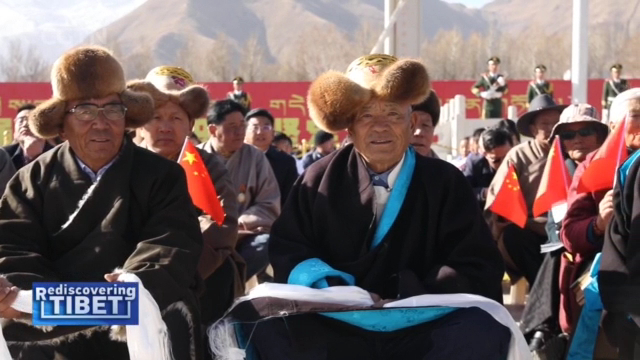
Thursday marks the 60th anniversary of democratic reform in Tibet Autonomous Region that abolished ruthless theocracy and serfdom. A grand ceremony was held in Tibet's capital city of Lhasa, with locals from all walks of life in attendance. CGTN's Yang Jinghao reports.
A grand ceremony in the plateau city of Lhasa. Thousands of local Tibetans gather in front of the Potala Palace, the landmark of Tibet, as the region celebrates the 60th anniversary of its democratic reform.
PADRUP TIBETAN RESIDENT "I'm very excited to be here today. Great changes have taken place in our hometown during the past 60 years, which are obvious to all."
During the gathering, Tibetans from different walks of life, including those that experienced darker times decades ago, shared the social progress they have witnessed over the years.
LOBSANG PHUNTSOK TIBETAN RESIDENT "In old Tibet, my family worked like cattle for the aristocrats. We didn't have enough food to eat and clothing to put on, and were frequently abused by serf owners. Since 1959, however, our lives have been improved by leaps and bounds. Now we have our own house, clean drinkable water and other daily necessities."
Through democratic reform, feudal serfdom under theocracy in Tibet was completely abolished, with about 1 million serfs regaining freedom.
Wu Yingjie, the Communist Party Chief of Tibet, reviewed the accomplishments made since the reform, from people's livelihoods to infrastructure improvements, from industrial development to ecological protection and underlines the improved well-being.
WU YINGJIE, PARTY SECRETARY TIBET AUTONOMOUS REGION "People's incomes have been steadily increasing, with their lives getting better. What they pursue now are not just simple living supplies. Stuff like cars, laptops, high-definition TVs and smartphones are not rarities anymore. More than 80 percent of impoverished people have gotten out of poverty."
While drawing a blueprint for the overall future of development, in particular the economy, Wu also noted that the region will continue to guard against and crack down on all kinds of infiltration and sabotage activities to ensure lasting peace in Tibet.
YANG JINGHAO LHASA "As a border region with a large area, Tibet's development is vital to China's development as a whole. As local government officials say, the achievements over the past six decades have laid a good foundation, but more challenges lie ahead. For example, how to continuously improve people's livelihoods and ecological environments. All of these call for more effort from both government and local Tibetans. YJH, CGTN, Lhasa, Tibet Autonomous Region."