
14:07, 08-Jul-2019
Plants and Their Stories: Documentary traces journey of Chinese plants
Updated
16:49, 09-Jul-2019

Share






Copied
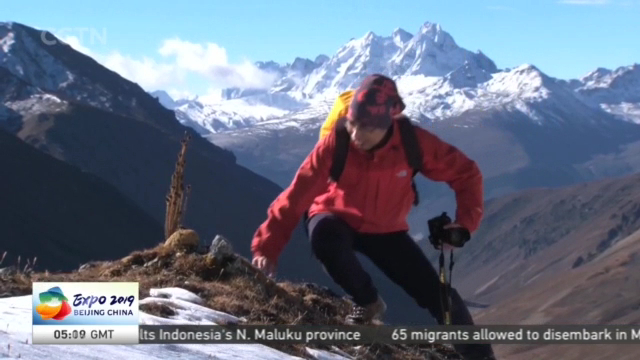
The International Horticultural Expo is underway in Beijing. It's a stage for countries from around the world. Many plants associated with a certain country or society actually have their earliest roots in China. There are over 300-thousand known species of plants in the world. 10 percent grow in China. A new documentary takes a unique look at how they have shaped so much of our world and their global travels. Here's CGTN reporter Cui Hui'ao.
China's first documentary telling stories of Chinese plants…and their connection to the world. Director Li Chengcai says he was inspired to create the series by French philosopher Jean-Jacques Rousseau, who spent the last few years of his life studying plants.
LI CHENGCAI, DIRECTOR THE JOURNEY OF CHINESE PLANTS "Many people take for granted what nature has given us, and never think of asking where a bowl of rice comes from, where tea comes from, and how do we end up having products like silk. I started paying attention to these questions after reading Rousseau's book on botany.
After two years of production, this documentary aims to remind people it is plants that have shaped human civilizations, giving birth to languages, aestheticism, and cultural exchanges.
For instance, the now famous kiwifruit was actually discovered in 12th century China, and then spread to New Zealand and was cultivated there 8 centuries later.
And rice paddy, something now being grown in more than 100 countries, was first domesticated in China nearly 10 thousand years ago.
ZHOU YE, DIRECTOR THE JOURNEY OF CHINESE PLANTS "This documentary is not boasting about the greatness of Chinese plants, but rather showing how the internal vitality of how an indigenous plant can clash with a foreign civilization and science, thus adding more value to the world."
Following the footprints of Chinese plants, Li's team has traveled from 27 provinces in China to 7 countries all over the world.
Tough filming conditions have brought back some magnificent footage, such as flowers high in the mountains.
Moreover, it has given crew members a different perspective about plants and nature.
LI CHENGCAI, DIRECTOR THE JOURNEY OF CHINESE PLANTS "You develop a sense of modesty and reverence toward nature. When you start to know a flower or a grass, you see vulnerability in their lives and begin to reflect how we should treat plants."
Li says plants arrived on this planet much earlier than human beings. While the history of interaction has shown plants can be domesticated, humans are advised never to tame plants - a message that this documentary tries to point out. Cui Hui'ao, CGTN, Beijing.