
13:34, 25-Mar-2019
Reshaping China's Economy: Does the slowdown matter?
Updated
13:30, 28-Mar-2019
 []
[]
Share







Copied
06:35
The growth of China's economy has reached its lowest point in nearly three decades. And it might continue to slide. Is China's four-decade miracle coming to an end? In the past month, CGTN reporter Ge Yunfei traveled across the country to study the actual situation on the ground. Now let's see the first episode of the special series - Reshaping China's Economy.
The world's once fastest-ever growing economy is slowing down. And part of the reason can be seen up in the clear blue skies--above Beijing.
People in the Chinese capital are breathing some of the cleanest air in decades. But five years ago, the thick, dusty, and toxic smog choked the city for much of the year, especially in the winter.
To find why this drastic change in Beijing's hue happened, I went to a place 200 kilometers away from the city. A rusty abandoned iron mill now full of wild-growing weeds.
GE YUNFEI HEBEI PROVINCE "The blast furnace under my feet can produce 680 thousand tons of iron every year at its peak. But in 2016, the fire died out and everything here stopped."
This deserted iron factory is located in Hebei, a northern province that accounts for a quarter of China's total steel production.
Fan Chao was the manager of the iron mill. He told me the factory used to have 600 workers but still struggled to survive.
FAN CHAO, MANAGER ZHAOCHUAN IRON FACTORY "It was hard to make a profit. Too much iron and steel were produced. Then the government launched plans to reduce emissions, overcapacity, and energy usage. So in 2016, we shut down the factory at the request of the government."
For local officials, shutting down the factory was not an easy choice to make. It meant a severe loss for the local economy.
In fact, tens of thousands of polluting firms have been shut down across the country in the past few years.
In the past three years, the steel production capacity that China reduced almost equals the annual production of Japan and Germany combined.
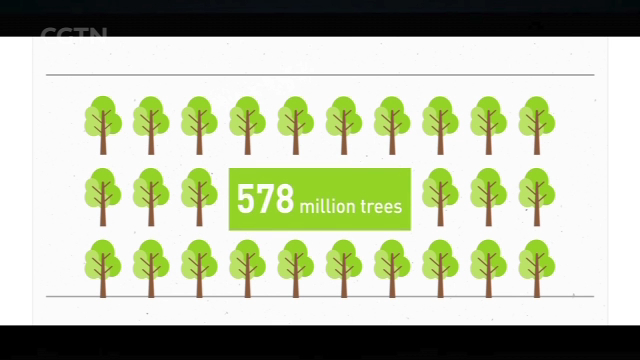
And from 2011 to 2015, the reduction of China's paper-making capacity saved nearly 600 million trees on earth. And the slashed coal production cut 11.4 trillion tons of carbon dioxide emissions.
For the central government, this sweeping campaign runs the risk of decelerating its economy.
In 2018, China's growth rate was only 6.6 percent, the lowest since 1980.
JEREMY STEVENS, CHIEF CHINA ECONOMIST STANDARD BANK "Part of the reason is a direct consequence of policy choice that has been made since 2016. Certainly, policies have intentionally reined in some of the drivers of growth from the past. "
Exports of smartphones, clothes, toys and investment in railways, skyscrapers and bridges, the old growth model made China rise from poverty to become the world's second-largest economy.
But as the old engines of growth cannot generate enough power, China's slowing economy worries many.
It seems that China's miracle may be running out of steam.
HARLEY SEYEDIN, PRESIDENT SOUTH CHINA AMERICAN CHAMBER OF COMMERCE "I don't see this is the beginning, the middle or the end of China. If you are looking at a much larger base from which the economy is growing."
And for China, the 6.6 percent growth is the slowest in nearly three decades. But it's still a stunning growth rate if compared with many other major economies around the world.
PROF. JOHN GONG UNIVERSITY OF INTERNATIONAL BUSINESS & ECONOMICS "There's no way this country can keep going above six percent for a decade. It's not gonna happen. I mean you are talking about six percent growth, it's like creating another economy every year. Right? So how can you do that? "
Now let's compare two years, 2007 and 2018.
In 2007, China enjoyed a booming GDP growth, more than double the rate of last year. Yet the total GDP in 2007 was only one-fourth of the economic output in 2018.
The increase in China's GDP in 2018 was 1.46 trillion US dollars, almost the size of Australia's entire economy. It's like China is generating an Australian sized economy every year.
In 2007, the increase in China's economy was only 0.8 trillion dollars.
The Chinese government has vowed to transform its economy to boost the service sector and high-end manufacturing, focusing more on efficiency and innovation.
But that transformation takes time. In the latest government report, the country has set the growth target for 2019 at 6-6.5 percent, a new low.
JEREMY STEVENS, CHIEF CHINA ECONOMIST STANDARD BANK "I mean in reality, the Chinese leadership are doing all the right things at this time and have been for the last couple of years."
"Really?"
"Yeah. I would argue that they are and then you know maybe people are impatient in terms of, you know, I want this priority to be the number one and I want it to happen tomorrow. But in reality, this is a dynamic economy. And so they always go gradually."
GE YUNFEI HEBEI PROVINCE "This deserted factory is just one example of China's determination to restructure its economy, even at the cost of its GDP growth rate."
While the old model is phasing out, new hope is rising, especially along the southern coast of China.
In the next episode, I will head south to the country's richest and most populated region, Guangdong Province, to see how people there are handling the economic transformation.
Leave, die, or change. Ge Yunfei,CGTN.