
16:05, 08-Jun-2019
World Oceans Day: Man-made issues put oceans under threat
Updated
00:01, 10-Jun-2019
 []
[]
Share







Copied
03:26
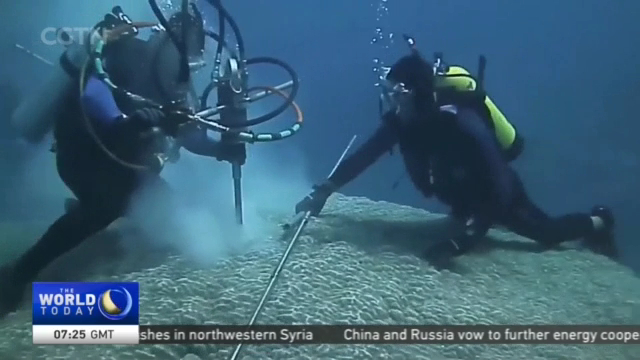
Overfishing, global warming, pollution...They've all been described as "ticking time bombs" that could irreversibly damage our oceans, destroy livelihood and forever alter our ecosystem. As we mark World Oceans Day today, our UN correspondent in New York Liling Tan looks at how these man-made issues are putting our oceans under threat.
November 2018 in Indonesia, a dead whale washes ashore with six kilograms of plastic in its stomach. In the Philippines this past March, another was found with a staggering 40 kilograms of plastic.
JOHN SPARKS, CURATOR DEPARTMENT OF ICHTHYOLOGY AMERICAN MUSEUM OF NATURAL HISTORY "Whether it's a baleen whale or sperm whale, they're incorporating all these plastics, and you hear about dolphins brought in. They're just full of plastics in their stomach. They just get accumulated over time and they can't get rid of it."
Oil, sludge, dirt and other types of trash and chemicals have also made their way into the seas over the decades, affecting even the most basic, microscopic organisms.
JOHN SPARKS, CURATOR DEPARTMENT OF ICHTHYOLOGYAMERICAN MUSEUM OF NATURAL HISTORY "The phytoplankton, for example, produce anywhere from 50 to 80 percent of the oxygen we breathe, so to lose them is very detrimental to life. Pollution can affect plankton communities. So plankton depend on the phytoplankton, the bigger creatures - fish, marine mammals depend on those. So the whole food chain could crash."
But if advances in industry have harmed the ocean, at least modern technology is helping scientists study the impact.
LILING TAN NEW YORK "This is a simple model of the Triton-1650 submersible that can descend 500 meters into the ocean. There are several models today that can go much, much deeper than that, giving us unprecedented insight into our oceans and the deep seas."
This has provided clues into how higher carbon dioxide levels lead to greater acidity in the ocean, putting marine habitats like coral reefs under immense stress.
BRADDOCK LINSLEY, RESEARCH PROFESSOR BIOLOGY AND PALEO ENVIRONMENT LAMONT-DOHERTY EARTH OBSERVATORY "So the carbon dioxide that we're talking about is coming from fossil fuel combustions. That's all anthropogenic."
Braddock Linsley, a geologist at Columbia University's Lamont-Doherty Earth Observatory, studies coral skeletons to chart changes in ocean chemistry and temperature patterns.
BRADDOCK LINSLEY, RESEARCH PROFESSOR BIOLOGY AND PALEO ENVIRONMENT LAMONT-DOHERTY EARTH OBSERVATORY "I've been collecting corals like this since 1994, so not that long, but already seen in my different trips I've seen degradation in some of the reefs I've been back to over that relatively short time period. It has to do with the warming water and the bleaching events that are stressing out the corals and may be a threat from acidification."
Already hammered by pollution, rising temperatures and CO2 levels, overfishing is also endangering ocean ecosystems. The Environmental Defense Fund has warned that without sustainable management, fisheries could face collapse, triggering a global food crisis.
The United Nations says work is underway to undo the damage through conservation efforts, sustainable management and international agreements, but with fossil fuels and plastic production still rampant, the question is can the world turn the tide in time.
Liling Tan, CGTN, New York.