
19:30, 07-Mar-2019
Brazil Carnival: Carnival promotes local musicians globally
Updated
19:20, 10-Mar-2019
 []
[]
Share







Copied
03:51
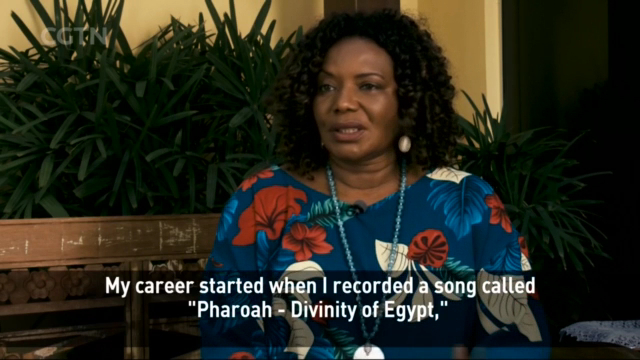
In Rio de Janerio, tens of thousands of spectators are dancing to Brazilian music during carnival. CGTN talked to one singer who had the opportunity to promote her style of music globally.
MARGARETH MENEZES MUSICIAN "I am Margareth Menezes. I'm a Bahian artist with a career spanning over 30 years. My career started when I recorded a song called 'Pharaoh - Divinity of Egypt,' by composer Luciano Gomes. It was the song that made me famous and the first time my music was heard on the radio.
When I was 27 years old, David Byrne, the leader of Talking Heads, the American band, made an album called Rei Momo, King Momo, and for that project David - who is always researching and innovating and does it until this day - he chose me among many artists to be part of that project. We did 70 shows all over the world, and I was the first person that appeared on the stage.
This way we have of expressing ourselves here, this drumming and rhythm, is tied to our Afro-Brazilian roots-to the people who came from Africa to Brazil. It is part of our formation. It's in our blood, this way of expressing ourselves, part of our DNA I would say this memory.
Bahia is the birthplace of Brazilian Music. The first school of music was founded here by John VI (John the Sixth), the King of Portugal and Brazil. The first recorded long play in the country was of a Bahian singer, so this place has had that mission of leading the music scene.
This musical language that we use today is not a pure musical form. It's not African, but Africa is there. If you go to Africa, you will see the difference. Our music has several contemporary elements but the way we communicate is fantastic. The foundation is African, but the way we transmit it is absolutely contemporary.
I witnessed how the majority of the Black people from Salvador, of my generation, of how this musical work was planted by the Afro-Brazilian musical groups here in Bahia. It was not easy, and it is not easy today, because it is still hard to get help and sponsorships.
But there was a victory when the Afro bands in the 70's were formed. It helped change the way black people from Bahia and from all over Brazil saw themselves, because we had a reference point, and freedom, in the way we dressed, in the way we expressed ourselves.
It's great to sing in Bahia's Carnival, in Salvador which is my town, it's here where people really know me. And the way they treat me is very interesting. I'm home, and all this affection is so nice and to see that the music is being understood, that is really my purpose as an artist, being understood.
About being born here, well that is a fundamental reason for why I am who I am. If had been born somewhere else it would be different. I am what I am because I was born here in Bahia. I can't talk about how would be if I was from somewhere else because our roots are very important to understand who we are, because if we don't have a cultural memory we don't have a history and don't have a future."