
21:52, 21-Jan-2019
World Economic Forum 2019: Participant profiles at this year's Davos
Updated
21:50, 23-Jan-2019
 []
[]
Share






Copied
01:47
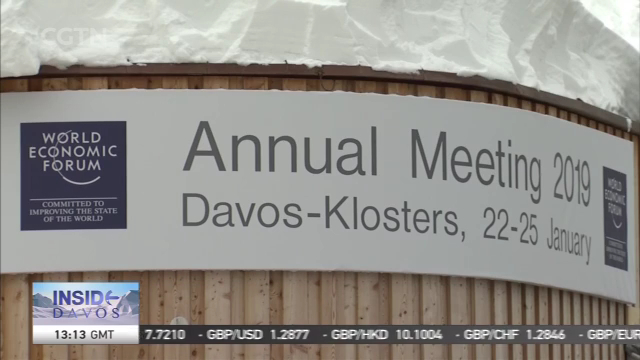
Around 3,000 participants from all over the world would converge at Davos. They are from every sphere of influence: business, government, civil society, academia, arts and culture, and media. Our reporter Yang Chengxi examines how the demographics of the participants have changed over the past years.
The World Economic Forum is one of the foremost high-level gatherings of global elites. The biggest contingents come from Western Europe and North America with the US having the biggest delegation every year. But participation from Asia has increased in recent years. Chinese president Xi Jinping opened the 2017 annual meeting, and the People's Republic of China has sent more and more representatives since.
The forum also reflects the increasing gender equality in senior management across world sectors, as the percentage of female participants has risen steadily.
Private sector participants in Davos represent more than 20 industries. In the past, media and information have taken the top spot, yet since 2017 top honors have gone to the banking and finance industries. IT also has significant representation, propelled by technology and the concept of the fourth industrial revolution, which remain consistent themes throughout the Davos annual meetings.
The theme this year focuses on globalization. Heads of major international institutions like the United Nations, the WTO, the World Bank and so on have all gathered in this Swiss town.
YANG CHENGXI DAVOS, SWITZERLAND "Many experts believe that public frustration over globalization and institutions have led to a surge in populism and nationalism worldwide. Talks on the future of globalization will be a major part of discussions at Davos 2019."