
Opinions
18:46, 12-Apr-2018
Opinion: Western media should look beneath the 'optics'
 ["china","north america"]
Share







Copied
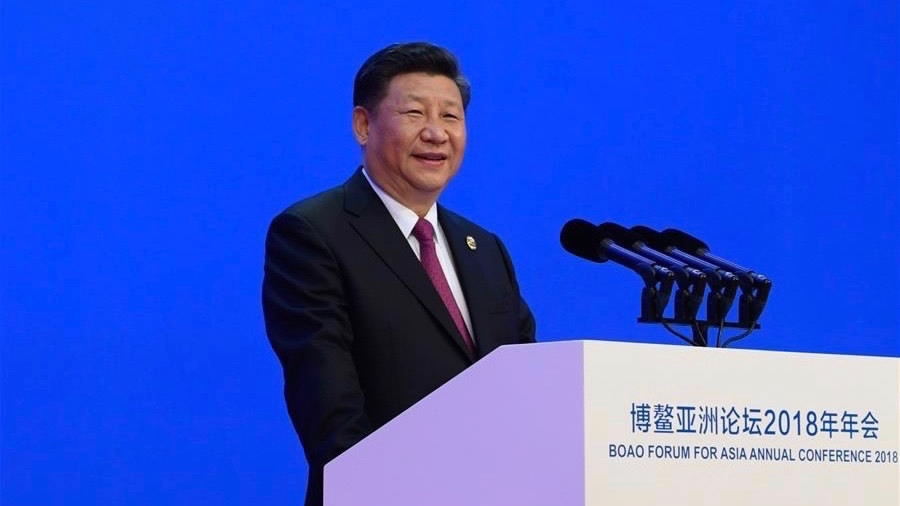
Many mainstream Western media outlets are jubilant these days over Chinese President Xi Jinping's pledge to further open up China's economy. They’ve interpreted his remarks to be an overture to Donald Trump’s trade provocations, and a signal in allaying the fears of a trade war.
At the opening ceremony of the Boao Forum for Asia on Tuesday, Xi rolled out a blueprint of China's further reform and opening-up measures, including reinforcing intellectual property protection and lowering tariffs on auto imports. Trump made a swift response on Twitter, thanking Xi for his "kind words on tariffs and automobile barriers... also, his enlightenment on intellectual property and technology transfers." A host of established media have also started to associate these upbeat proclamations with attempts to avert the looming US-China trade war.
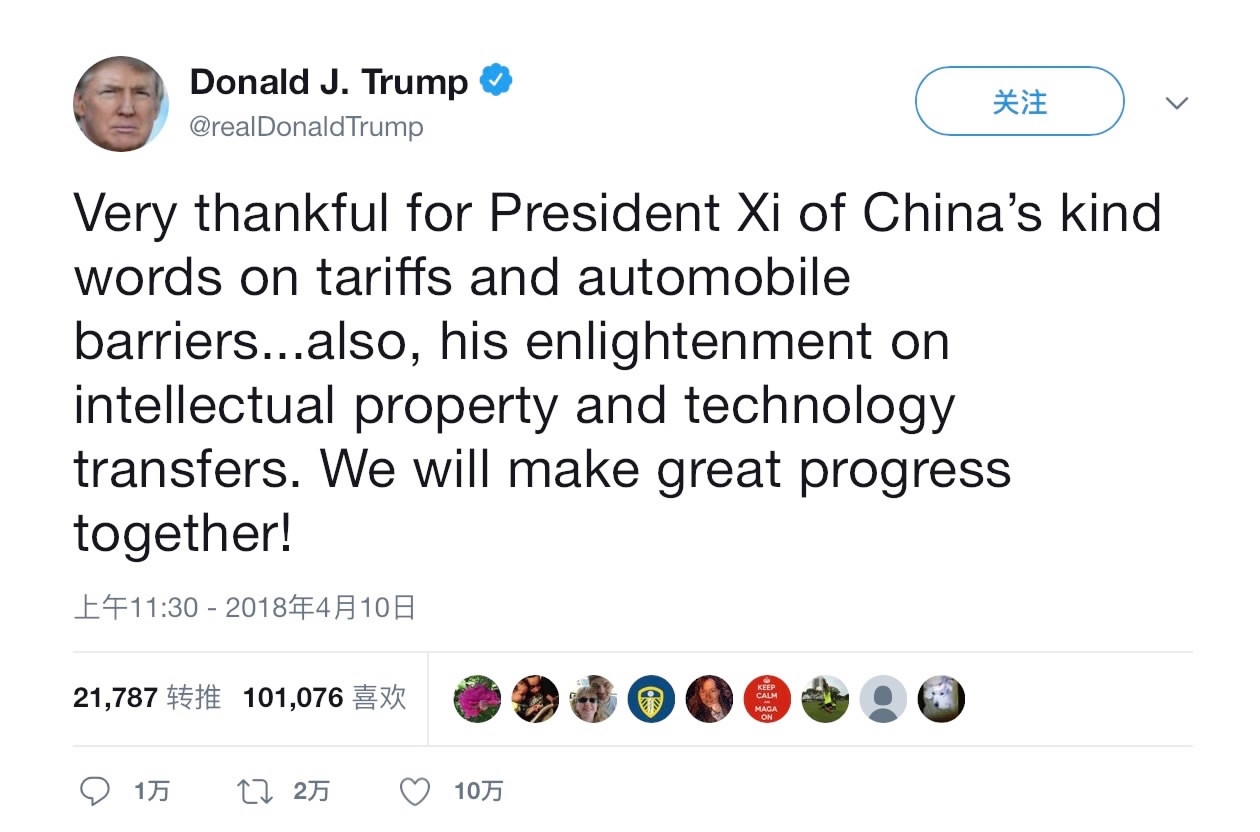
Trump thanks Xi on his Twitter post. /Twitter screenshot
Trump thanks Xi on his Twitter post. /Twitter screenshot
In a Wednesday piece entitled "China president’s conciliatory trade gesture raises optimism," the Associated Press expressed the hope that Xi's vow "will ease a trade dispute with Washington." In another article, it stated that China made "possible concessions aimed at defusing a worsening dispute with Washington over trade and technology." And one of the Time magazine's top stories focused on the so-called "trade concession," claiming it was "a conciliatory gesture, though far from surrender." The New York Times commented that the Chinese president "urges dialogues rather than confrontation" when speaking publicly for the first time after "Trump seeks tariffs." More overtly, the Forbes published an opinion piece, "Trump's tariff threats to working on China," in which the contributor directly asserted Xi "has conceded that tariffs on US cars and trucks coming into his country are too high."
These biased reports have not only made headlines across these prestigious US news organizations but even in the European and Asian press. Reuters also associated Xi's vow to open economy with "an attempt to defuse an escalating trade dispute with the United States." The Press Trust of India, the country's largest news agency, said Xi was "apparently addressing the concerns of US President Donald Trump.” Even Nikkei, one of the world's major financial newspapers, had such a headline: "Xi extends olive branch to US with 'open' markets speech."
Yes, stock markets rallied immediately after Xi's keynote speech, but that's no justification for media to cheerfully draw the arbitrary conclusion that Xi made the remarks in a move to ease the roiling trade tensions.
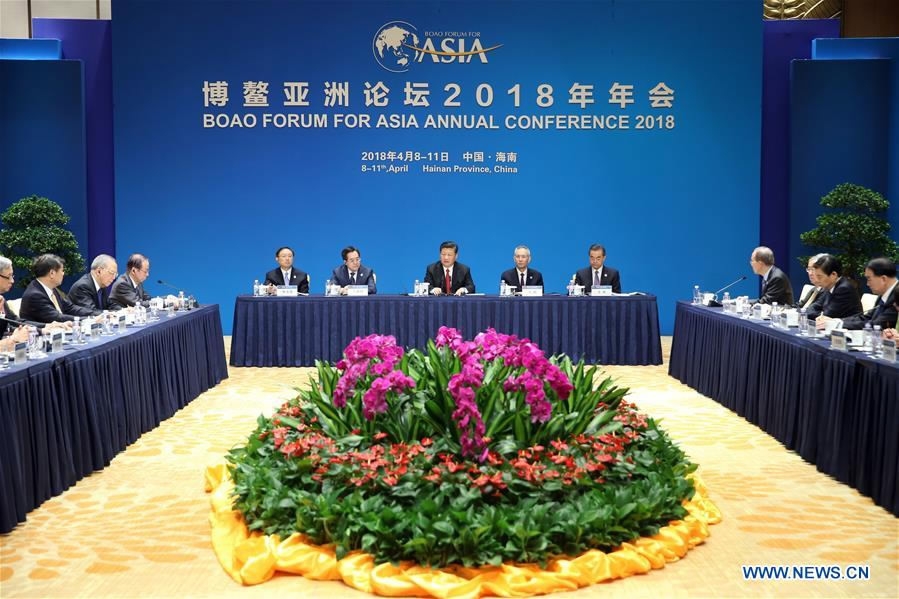
Chinese President Xi Jinping meets with incumbent and incoming members of the Board of Directors of the Boao Forum for Asia in Qionghai, south China's Hainan Province, April 11, 2018. /Xinhua Photo
Chinese President Xi Jinping meets with incumbent and incoming members of the Board of Directors of the Boao Forum for Asia in Qionghai, south China's Hainan Province, April 11, 2018. /Xinhua Photo
It's a mere coincidence. As early as last October, Xi said in the report to the 19th National Congress of the Communist Party of China that "China will not close its door to the world; we will only become more and more open." In painting the picture for the 2018 economy, leaders at China's Central Economic Work Conference last December reiterated its stance to open wider to the outside world in 2018, which marks the 40th anniversary of China's reform and opening-up policy.
Moreover, China conveyed a more articulate message back in January. Liu He, now Chinese vice premier, revealed four aspects where China was prepared to open up, including the further opening of financial, manufacturing and service sectors, protection of property rights and expansion of imports, while attending Davos as then director of the Office of the Central Leading Group for Financial and Economic Affairs.
Recent history shows that Xi's roadmap for further opening up has been prepared for months and is explicitly aimed at boosting China's development and revving up economic globalization. "It really addressed Trump's concerns," said Wang Dan, an analyst with The Economist Intelligence Unit, but it is "unwise for China to commit to anything or give out too much before securing an answer from the US."
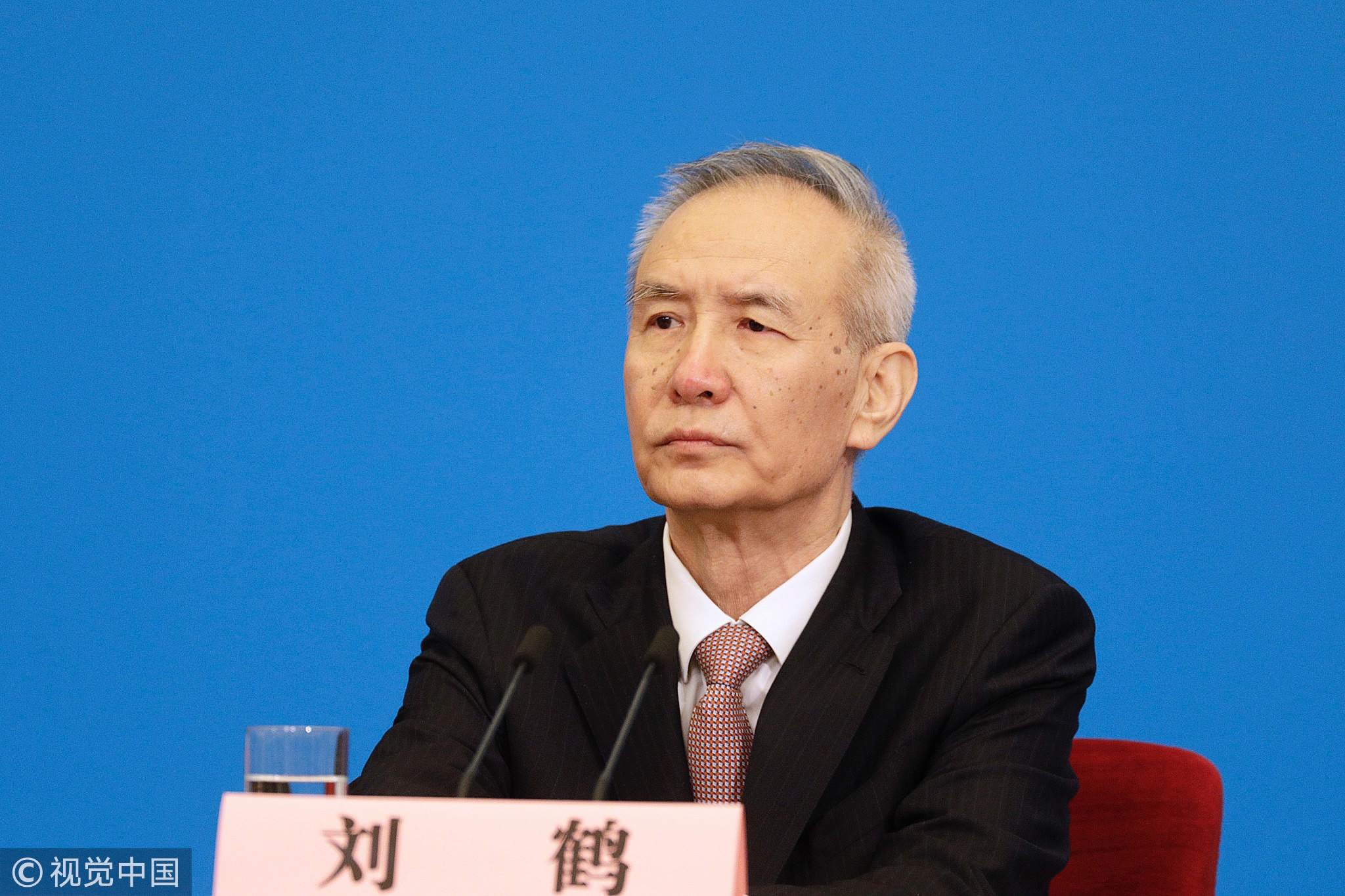
Chinese Vice Premier Liu He attends a news conference with Premier Li Keqiang, not pictured, following the closing of the First Session of the 13th National People's Congress at the Great Hall of the People in Beijing, China, March 20, 2018. /VCG Photo
Chinese Vice Premier Liu He attends a news conference with Premier Li Keqiang, not pictured, following the closing of the First Session of the 13th National People's Congress at the Great Hall of the People in Beijing, China, March 20, 2018. /VCG Photo
Beijing embraces a greater vision with these inspiring decisions, which have nothing to do with Trump's tough trade rhetoric.
China's move in the aforementioned four points, to some extent, caters to the need of its burgeoning middle class. "From our forecast, right now, only 10 percent of the Chinese population can be identified as middle class, that is 132 million. But by 2030, the figure will rise to 35 percent, that is 480 million. The big jump will open more opportunities in the service sector," Wang noted. Therefore, the consumer market will present a rosy picture, and the financial and service industries will be the most promising drivers of the country's economic growth in the next decade.
This will not only improve the well-being of the staggeringly large Chinese population but also create jobs for other countries through candid cooperation.
We have been used to Trump's wee-hour Twitter storm but have not expected reputable media outlets to make such misinterpretations. As the most crucial part of the Fourth Estate, the press is expected to exert significant influence on society by guiding public opinion in an informed way.
In this case, they should not just analyze Xi's speech but do their due diligence and talk to policymakers from both sides. Their long-standing reputation should hold them to a higher standard of accountability, rather than rush to superficial conclusions.
Look beneath the "optics" and leave the speculation and complacent assertions to Trump's Twitter.
(The author is a reporter for CGTN Digital.)