
Enviro
22:59, 01-May-2018
Mongolians sip 'oxygen cocktails' to cope with smog
 ["china"]
Share







Copied
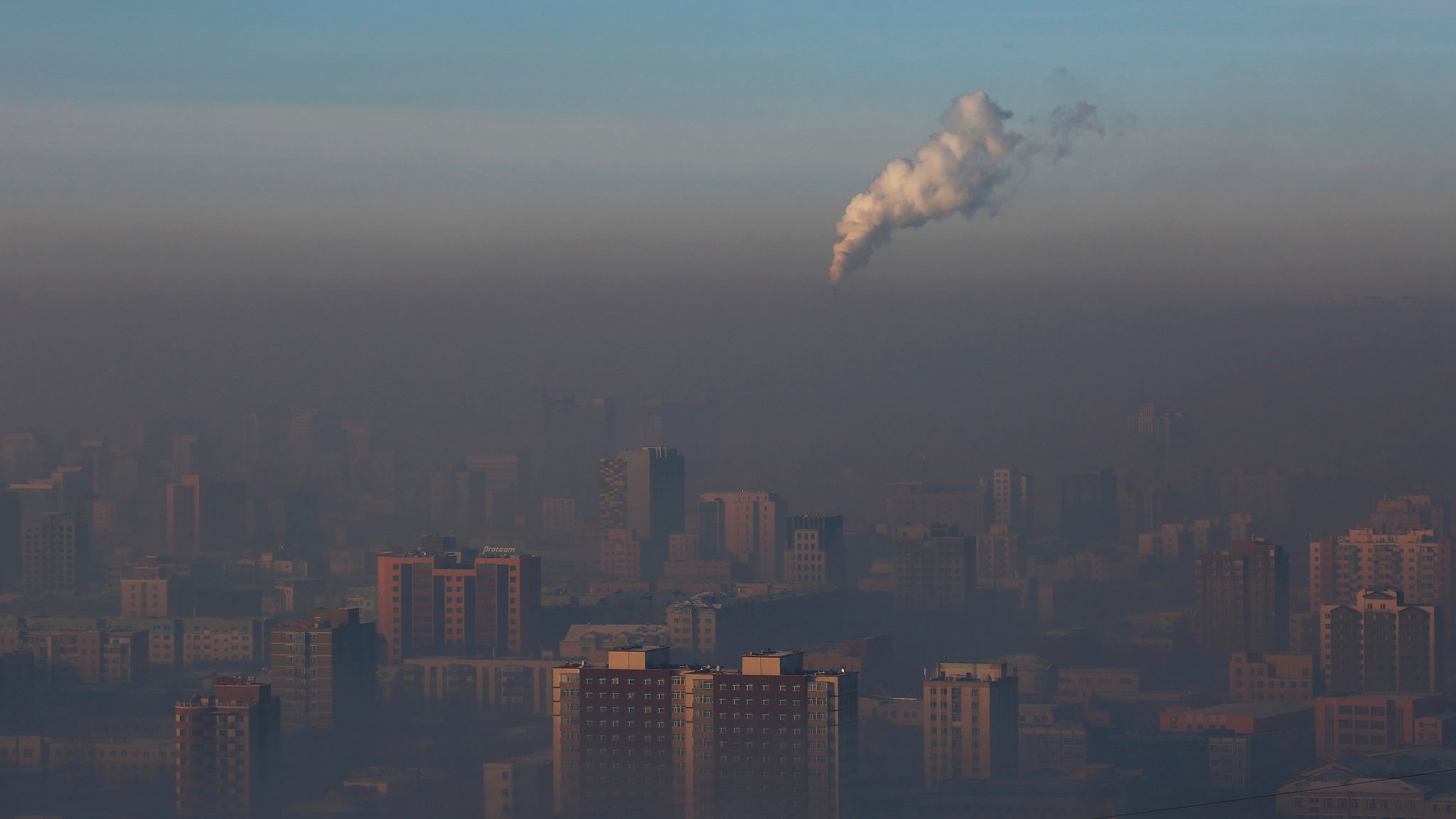
Fed up with the smog in Ulan Bator, residents have resorted to sipping "lung" tea and "oxygen cocktails" in a desperate bid to protect themselves from pollution, despite health officials saying there is no evidence they work.
Mongolia's capital topped as the world's most polluted capital in 2016, UNICEF said in a report warning of a health crisis that has put every child and pregnant woman at risk.
With residents of so-called "ger districts" using coal stoves to cook and heat their homes in the world's coldest capital, where temperatures can dip as low as -40 degrees Celsius (C), pollution has skyrocketed.
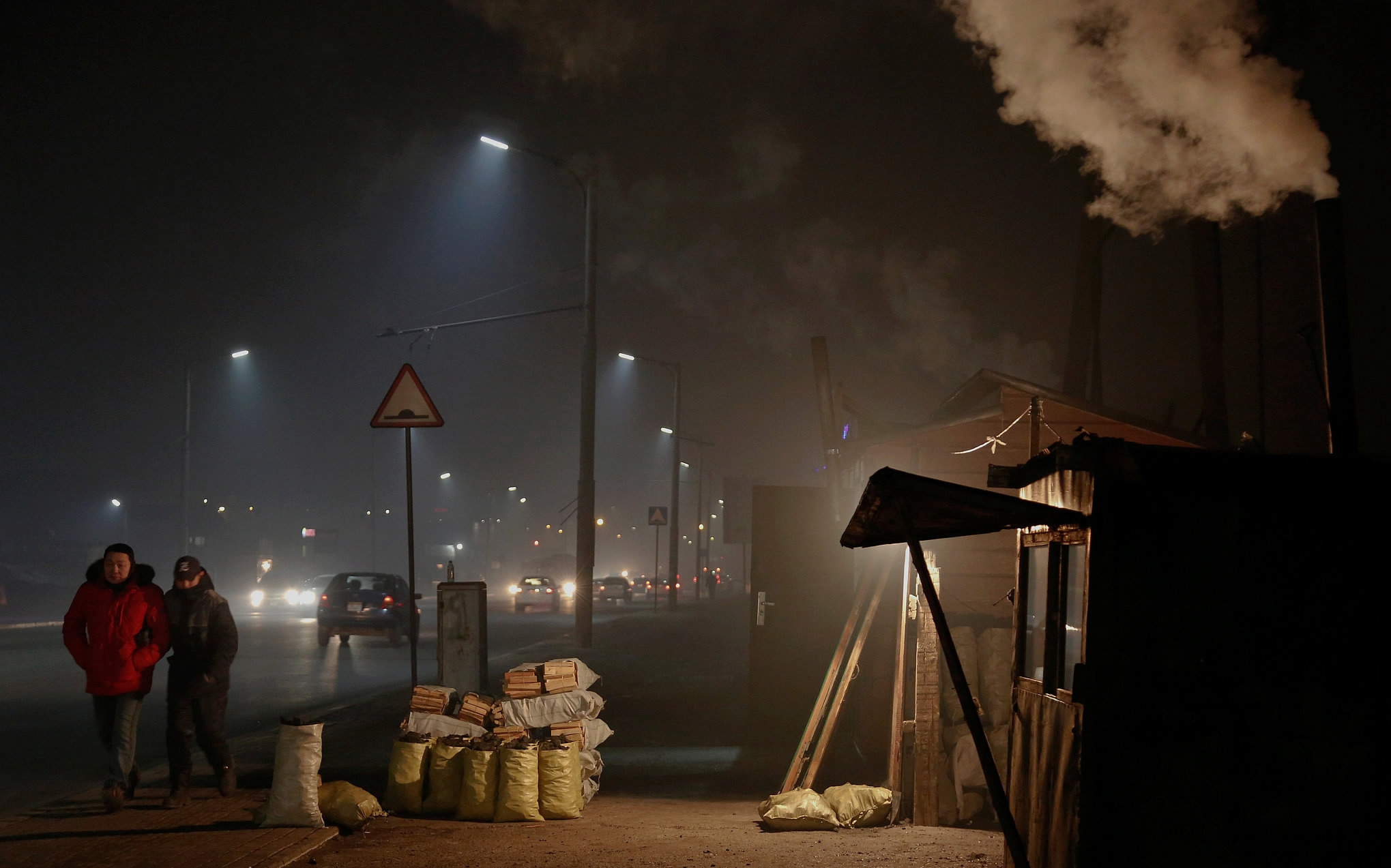
Bags of coal and wood are offered for sale in central Ulan Bator, Mongolia, Jan. 26, 2017. / VCG Photo
Bags of coal and wood are offered for sale in central Ulan Bator, Mongolia, Jan. 26, 2017. / VCG Photo
While most of the pollution comes from stoves in the gers, road transport and power plants add to the toxic mix.
On Jan. 30, air pollution here was 133 times higher than the safe limit set by the World Health Organization (WHO). UNICEF reported that cases of respiratory infections have nearly tripled and pneumonia is now the second leading cause of death for children under five.
Worried parents have held protests to force the government into taking action.
But some businesses are cashing in, even though a WHO official says there is no evidence that such anti-smog products work.
“Life is air”
Advertisements in Mongolia boast that "drinking just one oxygen cocktail is equal to a three-hour-walk in a lush forest.”
In the produce section of the State Department Store, blue cans of oxygen called "Life Is Air" are on sale for two US dollars, and promise to turn a glass of juice into a foamy and sweet "oxygen cocktail" after spraying some into a glass through a special straw.
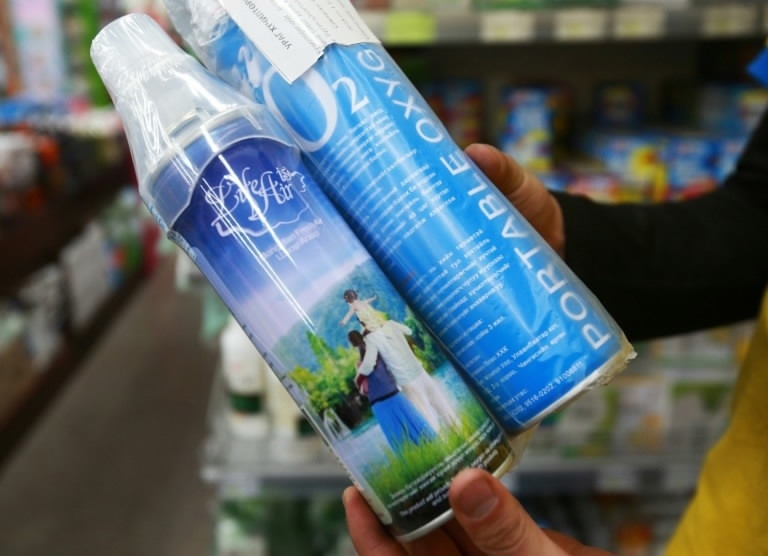
A customer buys 'oxygen cocktails' at a store in Ulan Bator. /AFP Photo
A customer buys 'oxygen cocktails' at a store in Ulan Bator. /AFP Photo
Other stores and pharmacies have oxygen cocktail machines that resemble coffee makers and can turn a juice into a frothy drink for one US dollar.
Pregnant women are among the most avid customers of the product, some saying they are following their doctor's orders.
Batbayar Munguntuul, a 34-year-old accountant and mother of three, drank oxygen cocktails when she was pregnant, but she ended up spending much more money on medicine.
"Every winter we constantly buy medicine." she said, "It has reached a point that it is like just any other grocery product that you have to buy regularly."
Like many other Mongolians, she has chosen to buy an air purifier to make sure her family breathes clean air at home. Her machine, which filters out toxic fumes, cost her 300 US dollars.
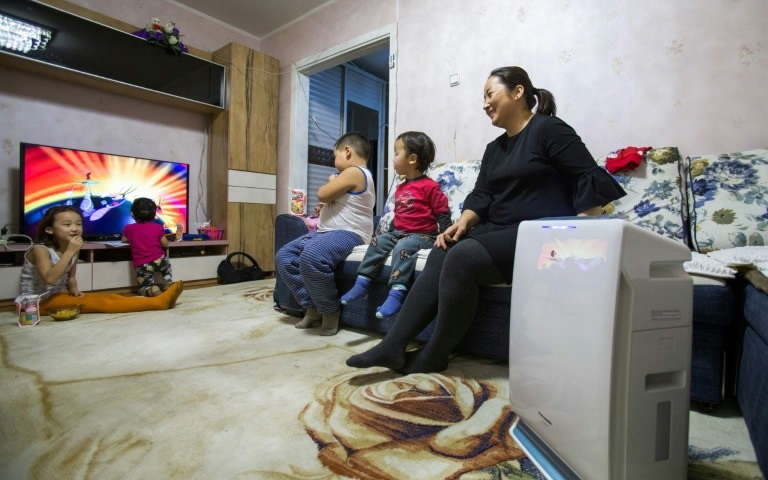
Batbayar Munguntuul sitting with her children while an air purifier runs at her home in Ulan Bator. /AFP Photo
Batbayar Munguntuul sitting with her children while an air purifier runs at her home in Ulan Bator. /AFP Photo
The average level of PM2.5 particles – which penetrate deep into the lungs – was 75 micrograms per cubic meter last year, three times the exposure recommended by the WHO for a 24-hour period.
Air pollution has been linked to asthma, bronchitis, and other long-term respiratory diseases.
Some Mongolians drink special teas named Enkhjin, Ikh Taiga, and Dr. Baatar that are claimed to clean lungs.
Dr. Baatar's CEO, Baatar Chantsaldulam, said sales surge by 20 to 30 percent during winter, when pollution tends to reach its peak.
According to Chantsaldulam, his products first take all the toxins out of the blood and then turn the toxins in the lung into mucus, and above all, tea helps boost the human immune system.
But Maria Neira, the head of the WHO's public health department, said the "real solution" to protect the lungs and the cardiovascular system was to reduce air pollution and avoid exposure to it.
"The business community will offer plenty of those solutions," Neira said, referring to the oxygen cocktails and lung teas.
"We don't have any scientific evidence whether they provide any benefit," she said.
Angry parents
Non-profit organizations such as Parents Against Smog say the government is not doing enough to reduce air pollution and argue that ordinary people should not have to suffer financially to protect their health.
Those organizations have organized several protests since 2017.
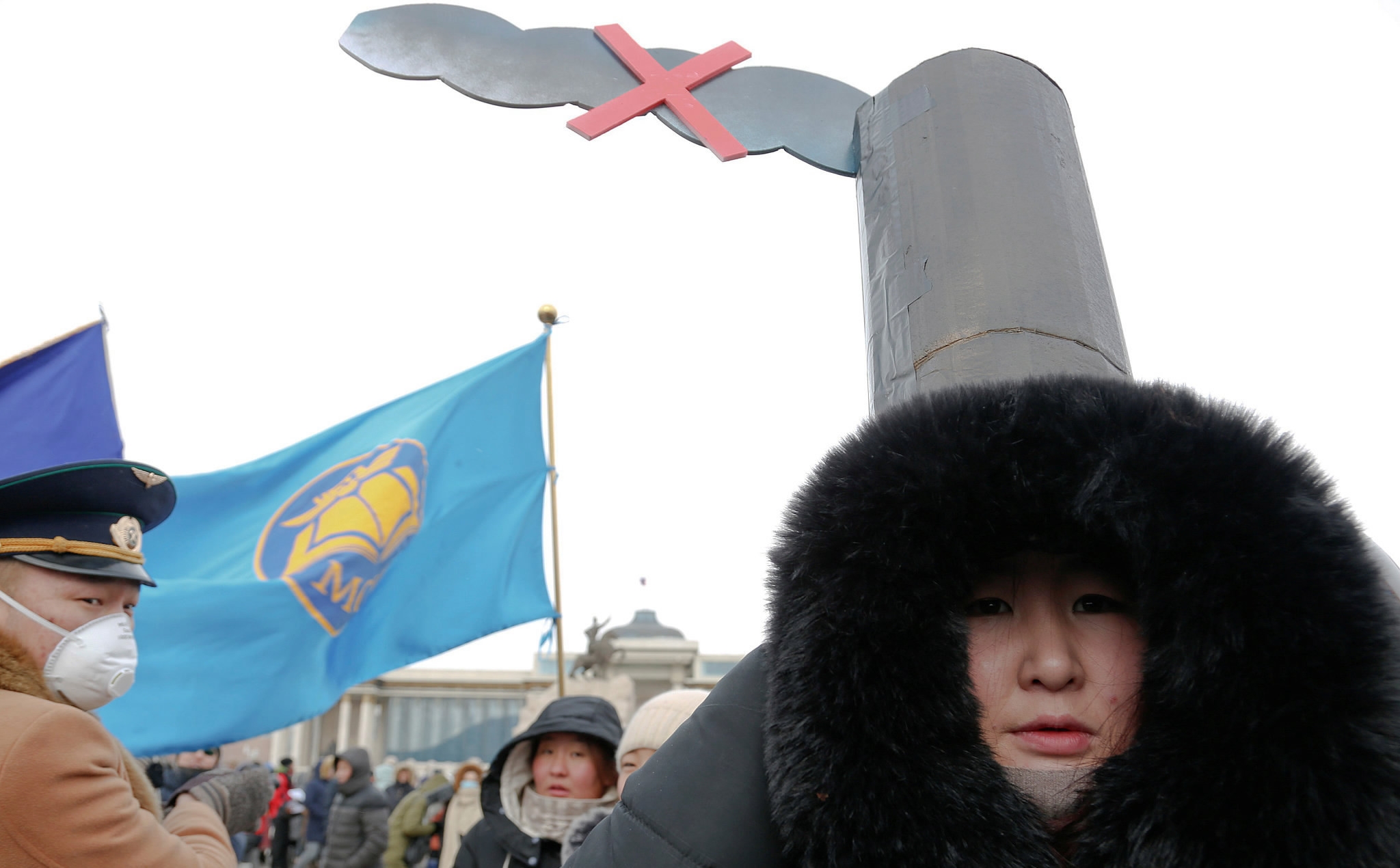
A woman wears a costume as she takes part in an anti-pollution protest in front of a government building in central Ulan Bator, Mongolia, Jan. 28, 2017. /VCG Photo
A woman wears a costume as she takes part in an anti-pollution protest in front of a government building in central Ulan Bator, Mongolia, Jan. 28, 2017. /VCG Photo
"For the past 10 years, people have known that air pollution has reached dangerous levels," Parents Against Smog coordinator Tumur Mandakhjargal said.
"However, policymakers only address the issue by talking about passing out clean stoves and clean coal."
The NGO says the government should give some 200,000 ger residents access to loans so that they can install heating insulation and replace their stoves with cleaner heaters. They also complain that a ger relocation plan has been too slow.
The government spent 120 million US dollars from 2008 to 2016 combating pollution, with half of the funds coming out of its foreign aid revenue. Part of the money has gone to distributing low-emission stoves to residents of ger districts.
Last year, the parliament approved a tax exemption for companies that sell air purifiers, while Mongolian Prime Minister Ukhnaa Khurelsukh issued an order to distribute 1.6 million US dollars’ worth of the appliances to all schools.
Non-profit organizations are giving away air purifiers and anti-smog masks to schools, kindergartens and hospitals.
The non-profit group Smog and Kids donated a South Korean-made air ventilation system to a kindergarten in one of the capital's most polluted areas, and the difference in air quality inside and outside the classrooms is palpable.
Such systems can cost up to 2,500 US dollars, plus 500 dollars more for installation.
But Smog and Kids representative Tumendalai Davaadalai said air purifiers were not the answer to the problem.
"Mobile air purifiers don't give oxygen, they're not plants," Davaadalai said.
Source(s): AFP