
Business
21:08, 13-Aug-2018
Dispute with US heavily impacts everyday Turks’ lives
Updated
20:38, 16-Aug-2018
 ["china"]
Share







Copied
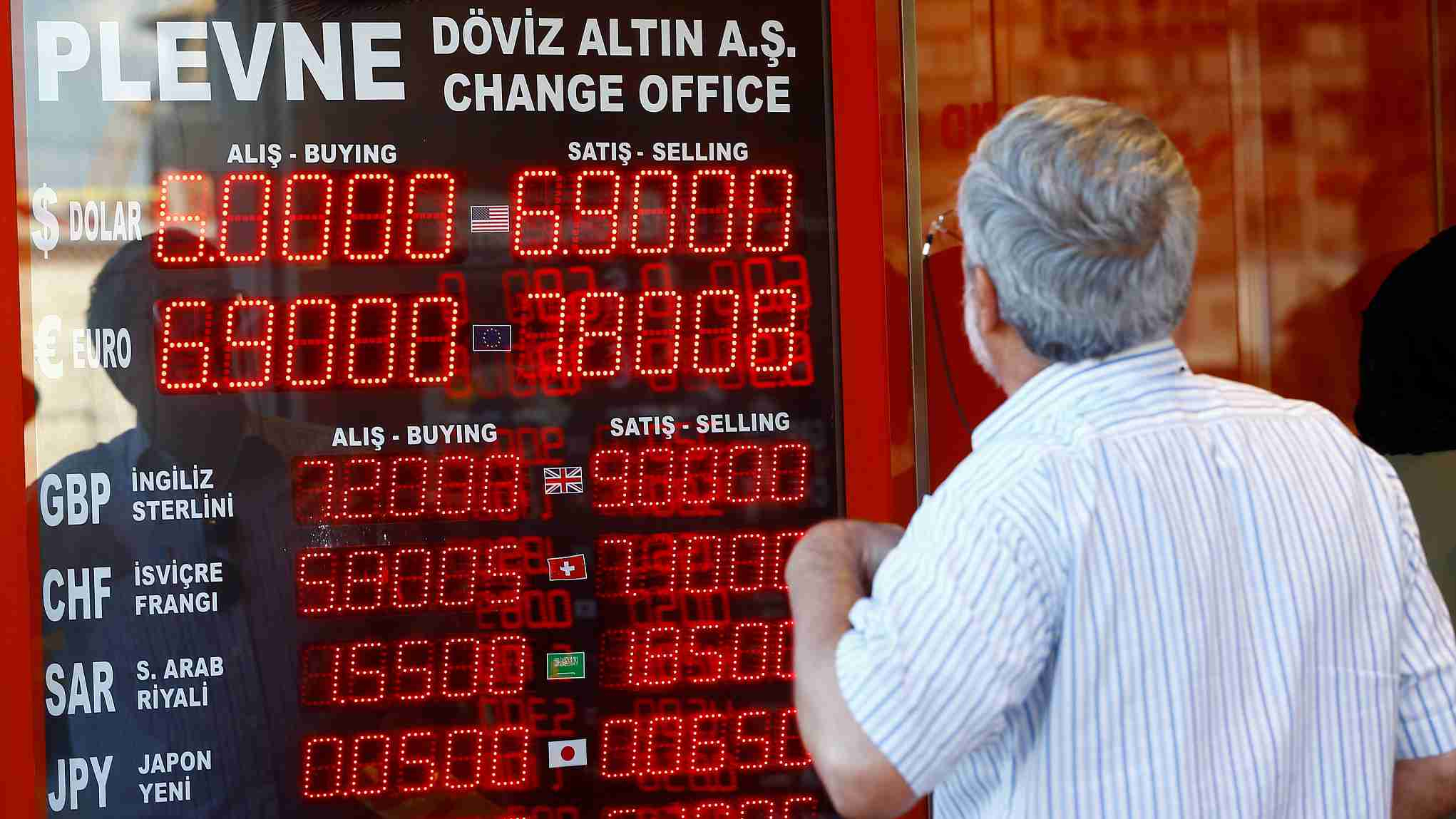
After talks between Turkey and the US in Washington ended with no results which caused the lira to fall further, Turkish President Tayyip Erdogan tried to reassure his followers, telling them “God is with them” and called for national support.
Turkey’s Central Bank took action on Monday announcing that it had cut lira reserve requirement ratios by 250 basis points for all maturity brackets and lowered reserve requirement ratios for non-core FX liabilities by 400 basis points for up to 3-year maturities.
With these changes some 10 billion lira, 6 billion US dollars, and 3 billion US dollars equivalent of gold liquidity will be provided to the financial system.
Erdogan’s son-in-law, the newly appointed Turkish Treasury and Finance Minister Berat Albayrak announced a new economic model last Friday. Speaking to an audience of businesspeople he emphasized that the Turkish Central Bank would be independent under his leadership.
Despite all this, the main sentiment in Turkey is concern. Many companies import products in foreign currencies, a business owner Uygar said, “We bought our products in US dollars, but we didn’t put tags in dollars because well we live in Turkey, we sell in Turkish liras, that’s why we are affected very much, our prices have become outdated”.
Others are worried that as the Turkish lira loses value, people’s buying power decreases. Many shop owners are saying sales are already affected.
Sezen, who has two children, said she is bracing herself for potential price hikes on everyday products, stating that she believes “it will be difficult to maintain the same lifestyle. Prices could rise in gas, children’s’ clothing, food, everything.”
Albayrak has stated that action plans were in place to ease markets. More details of these plans and the structure of the new economic model are expected to be announced soon, including moves that might ease some of Turkish citizen’s concerns.
2018 has been a difficult year for the Turkish economy as the country’s currency continues to tumble.
The Turkish lira has been at a downfall for months, becoming one of the worst performing currencies this year. It has lost more than 40 percent of its value since the beginning of the year.