
Business
17:50, 20-Jun-2018
Iran: OPEC meeting 'unlikely to reach agreement'
 ["europe","north america","other","Middle East"]
Share







Copied
A split among the Organization of Petroleum Exporting Countries (OPEC) is threatening to leave this week’s annual meeting in Vienna without a conclusive consensus, at a time of soaring oil prices.
On Tuesday, Iran’s energy minister Bijan Zanganeh told the media that the 14 OPEC members were unlikely to reach agreement in Vienna, saying “"every decision in OPEC needs unanimity, and I don't believe in this meeting we can reach agreement.”
So what’s causing the divisions in OPEC, and what does it mean for the world economy?
The ‘battle’ of Vienna
According to Bloomberg, this week’s OPEC meeting will be a “battle” between countries looking to increase oil production, and others wanting to maintain the status quo.
Saudi Arabia, backed by non-OPEC member Russia, wants to reduce caps on production, in response to concerns from oil consumers that have been affected by recent price hikes.
Standing in its way is Iran, which has made clear its firm opposition to any moves to increase production.
The price of oil soared above 80 US dollars per barrel last month, hitting a three-and-a-half year high, and is currently around 75 US dollars. OPEC agreed in late 2016 to cut daily production by 1.8 million barrels, after a glut in supply pushed prices down to around 30 US dollars per barrel.
OPEC 'not part of the US Department of Energy’
An increase in production would lower prices, and please US President Donald Trump, who has previously accused OPEC (via Twitter) of conspiring to push up oil.
Standing in the way of an increase in output is Iran, with Zanganeh telling reporters on Tuesday there was “no need” for any changes to the status quo.
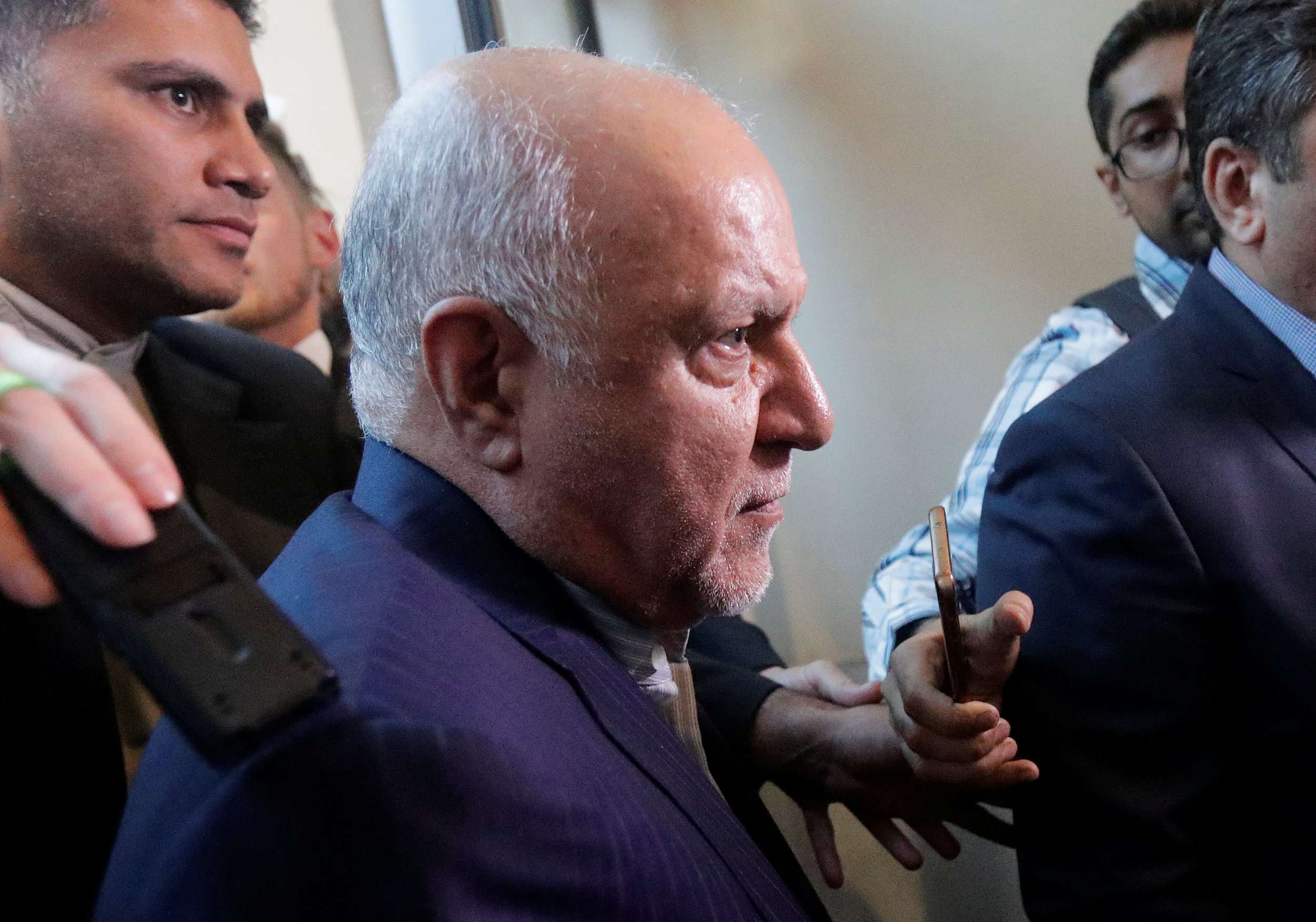
Iran's Oil Minister Bijan Zanganeh arrives at his hotel ahead of the meeting of OPEC oil ministers in Vienna, Austria, June 19, 2018. /VCG Photo
Iran's Oil Minister Bijan Zanganeh arrives at his hotel ahead of the meeting of OPEC oil ministers in Vienna, Austria, June 19, 2018. /VCG Photo
After the US pulled out of the Iran nuclear deal in May, ties between Tehran and Washington have hit a new low, with the Iranian energy minister keen to stress that OPEC “is an independent organization, not an organization to receive instruction from President Trump. OPEC is not part of the Department of Energy of the United States.”
Other OPEC members including Venezuela and Iraq are also against any changes to the current output caps, over concerns they don’t have the capacity to raise production and would, therefore, lose out if prices fell.
Deal or no deal? What happens next?
OPEC meetings have previously seen last minute deals and compromises made when all hope seemed lost – a phone call from Russian President Vladimir Putin convinced his Iranian counterpart Hassan Rouhani to agree to November 2016’s production caps, according to Iran’s ambassador to Moscow.
And in the case of no consensus, members in favor of an increase in production could theoretically go ahead and boost output on their own.
VCG Photo
VCG Photo
Saudi Arabia did just so in 2011, the last time that a meeting between the OPEC countries failed to materialize in a deal.
China became the world’s biggest importer of crude oil in 2017, and launched yuan-denominated oil futures in March – a move aimed at boosting the international use of the Chinese currency, as well as giving producers and buyers greater security ahead of further expected volatility in energy markets in the coming years.
China imports almost one billion US dollars’ worth of oil from the US every month according to China Daily, meaning ongoing trade tensions between Beijing and Washington are also having a knock-on effect on oil prices.
Ahead of the OPEC meeting and coming after Trump announced plans for another round of tariffs on Chinese imports, oil dropped to 72.45 US dollars – a seven-week low that came as global equity markets all fell over concerns about Trump’s trade rhetoric.