
Opinion
17:24, 24-May-2019
Trump's administration undermines global rule book
 ["china"]
Share







Copied
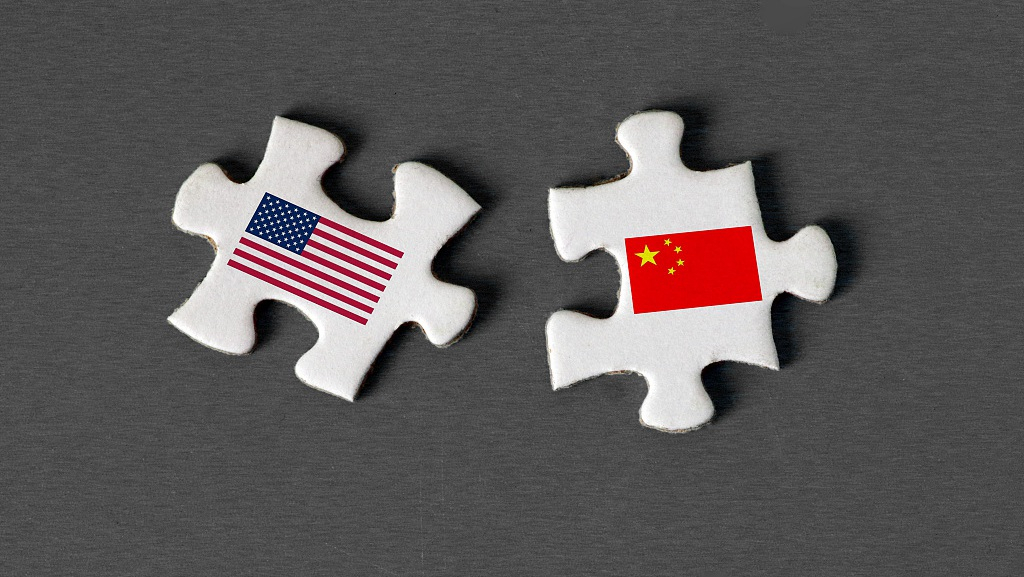
The U.S.-initiated trade war against China escalated after Washington banned Huawei from purchasing components from American companies. This war is no longer only about the economy, it has evolved into one where the U.S. is seen as trying to contain China on all fronts. More worryingly, by launching the so-called trade war, the Trump administration has seriously damaged the rule-based global order.
Not playing by the book
At the center of the trade talks is reducing the U.S. trade deficit with China, because of which, Washington has demanded that China make big purchases of American goods.
Huang Yiping, deputy dean of the National School of Development and Director of the Institute of Digital Finance at Peking University, notes that the reason why China does not buy as many American products is very simple – American products are not competitive in price.
Now as the U.S. forces China to purchase more of its agricultural and energy products, Beijing will probably need to cut down on goods of the same kind imported from other countries. This would deal a blow to the existing international economic order.
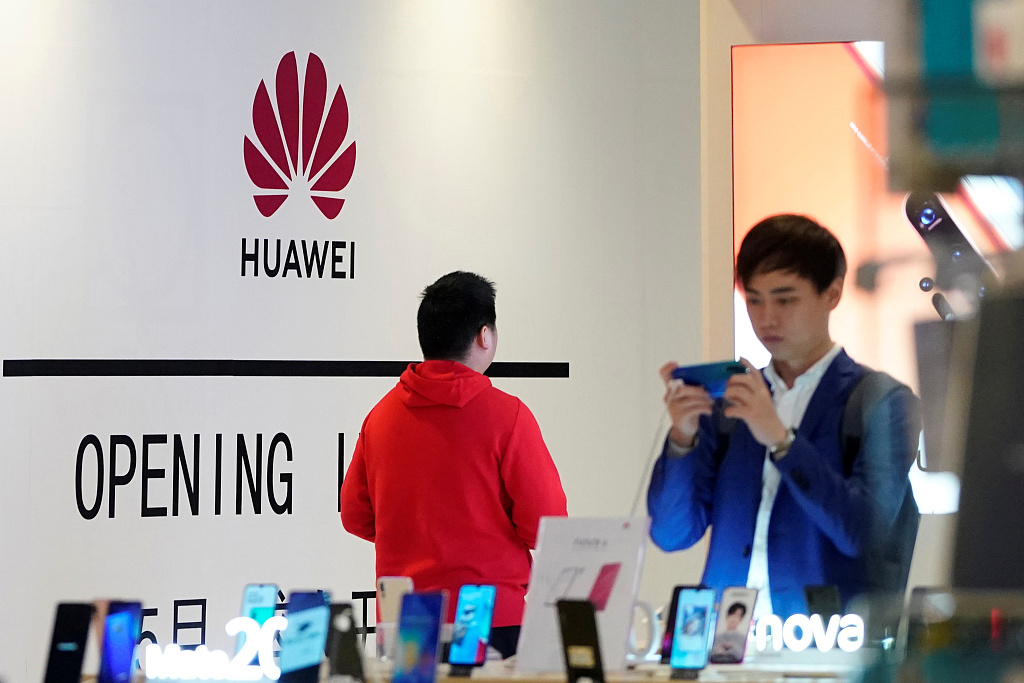
Huawei smartphones are on display inside a shopping mall in Shanghai, China, May 16, 2019. /VCG Photo
Huawei smartphones are on display inside a shopping mall in Shanghai, China, May 16, 2019. /VCG Photo
Last week, the Bureau of Industry and Security, an agency of the U.S. Department of Commerce added Huawei to the "Entity List" under the pretext of safeguarding national security.
That means that from now on, any American company will need to seek permission from the Department of Commerce before selling products to Huawei. American companies including Google, Qualcomm, Intel, etc. have declared that they would suspend business operations with or stop supplies to the company in full compliance with Washington's decision.
According to an article recently published on the Financial Times by Dr. Xing Yuqing, a professor of economics and the director of Asian Economic Policy at the National Graduate Institute for Policy Studies in Tokyo, America is abusing its monopoly power over technologies by slapping sanctions on Huawei, and is undermining the rule-based international order.
The global value chain is comprised of a series of tasks necessary for the delivery of a product and those different tasks, which include research and development, parts and components manufacturing, assembly and distribution are designated among countries according to their comparative advantages.
Xing believes that what the U.S. has done is beyond the domain of national security and constitutes an abuse of its monopoly over communications technology, which severely undermines the global rule book.
U.S. harbors ulterior motives
Another issue at the heart of the China-U.S. trade negotiations is forced technology transfer. Justin Yifu Lin, dean of the Institute of New Structural Economics and Honorary Dean of the National School of Development at Peking University, points out that American companies investing in China have indeed brought along new technologies. But, has China forced them to do so? Never.
For American companies that tried to manufacture products in China and entered the Chinese market, how could they guarantee their competitiveness if they did not use their best technologies?
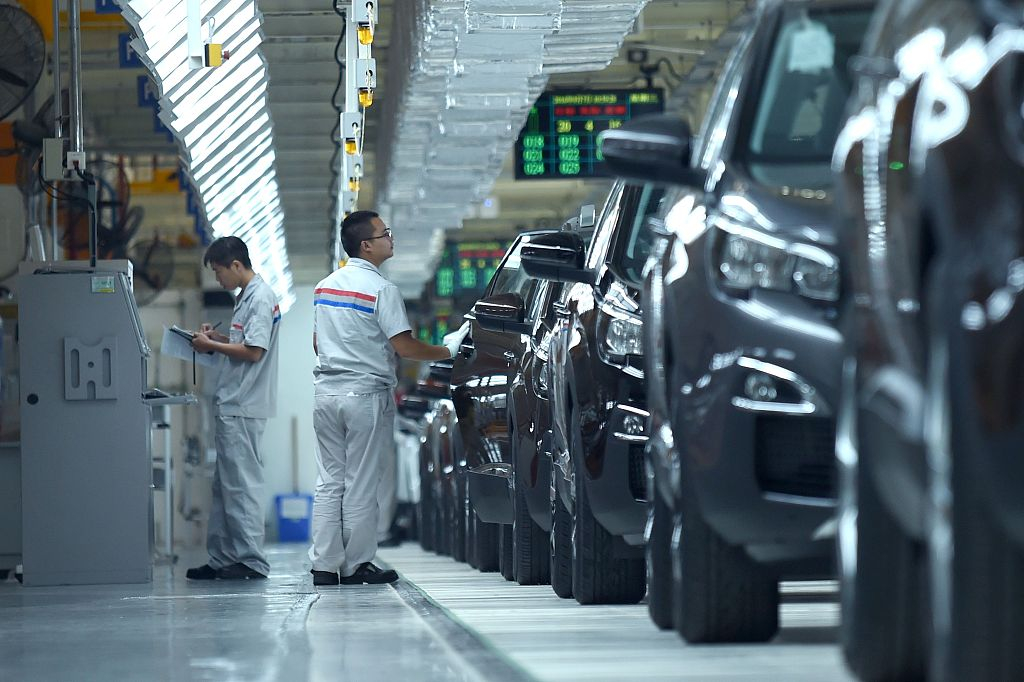
Chinese staff work on the assembly line at DPCA Chengdu plant production start and Dongfeng Peugeot 4008 line in Chengdu, September 7, 2016. /VCG Photo
Chinese staff work on the assembly line at DPCA Chengdu plant production start and Dongfeng Peugeot 4008 line in Chengdu, September 7, 2016. /VCG Photo
The auto industry is a case in point. China is currently the world's largest automotive market. American, German, Japanese and South Korean companies have chosen to set up production plants. If General Motors and Ford do not use their best technologies in their Chinese plants, how could they be confident that Chinese customers are going to buy their cars? These two companies manufacture more cars in China than they do in the U.S., and they are making hefty profits out of the Chinese market.
It is a must then for them to voluntarily bring the best technologies to China to meet their needs for growth. Claiming that China has been forcing them to transfer technologies is thus not fair, as, if it is true, why do they not choose to stay in their own country? Lin believes that this is just an excuse used by the U.S. to hide their real intention of preventing China's rise. The Trump administration wants to shut all doors on China's development.
China should keep calm
The U.S. imposing 25 percent tariffs on all Chinese goods will of course impact both sides. Lin estimates that China would suffer a GDP loss of 0.5 percentage point at most, while the U.S., 0.3. It appears that China will suffer more. However, considering that the current economic growth in America is less than three percent, a drop of 0.3 percentage point in GDP would mean a 10-percent decline in growth rates. China, Lin says, however, will still be able to secure a 6-percent GDP growth.
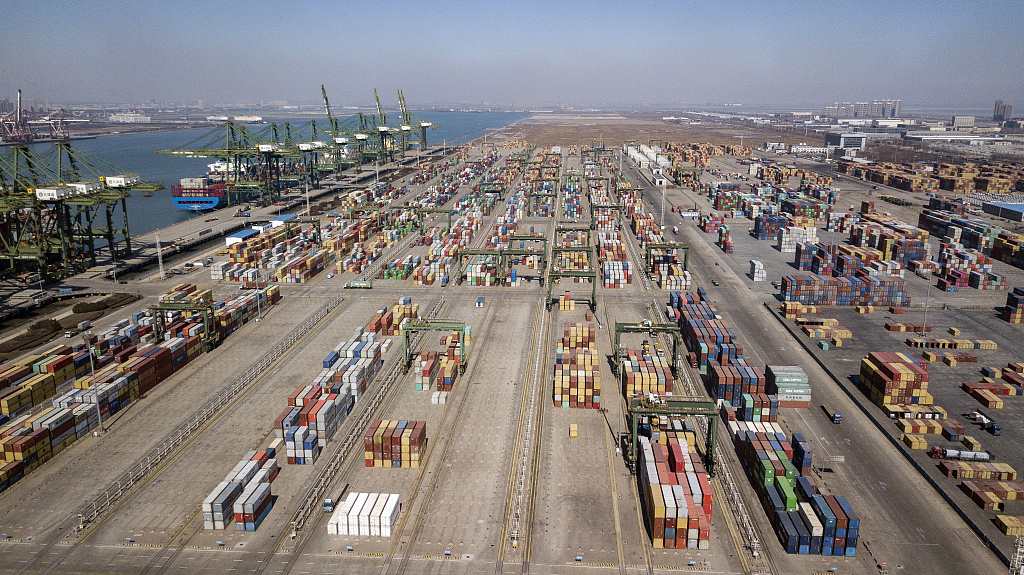
Shipping containers sit stacked next to gantry cranes at the Tianjin Port in Tianjin, China, March 14, 2019. /VCG Photo
Shipping containers sit stacked next to gantry cranes at the Tianjin Port in Tianjin, China, March 14, 2019. /VCG Photo
He holds that the most important thing for China to do now is to carry on with its sound policies that have been formulated before. The country needs to stick to those policies and facilitate all-round reforms and further opens up. It should continue to follow the "Five Major Development Concepts" put forward by President Xi, in order to promote high-quality development that is innovative, coordinated, green, open and shared by all.
According to Lin, China's future growth does not only depend on contributions made by its own people within the country, but also on its sound trade relations with other countries in the world.
He also said that the U.S. imports of Chinese goods take up less than 20 percent of China's total exports, which means 80 percent of the China's exports will go to other countries. If the U.S. cuts its exports because of the trade war, then China's imports of American goods would decline accordingly. In this way, China will be able to offer a bigger share of the Chinese market to European countries, Japan, South Korea and other developing nations.
Lin believes that development matters the most for every country in the world. China is no exception. At a time when many are concerned about where the world economy is heading, China's further opening-up may create opportunities for all countries to pursue common goals of development.
(If you want to contribute and have specific expertise, please contact us at opinions@cgtn.com)