
Politics
22:21, 02-Jul-2018
Wang Yi: Rules and rule of law are a pass for BRI 'going global'
Updated
21:29, 05-Jul-2018
 ["china"]
Share







Copied
02:52
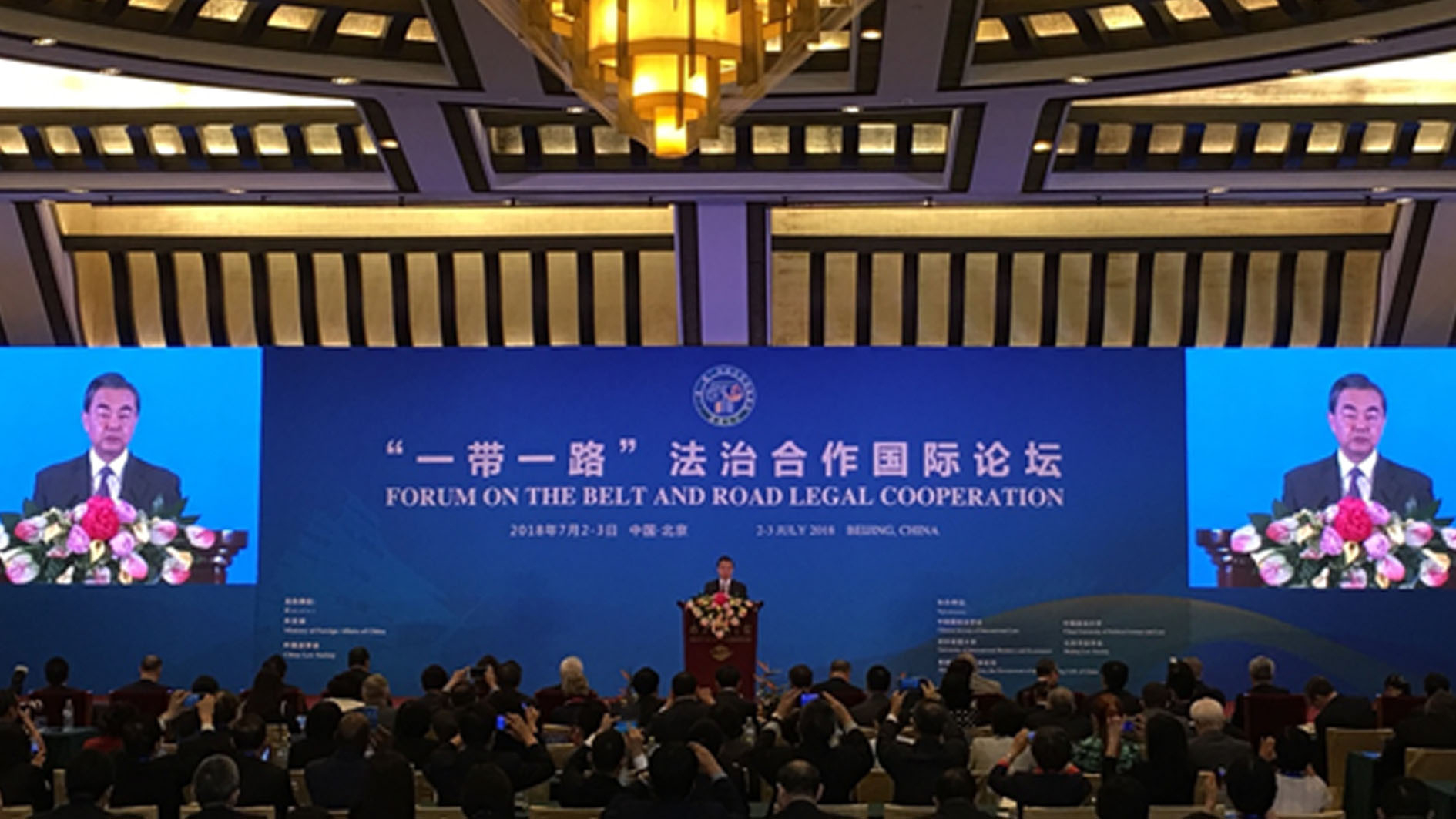
The Forum on the Belt and Road Legal Cooperation was held Monday in Beijing under the theme "Jointly Build the Belt and Road: Rules and Coordination." Over 300 delegates from governments, international and regional organizations, private sectors and academic institutions attended.
While advancing the “hard connectivity” of infrastructure, it’s also important to step up “soft connectivity” of policies, rules, standards, and institutions between countries, so the rules and standards can be compatible.
That's what Chinese State Councilor and Foreign Minister Wang Yi emphasized during his keynote speech for the opening ceremony of the Forum on the Belt and Road Legal Cooperation.
He said it’s important to build rules and a legal framework and to speed up negotiations regarding investment, finance taxation and intellectual property rights, transportation and environmental protection.
“China has basically aligned with international rules and adopted international standards. We have taken part in almost all universal intergovernmental organizations, and have access to over 500 international treaties. The correlation rate between China’s national standards and international ones is over 90 percent,” Wang said.
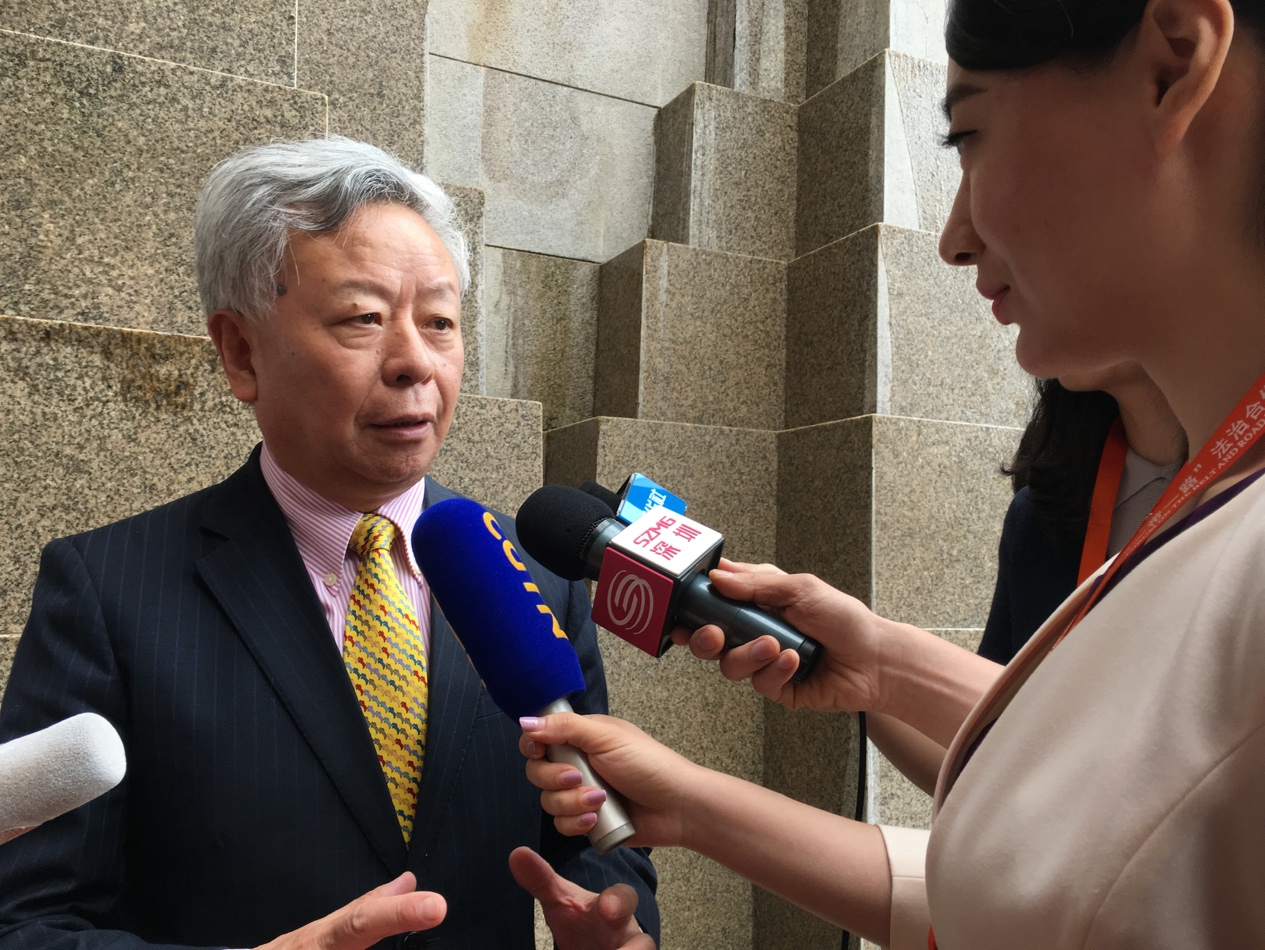
Jin Liqun, president of Asian Infrastructure Investment Bank, talks during an interview, July 2, 2018. /CGTN Photo
Jin Liqun, president of Asian Infrastructure Investment Bank, talks during an interview, July 2, 2018. /CGTN Photo
Many say it’s of great importance to connect infrastructure facilities, free up trade, mobilize resources and enhance the meeting of the minds.
Jin Liqun, president of Asian Infrastructure Investment Bank, said: “Because some people have doubts about China’s objectives and would ask a couple of questions regarding governance and standards. In this regard, legal cooperation is crucial. And I think it’s so important for us to have this kind of forum, focusing on some very specific issues. With the successful rolling out of the Belt and Road Initiative, this kind of skepticism, or even noise, will die down.”
Xu Hong, the director-general of the Department of Treaty and Law at the Chinese Foreign Ministry, said the international community wanted to know how China would build its rules and legal framework. He also said the forum couldn't have come at a better time to respond to their concerns.
Xu told CGTN: “As State Councilor Wang Yi said, rules and the rule of law are a pass for the Belt and Road Initiative to go global, and it’s also a safety valve to cope with uncertainties and challenges. He also said the Chinese government will provide funding for the building of a Belt and Road Legal Cooperation Research and Training Program, to enhance the rule of law in cultivating high-caliber law experts. This is a good beginning, and we hope we will achieve better results.”
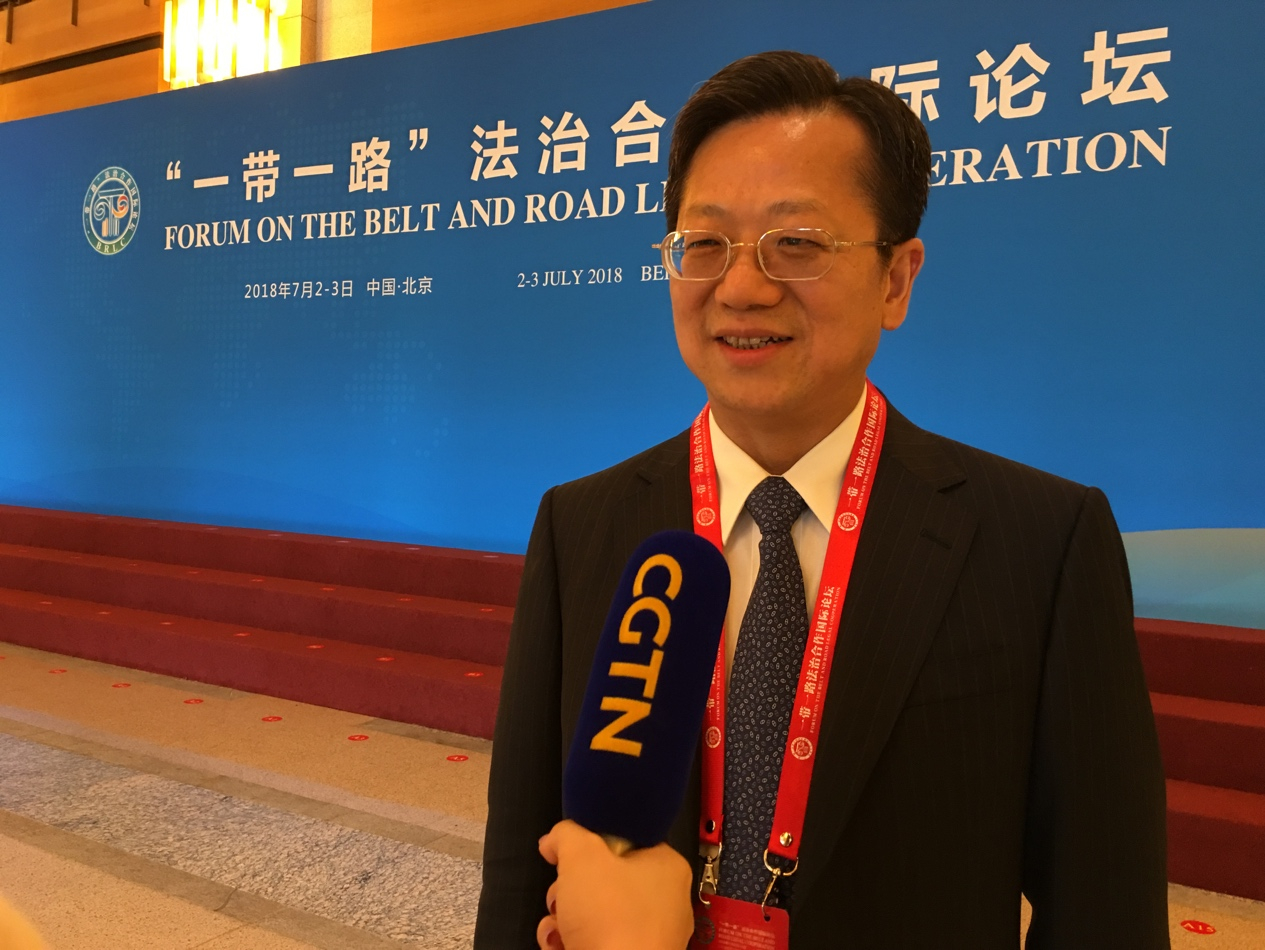
Xu Hong, the director-general of the Department of Treaty and Law of the Chinese Foreign Ministry, has an interview with CGTN at the Diaoyutai State Guesthouse, July 2, 2018. /CGTN Photo
Xu Hong, the director-general of the Department of Treaty and Law of the Chinese Foreign Ministry, has an interview with CGTN at the Diaoyutai State Guesthouse, July 2, 2018. /CGTN Photo
This year marks the 5th anniversary of the Belt and Road Initiative. Officials say while it originated in China, it belongs to the world. And China has made it clear that it's willing to work with all countries and regions to enhance mutual trust and cooperation, so the Belt and Road can be a platform for legal cooperation and mutual learning.