
Business
10:10, 03-May-2018
Musk positive on profit with lower than expected Tesla losses
 ["north america"]
Share







Copied
Tesla on Wednesday reported that it lost less money than the market expected and
said it was making progress ramping up production of Model 3 electric cars.
Shares in the automaker rose briefly, then dove about five percent after an earnings call during which chief executive Elon Musk dismissed as
"boring" some questions about money.
The automaker reported net losses of 784.6
million US dollars on revenue of 3.4 billion US dollars in the first three months of this year.
The California-based firm said that it made "significant
progress" in ramping up production of Model 3 vehicles considered key to its
success in the mass market. Prior to a planned shutdown of production to make
the system more efficient, Tesla managed to reach 2,270 vehicles a week. That
rate is still shy of a goal that Musk had set.
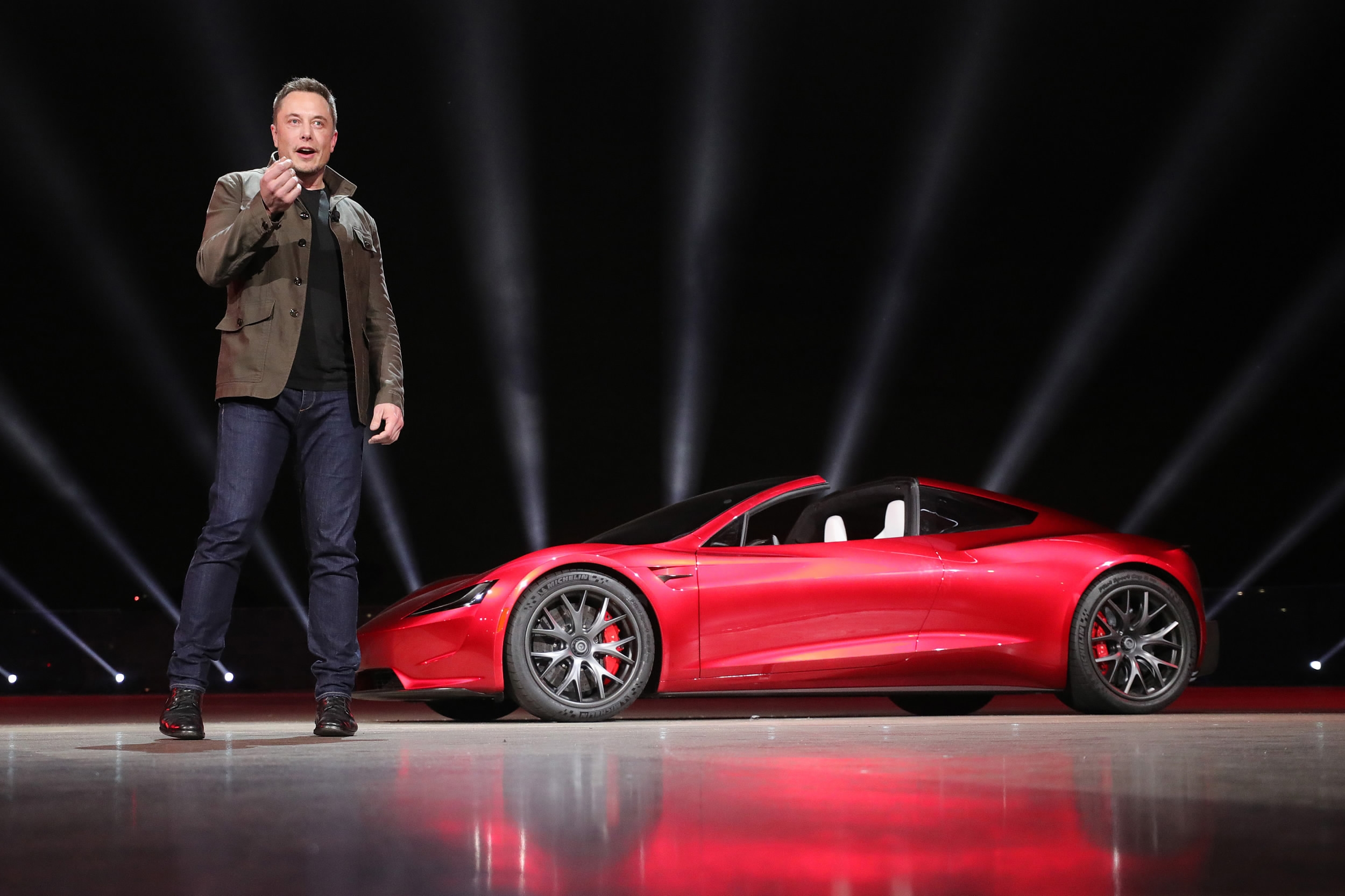
November 16, 2017: Elon Musk, chairman and CEO of Tesla, unveils the company's new Roadster sports car, which can go from 0-60 in 1.8 seconds, in Hawthorne, California. /VCG Photo
November 16, 2017: Elon Musk, chairman and CEO of Tesla, unveils the company's new Roadster sports car, which can go from 0-60 in 1.8 seconds, in Hawthorne, California. /VCG Photo
"We continue to target Model 3
production of approximately 5,000 per week in about two months, although our
prior experience has demonstrated the difficulty of accurately forecasting
specific production rates," Musk said in an earnings letter to shareholders.
To
achieve those Model 3 production numbers, Tesla will shut down its line again
this quarter to make modifications, according to Musk. Tesla expects to shut
down production for about 10 days to clear out "bottlenecks" across the lines.
'High time' for profit
If improvements go to plan, Tesla could begin showing
profit in the second half of this year, he said.
"It is high time we became
profitable," Musk said during an earnings call.
"The truth is, you are not a
real company until you are. That is our focus right now."
Investors and analysts
have expressed worry about how fast Tesla has been burning through cash, and
stopping losses would be a major step for the company.
"Our initial impression
is mixed," CFRA senior equity analyst Efraim Levy said in a note to investors
about the earnings. "Notably, reported free cash flow was less negative than we
expected, but we remain concerned about cash."
Tesla vowed to cut back projected
expenses to just "critical needs" to get the Model 3 production line up to speed
and turning a profit.
The Moody's ratings agency early last month downgraded the
company's credit further into junk status, saying Tesla might run out of cash if
it did not raise more than two billion US dollars.
Battery bottleneck
"We have good
visibility of our path to fully ramp and stabilize Model 3 production this
year," Musk said. "The path to an electrified revolution is not easy, but what
we're trying to achieve is worth fighting for."
Production bottlenecks have
plagued the company, with much of its future banked on the Model 3, its first
mid-price, mass-market vehicle.
Making battery packs fast enough has been
identified as a bump on the road to cranking out more Tesla cars. Musk said that
the company's northern California plant is "packed to the gills" and that later
this year Tesla will decide where to build a second facility at which a new
Model Y will be built.
Tesla will also announce a China location for a new
"Gigafactory" that will produce batteries as well as vehicles, according to
Musk.
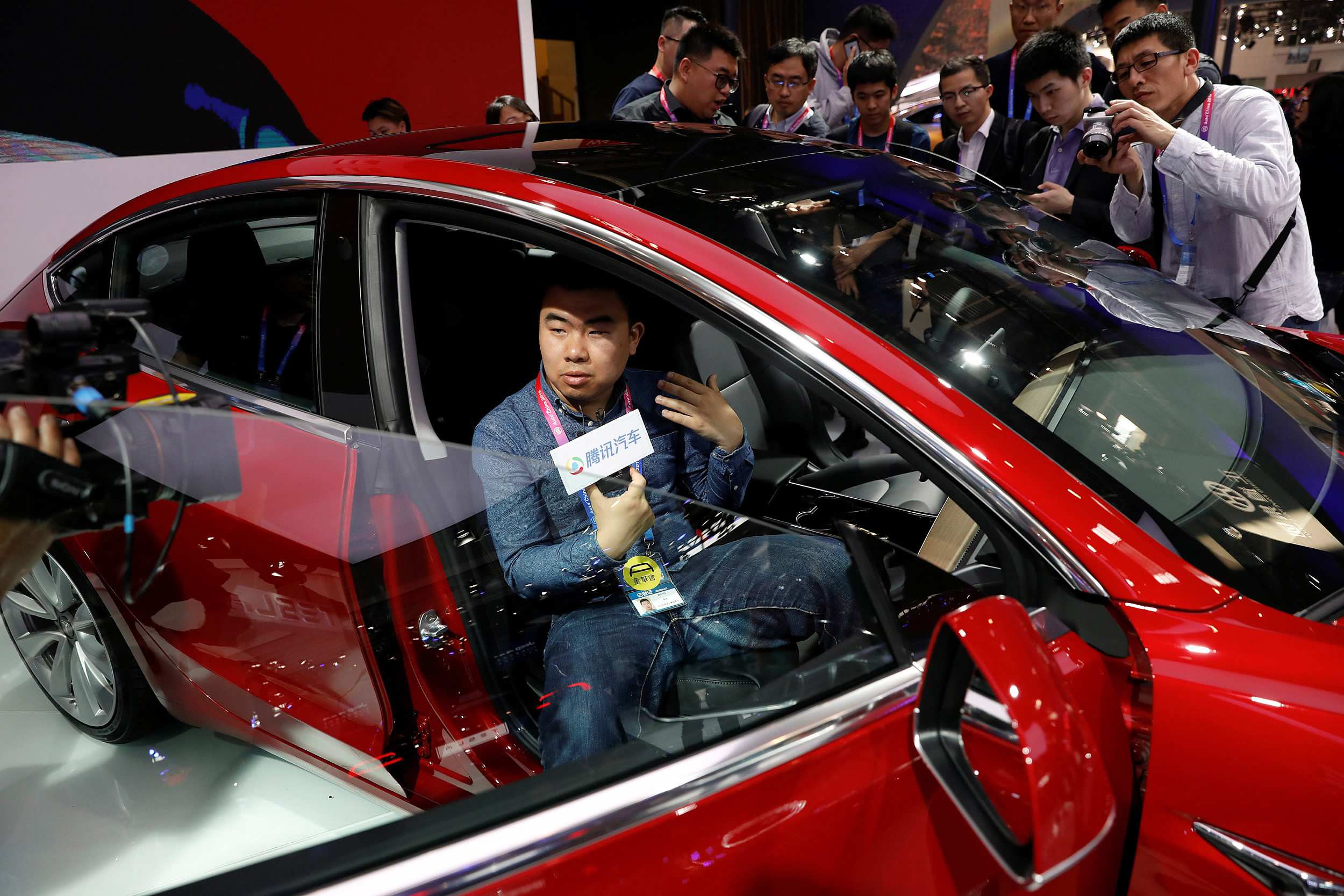
Tesla Model 3 is displayed during a media preview of the Auto China 2018 motor show in Beijing, China, April 25, 2018. /VCG Photo
Tesla Model 3 is displayed during a media preview of the Auto China 2018 motor show in Beijing, China, April 25, 2018. /VCG Photo
"In the future, all Gigafactories will include vehicle production," he
said.
The continued struggle to ramp up production comes as Tesla is facing a
federal investigation into a recent fatal crash involving Autopilot, its driver
assistance system, and the voluntary recall of 123,000 Model S sedans announced
last week.
During the call, Musk passionately defended the potential for
self-driving cars to dramatically reduce accident fatalities and railed at the
media for "inflammatory" headlines that could turn public opinion and regulators
against the technology.
Source(s): AFP