
Politics
10:30, 21-Aug-2018
President Ramaphosa: Black S. Africans can successfully own and manage land
Updated
09:55, 24-Aug-2018
 ["china"]
Share







Copied
Black South Africans are able to make a success of owning and managing land, President Cyril Ramaphosa said on Monday.
In an apparent bid to alleviate fears for the proposed land expropriation without compensation, Ramaphosa said black South African farmers "are able to farm successfully, ensure food security and sustain livelihoods."
The president was speaking at an event in Kempton Park, Gauteng Province, hosted by the African Farmers' Association of South Africa (AFASA), which is dedicated to ensuring meaningful participation of black individuals in the mainstream commercial agribusiness sector.
Ramaphosa praised the AFASA for shining a light on the historical challenges faced by farmers, and solely on the basis of their skin color.
"Through its lobbying and advocacy work, AFASA is helping to re-shape agriculture, bridging the divide between policy and reality, between legislation and the live experience of emerging black farmers," said Ramaphosa.
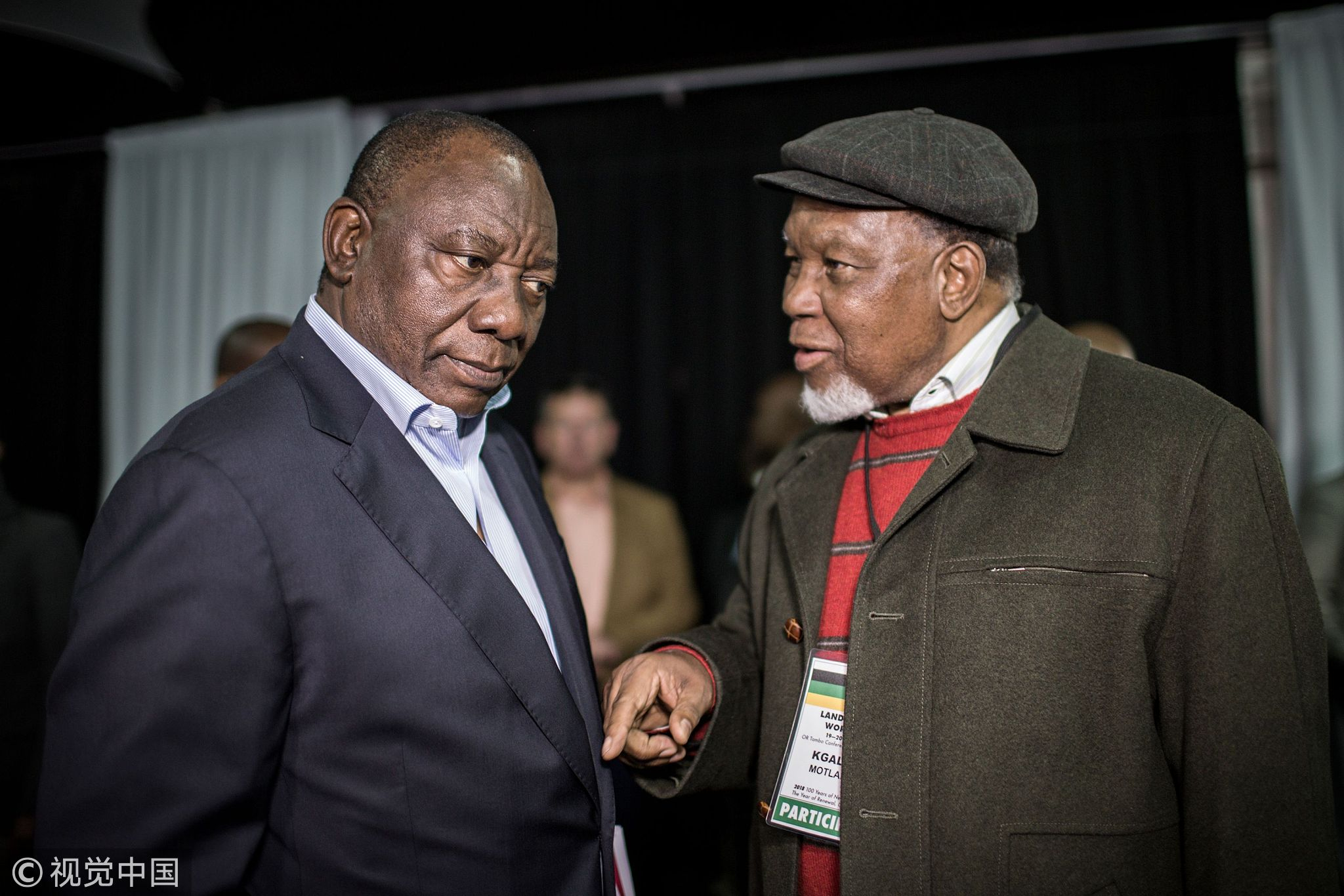
African National Congress (ANC) leader Cyril Ramaphosa (L) speaks to former South African President Kgalema Motlanthe (R) as they attend a meeting of the ruling ANC party on its land expropriation policy in Johannesburg, South Africa, May 19, 2018. /VCG Photo
African National Congress (ANC) leader Cyril Ramaphosa (L) speaks to former South African President Kgalema Motlanthe (R) as they attend a meeting of the ruling ANC party on its land expropriation policy in Johannesburg, South Africa, May 19, 2018. /VCG Photo
In doing so, it is sending a clear message to young South Africans that there is a future in farming, he said.
The AFASA is challenging some of the preconceptions about black farmers and changing attitudes throughout society, Ramaphosa said.
He was speaking as South Africa's Parliament is accelerating the process to review Section 25 of the Constitution and other clauses where necessary to sufficiently cater for the principle of land expropriation without compensation.
Opponents argue that land expropriation without compensation will drive away white farmers, kill jobs and threaten food security, just like what has happened in neighboring Zimbabwe where farming land seized by blacks has turned useless.
Earlier this month, AfriForum, an association of South African farmers, launched an international campaign to get the South African government to stop its move to expropriate land without compensation.
Ramaphosa disputed the notion that blacks can't manage land successfully.
The ability of black farmers to work the land successfully is constrained by the accumulated disadvantages of centuries of dispossession and deprivation, the president said.
This is in addition to the challenges they face when the forces of nature and forces of the market conspire to cut production and undermine profitability, he said.
"This is the reality that we need to confront and overcome together," Ramaphosa said.
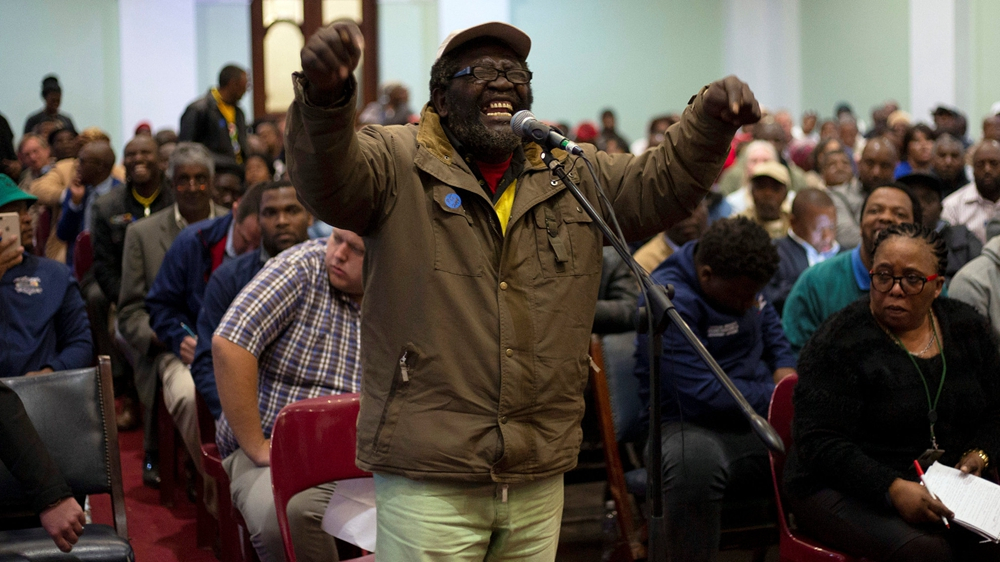
A man speaks as the Constitutional Review Committee holds public hearings regarding expropriation of land without compensation in Pietermaritzburg, South Africa, July 20, 2018. /VCG Photo
A man speaks as the Constitutional Review Committee holds public hearings regarding expropriation of land without compensation in Pietermaritzburg, South Africa, July 20, 2018. /VCG Photo
The country's land must be shared among those who wish to work it, and those who wish to work it must be given the support and encouragement to be successful, he added.
Since taking power in 1994, the South African government led by the African National Congress has made land redistribution from whites to blacks without compensation as one of its main policies.
But land remains predominantly in white hands more than two decades after the end of apartheid, sparking growing discontent among South African blacks.
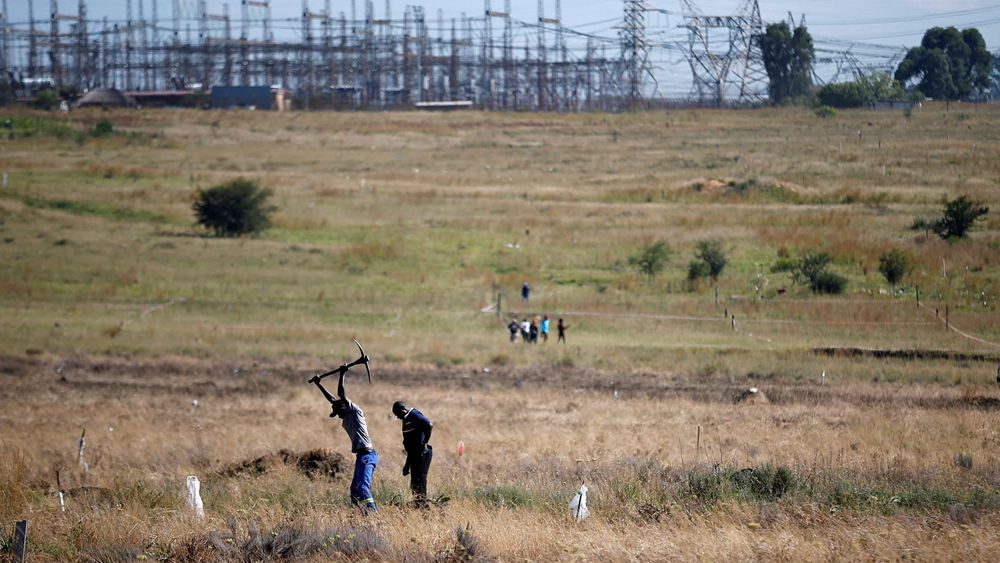
(Cover: A man is seen digging to mark vacant land in Olievenhoutbosch near Centurion, South Africa, March 12, 2018. /VCG Photo)
Source(s): Xinhua News Agency