
Opinions
15:37, 30-Aug-2018
Opinion: Putting a period to the stigma of menstruation
Updated
15:23, 02-Sep-2018
 ["china"]
Share







Copied
Editor's note: Salina Wilson is a Program Analyst of Ending Violence Against Women, UN Women India MCO. It reflects the author's opinions, and not necessarily the views of CGTN.
Menstruation continues to be stigmatized in India as in many other countries. Nepal's Parliament in 2017 criminalized Chhaupadi, a custom where women were banished from home during their periods and in their post-natal state based on a belief that they were impure.
The social tradition of keeping menstruating girls and women out of the main household premises is still a reality in many Indian households as well, pushing them to the margins, as well as restricting their mobility and opportunities.
In many parts of India, menstruation is associated with notions of purity, thereby debarring women from entry into certain places of worship, prohibiting them from cooking and even restricting access to certain parts of their own homes. These issues are rooted in structural inequality emanating from patriarchal norms and practices.
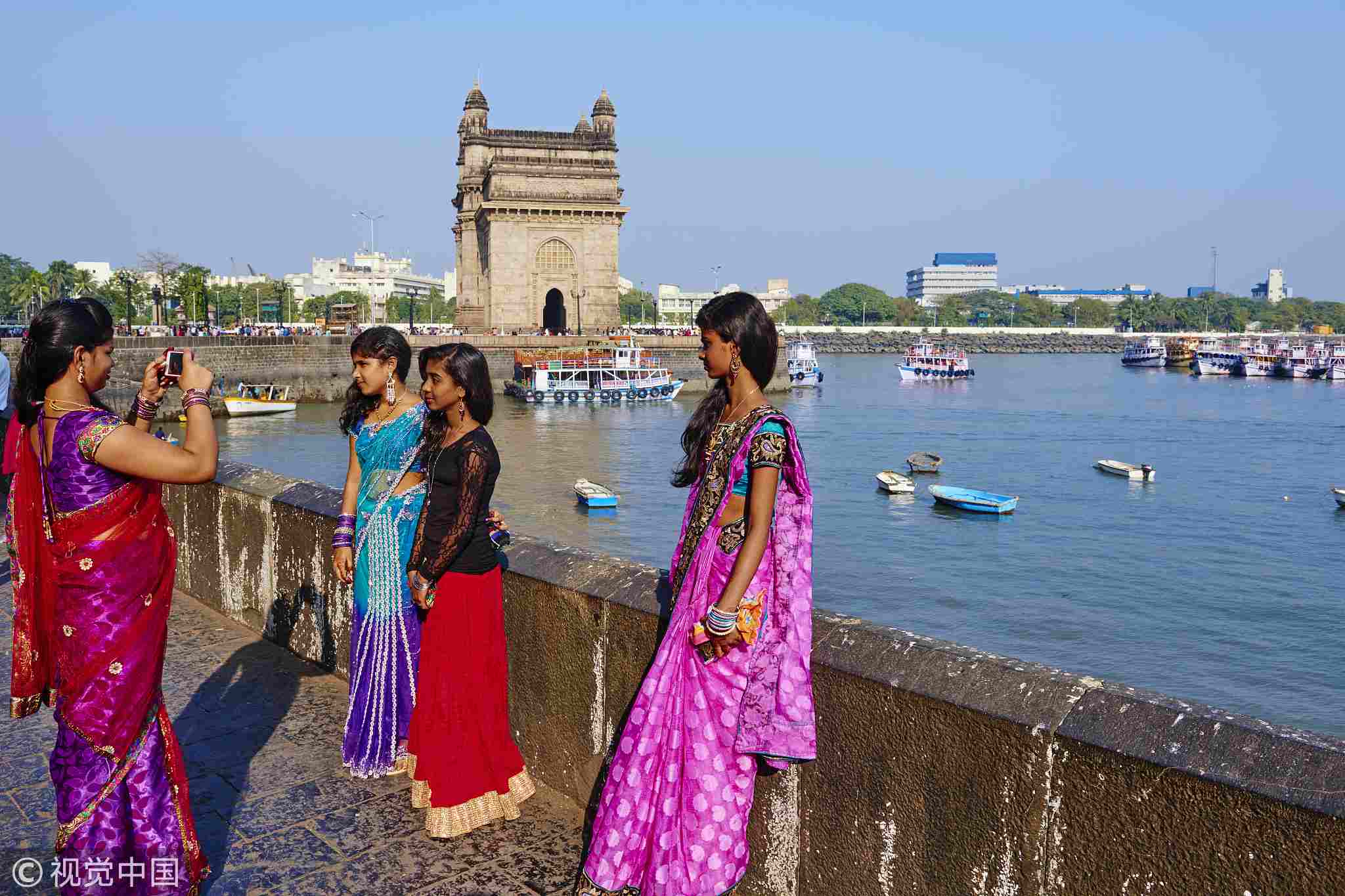
Indian women are taking photos at the Gateway of India, Mumbai, India. /VCG Photo
Indian women are taking photos at the Gateway of India, Mumbai, India. /VCG Photo
Menstruation is also closely linked with one's readiness for marriage. The National Family and Health Survey (NFHS-4) data showed that 26.8 percent of women between 20-24 years were married before 18 years of age, and 7.9 percent of women between the age of 15 to 19 years old were either pregnant or mothers.
One of the main challenges women and girls face is the cost of menstrual products, which exacts a toll on the health and safety of women, on the one hand, and impedes their access to education and economic opportunities on the other, thereby exacerbating the notion that girls are an economic burden on the family.
Evidence from the recent National Family Health Survey (NFHS-4) suggests that nearly 43 percent of women in India in the age group of 15-24 do not use hygienic methods of protection during their menstrual period.
Therefore, there must be a greater emphasis on generating awareness of the use and disposal of sanitary napkins and ensuring girls’ and women’s access to the same, supported by policy and financial resources.
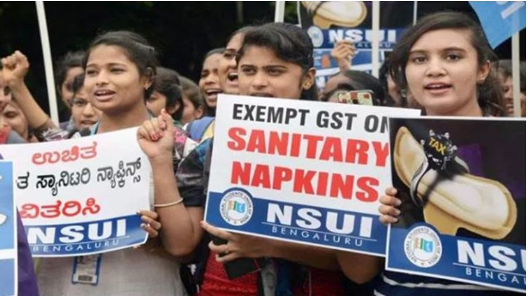
The Goods and Services (GST) Council in July 2018 exempted sanitary pads from the tax regime, in which it had previously imposed a 12-percent tax. This is an instrumental step complementing the government of India's existing efforts to address the stigma surrounding menstruation and ensuring that sanitary products are more accessible to women and girls.
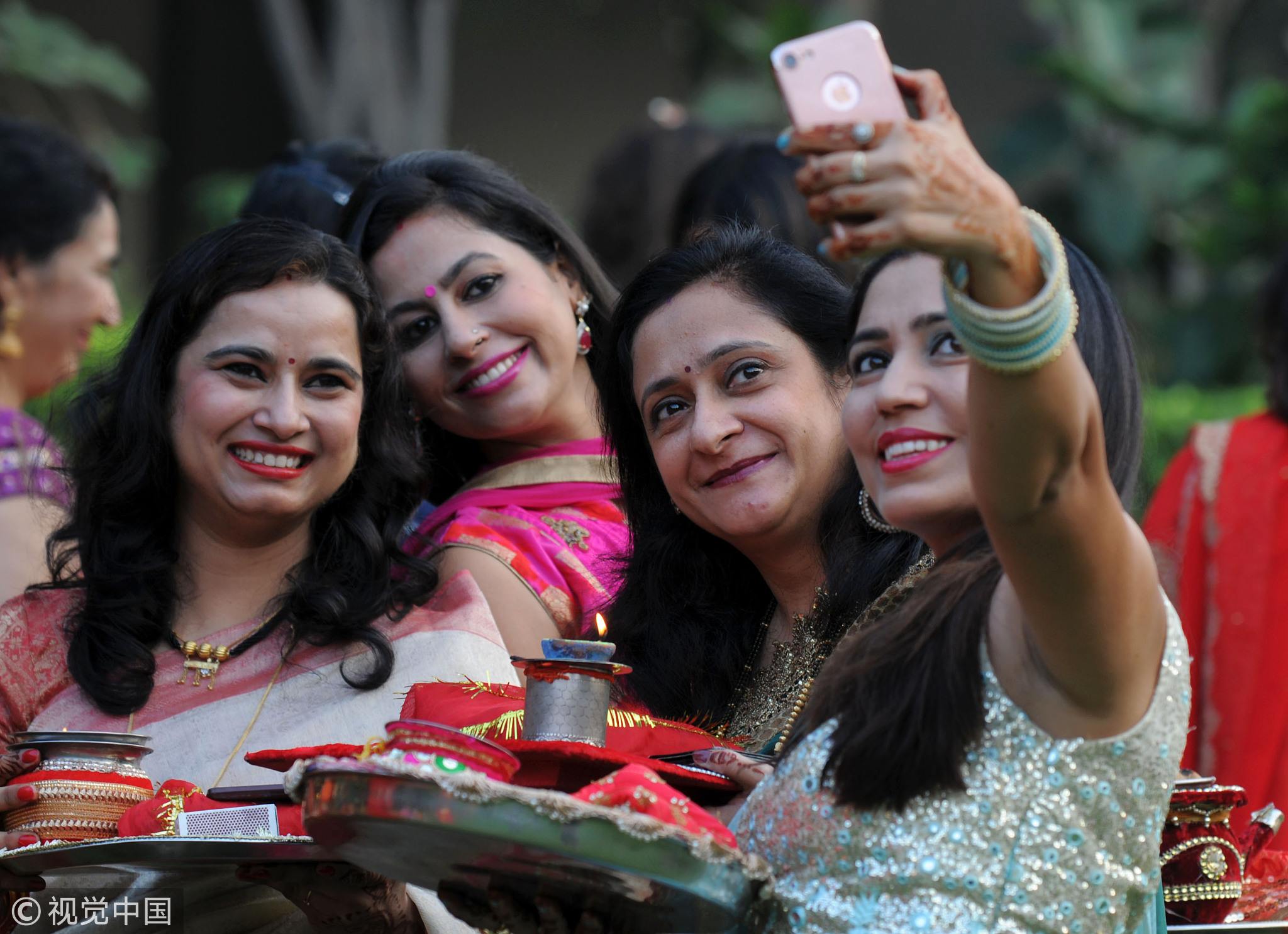
Married Hindu Indian women are taking a selfie during Karva Chauth festival in Gurgaon, India, on Oct. 8, 2017. /VCG Photo
Married Hindu Indian women are taking a selfie during Karva Chauth festival in Gurgaon, India, on Oct. 8, 2017. /VCG Photo
Meanwhile, the government of India is creating awareness among women and girls on the use and disposal of sanitary pads through the Swachh Bharat Abhiyan.
States like Rajasthan have gone an extra mile through a Menstrual Hygiene Scheme, comprising campaigns and policy pronouncements for building knowledge in schools. The State of Odisha, under its scheme Khushi, provides free sanitary napkins to girls in government and government-aided schools, benefiting 1.7 million girls across the state.
The Ministry of Health and Family Welfare's scheme Rashtriya Kishor Swasthya Karyakram, in which subsidized sanitary pads are made available for rural adolescent girls, has enabled conversations about reproductive health among girls and boys in the community.
There is a need to understand and address the orders of social stratification that contribute to gender inequality and bring about a transformative change of social norms at the family, community and institutional levels.
There needs to be greater emphasis on raising awareness in schools and among parents, especially mothers, who are considered the primary source of information for girls to learn about periods. There has to be subsidized provision of sanitary pads in the community, especially in rural areas for a sustained impact on the menstrual health value chain. Finally, mass campaigns must be carried out to break the stigma surrounding menstruation and the shame associated with discussing it.