
Opinions
22:13, 26-Jul-2018
Opinion: Uncertainty remains despite US-EU trade 'breakthrough'
Updated
21:29, 29-Jul-2018
 ["china"]
Share







Copied
Editor’s Note: This article is based on an interview with Dr John Gong, a research fellow at Charhar Institute and a professor at the University of International Business and Economics. The article reflects the author's opinion, and not necessarily the views of CGTN.
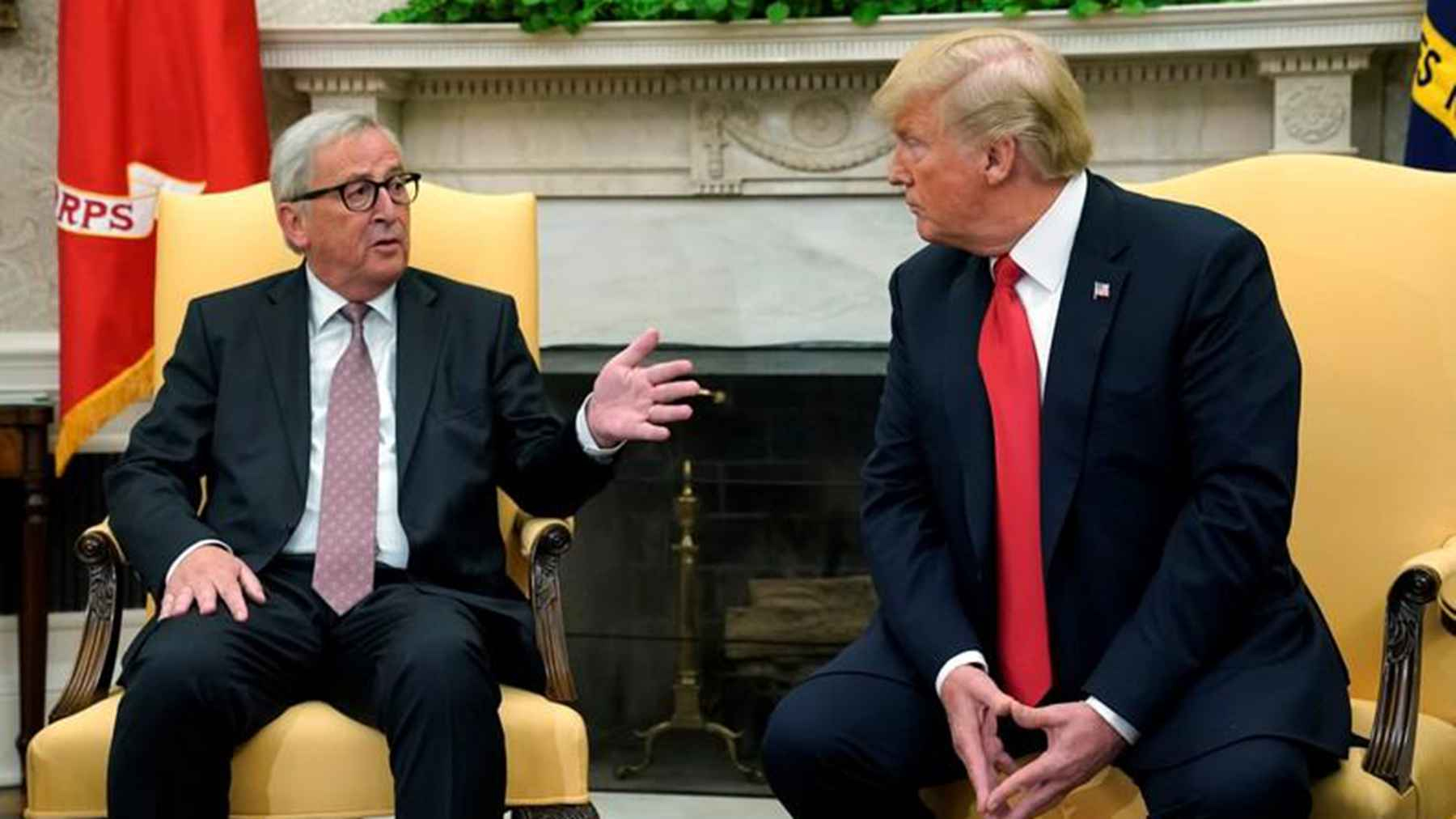
After a meeting at the White House on Wednesday, US President Donald Trump and European Commission President Jean-Claude Juncker said the two sides would work together towards zero tariffs, as well as to reduce barriers and increase trade in services, medical products and especially soybeans.
Despite being considered a breakthrough in easing trade tensions, the two sides have so far failed to substantially patch up ties strained over US tariffs on EU cars and steel and aluminum.
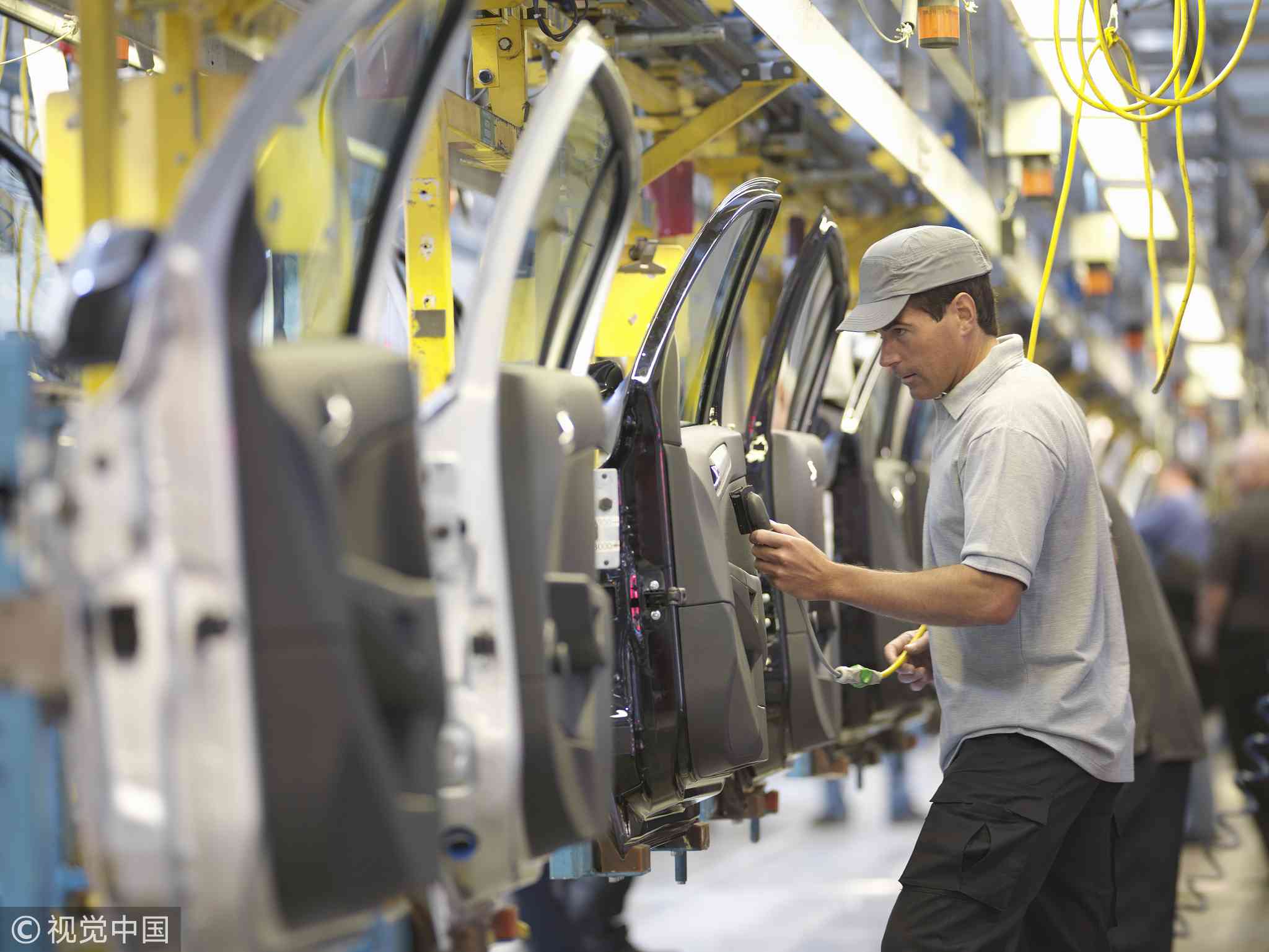
A car assembly line. /VCG Photo
A car assembly line. /VCG Photo
During the interview with CGTN, Dr John Gong, a research fellow at Charhar Institute and a professor at the University of International Business and Economics, observed that the move between the two sides served their own goals.
01:52
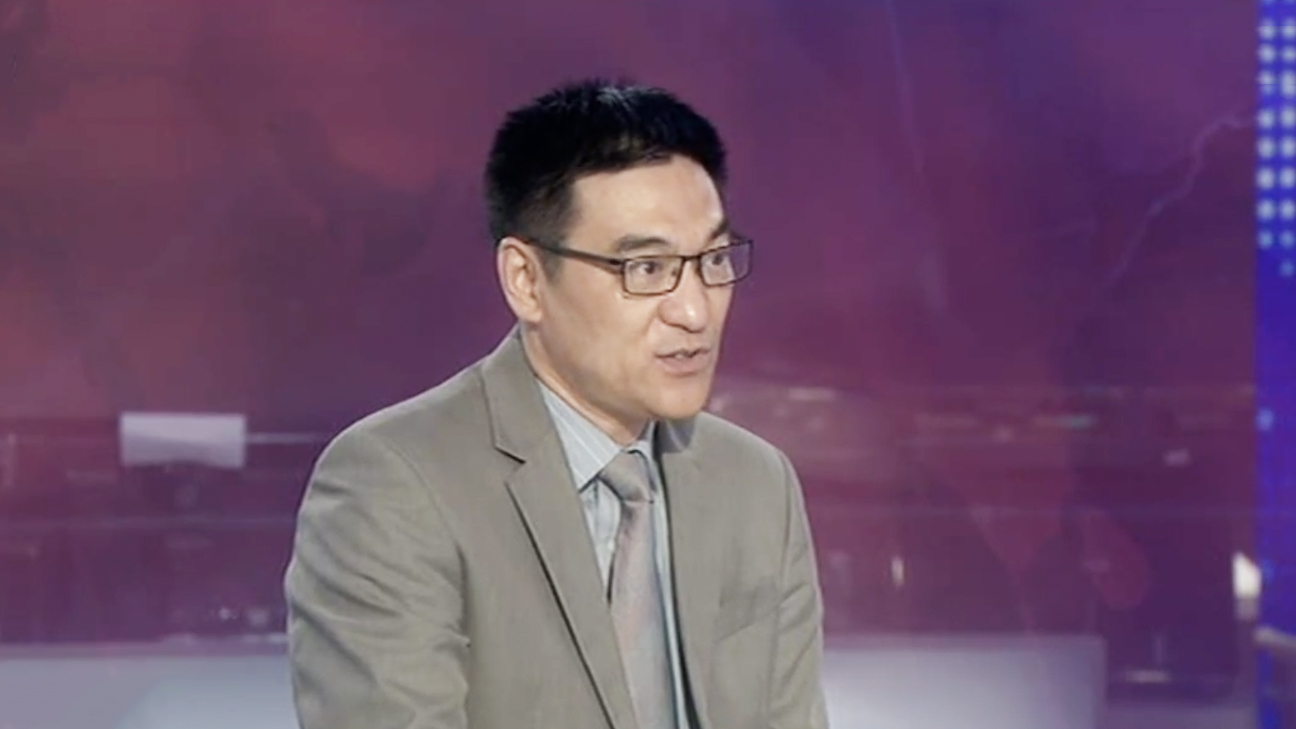
For the EU, it wants to take threats away from the automobile industry, especially for Germany, the leading economy in the block. The country’s car industry, with brands such as BMW, Daimler and Volkswagen, accounts for some 800,000 jobs.
For the US, it wants to find alternative markets for soybeans to avoid pressure from domestic farmers. Actually, Republican backlash is growing against President Trump's plan to spend 12 billion US dollars to help American farmers feeling the pain of the escalating trade war. That explains why Trump tweeted his triumph immediately after meeting with Junker.
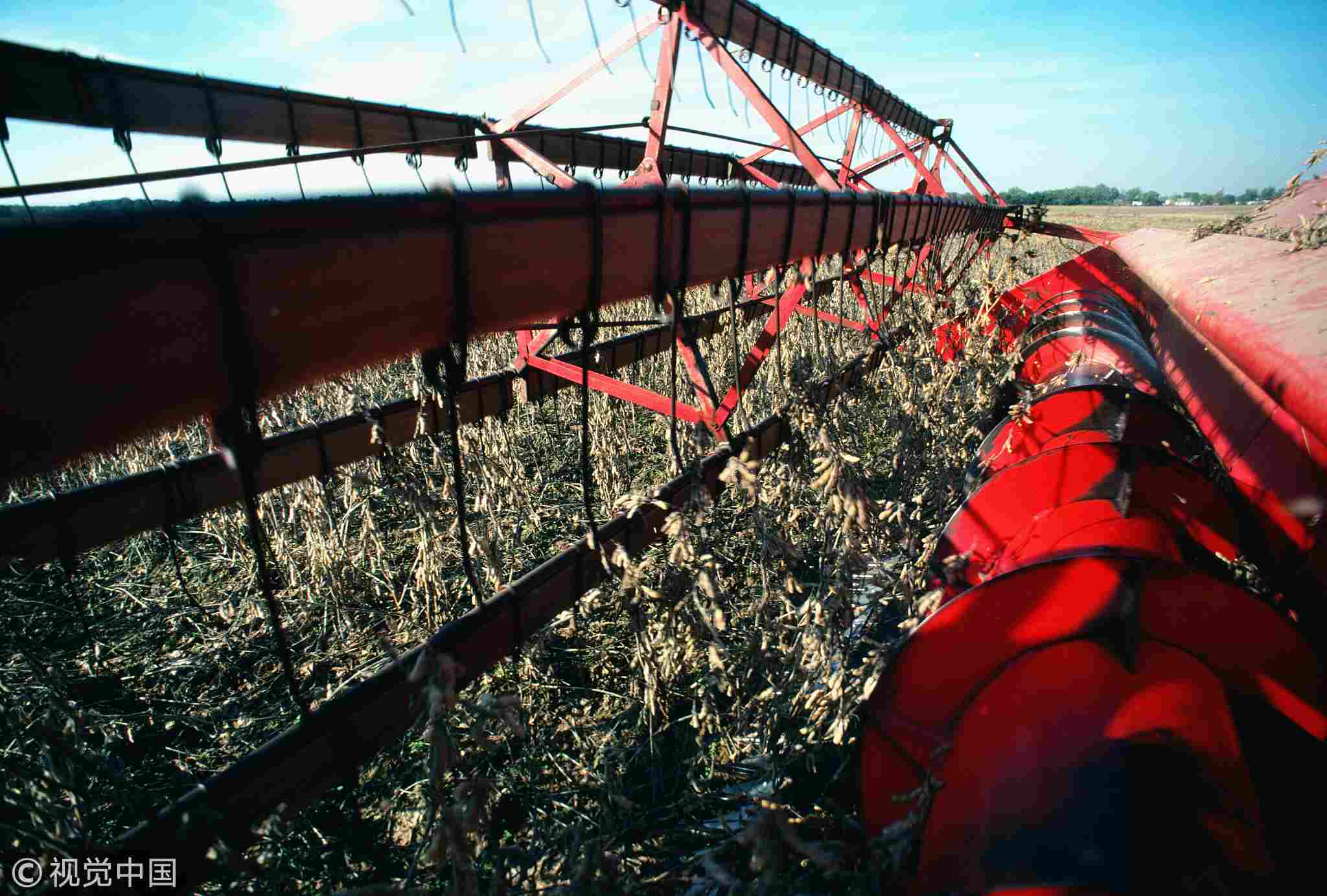
A close-up of combine harvesting soybeans in Maryland. /VCG Photo
A close-up of combine harvesting soybeans in Maryland. /VCG Photo
But Dr Gong is cautious about the finalization of a deal between the EU and the US as Donald Trump had rejected outcomes in several rounds of trade talks with China. And will the unsettled tariffs on EU cars, steel and aluminum trigger a new round of trade disputes? It’s still a question mark.
Dr Gong called said it was his personal view that meetings between trade representatives are just pre-plays, like Steve Mnuchin’s previous visits to China. He said final deals on trade tensions need to be reached at top levels. He suggested that probably a summit between US and China could help to solve the current trade deadlock.
On the recently signed EU-Japan Economic Partnership Agreement, Gong thought it will be a trend in future alongside the WTO framework. In his view, bilateral trade deals can be a supplementary to the WTO as the organization’s rules mainly represent minimum standards.
Under such circumstances, it is hard for all WTO members to advance different agendas. So reaching bilateral or regional deals could be a good model to solve trade issues.
When asked if the EU-Japan agreement could be a model to solve US-China trade tension, Gong said there are many things involved in the conflict, such as subsidies and IPRs. But he also believes that China is very willing to sit at the table and reach an accommodation on those issues.
And, he emphasized that China needs time to solve some of these issues gradually. But right now, Washington is taking a “take or leave” attitude on negotiations, which is not suitable and hard to accept for negotiations. So he hopes the US can walk back to the table and work on a more reasonable list with China.