
Business
14:21, 30-Apr-2018
Qiantu at Beijing Auto Show: We welcome foreign competition
 ["china"]
Share







Copied
02:13
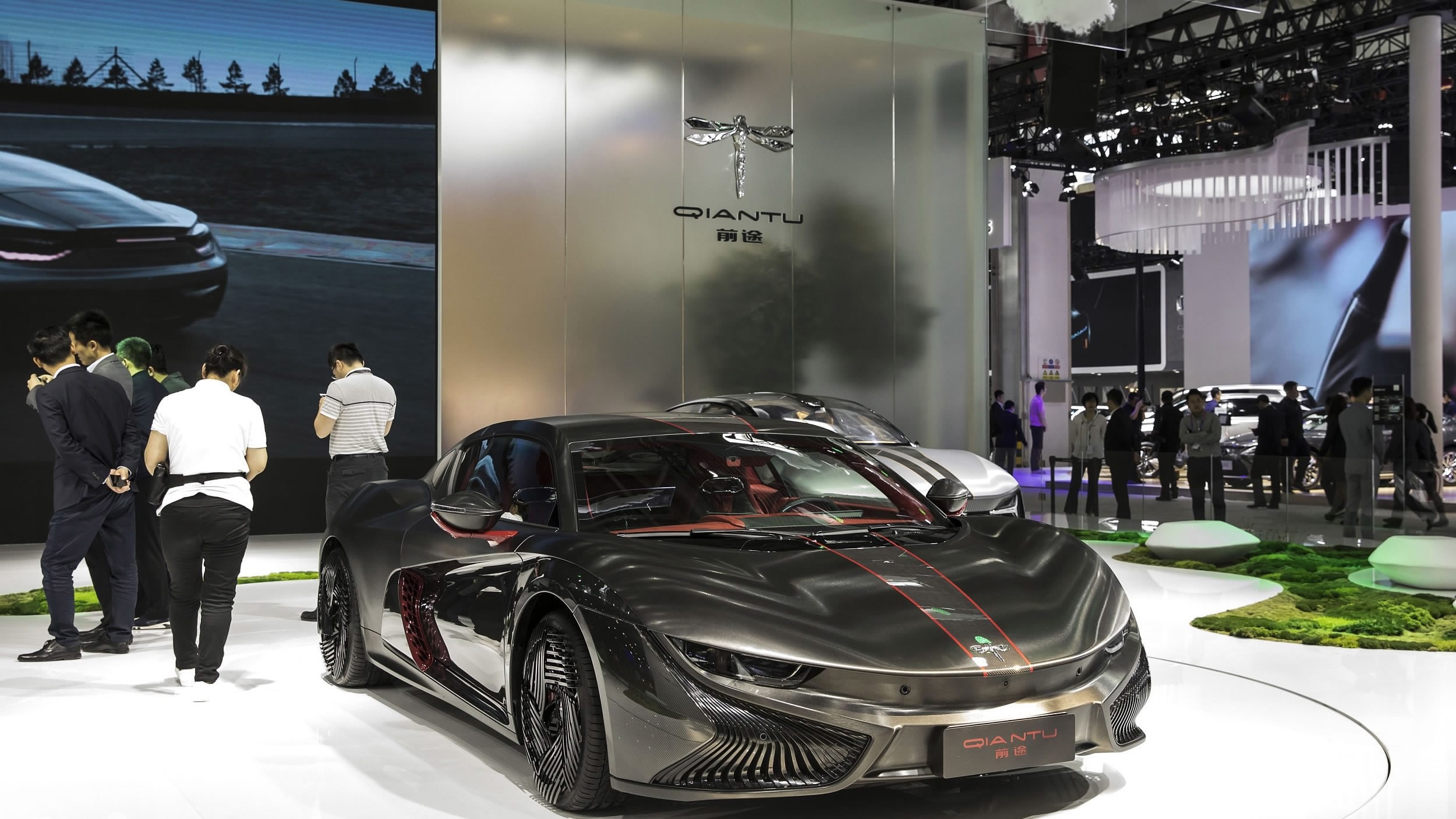
For new Chinese brands trying to find their feet in the rapidly expanding car market, having control over the technology underneath the hood is extremely important. This was the message Lu Qun, chairman of domestic new energy performance brand Qiantu Motor, conveyed to CGTN at the 2018 Beijing Auto Show.
Qiantu, with its dragonfly logo symbolizing agility and speed as well as recalling elements of Chinese culture, has three cars on display at the ongoing Beijing Auto Show, with the centerpiece K50 ready to enter production from its recently completed factory in Suzhou, eastern Jiangsu Province.
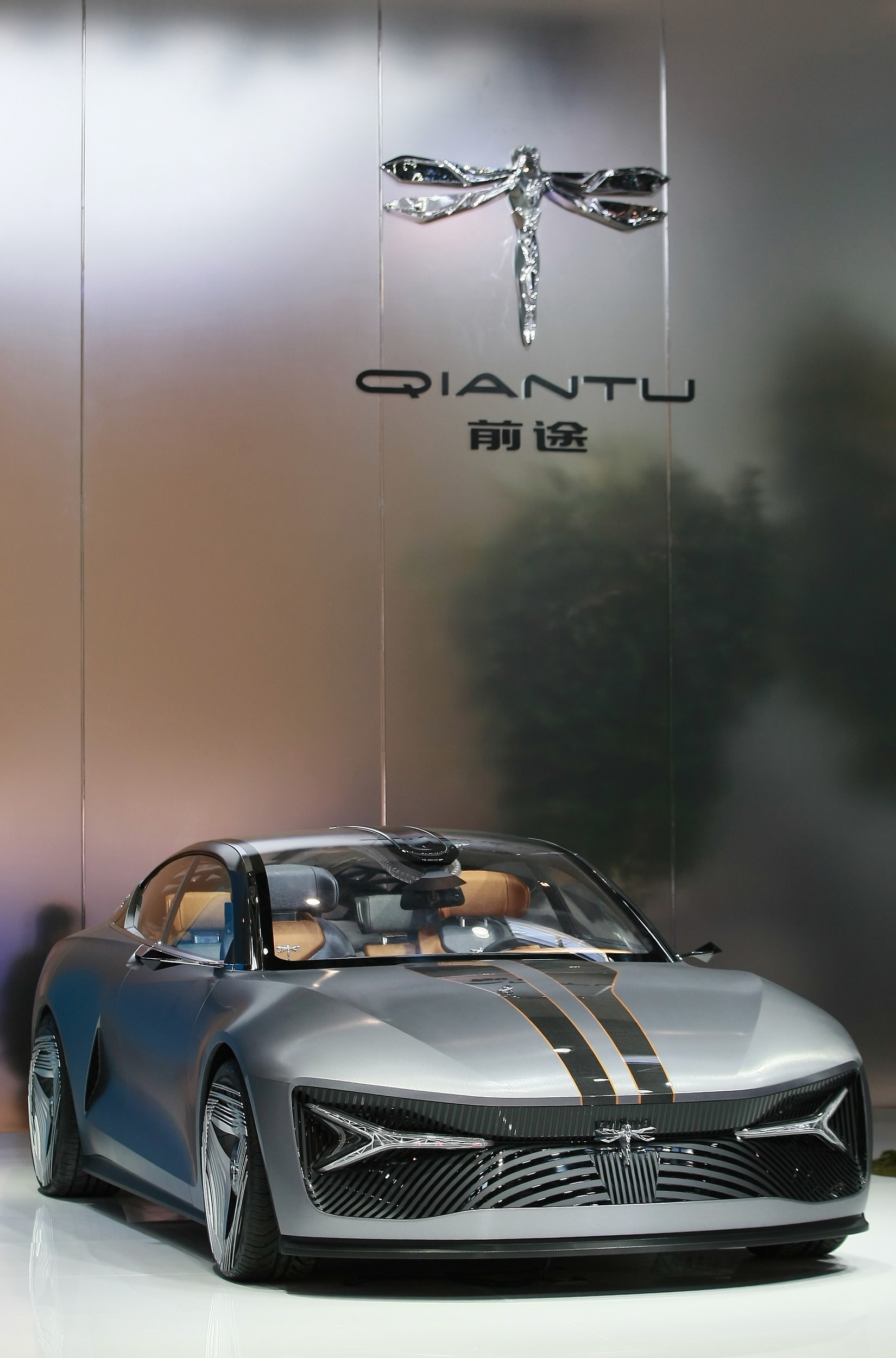
One of three Qiantu NEVs on display at the 2018 Beijing Auto Show. /VCG Photo
One of three Qiantu NEVs on display at the 2018 Beijing Auto Show. /VCG Photo
The electric performance sports car can reach speeds of 200 kilometers per hour, with its stunning design and carbon-fiber chassis making it one of the most eye-catching vehicles on display at the auto show.
The other two vehicles on display were a glimpse of what Qiantu has in store for the future in terms of its brand and the wider Chinese NEV sector – a small-scale sports car, and a four-door, four-seater coupe model.
While concerns continue to be raised about potential trade friction with the US and how that could affect industry supply chains for domestic brands, Lu was confident that his brand would be unaffected, telling CGTN that Qiantu had “mastered the underlying technology” behind the car, adding that the company attached great importance to being in control of the materials and processes used during manufacturing.
Lu called the threat of so-called trade frictions “short-lived,” but welcomed the long-term nature of increasing competition in the auto sector, calling it “a positive for the industry.”
01:16
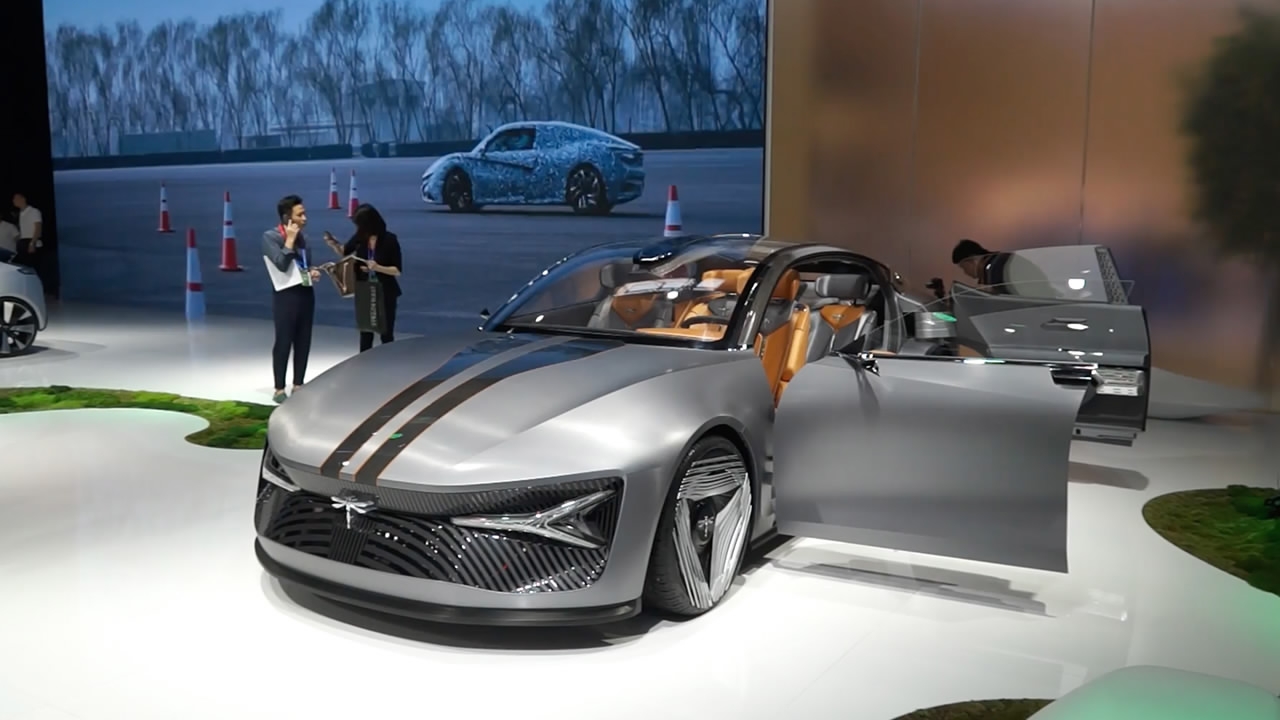
The recent announcement of plans to remove caps on foreign investment in the automotive industry by 2022 has raised questions over how this will affect domestic brands. For Lu, China’s car market is already an “internationally competitive industry” where joint ventures between domestic and overseas brands already provide foreign competition to domestic manufacturers, meaning the reforms will not make much of a difference.
Lu pointed to what he called a “small advantage” in being a 100 percent Chinese company in the domestic market, saying it meant Qiantu are slightly closer to their customers, and therefore in a better position to pinpoint and deeply understand their users. Lu said that in a market as big as China’s, “the closer you are to your users, the bigger is your advantage.”