
Politics
16:41, 14-May-2018
Kim-Trump summit: Will denuclearization really happen?
 ["china"]
Share







Copied
The Democratic People's Republic of Korea (DPRK) has scheduled the dismantlement of its nuclear test site for sometime between May 23 and 25, announced the DPRK.
The announcement comes after the United States promised last Friday that it would work to rebuild the sanction-crippled economy of the DPRK if Pyongyang agrees to surrender its nuclear arsenal.
The two moves are part of the gradually changing relationship between the US and DPRK. Just last week, the DPRK released American prisoners and Trump has softened his rhetoric on the country and its leader.
As the world waits to see what will happen at the June 12 summit between DPRK leader Kim Jong Un and US President Donald Trump, there is no doubt that the summit will focus on one critical issue: the denuclearization of the Korean Peninsula.
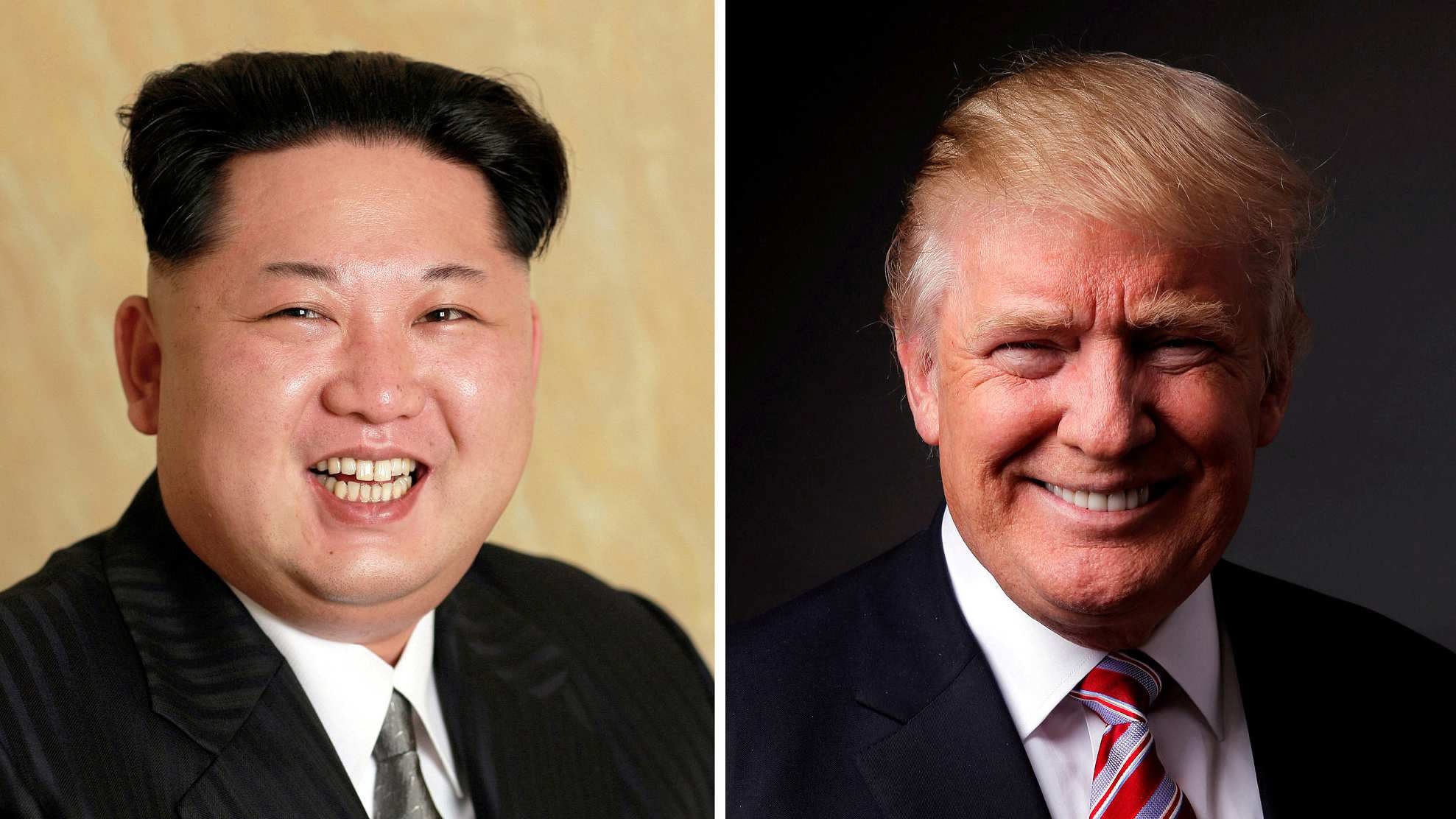
A combination photo shows a Korean Central News Agency (KCNA) handout of DPRK's leader Kim Jong Un released on May 10, 2016, and Republican US presidential candidate Donald Trump posing for a photo after an interview with Reuters in his office in Trump Tower, in the Manhattan borough of New York City, US, May 17, 2016. /VCG Photo
A combination photo shows a Korean Central News Agency (KCNA) handout of DPRK's leader Kim Jong Un released on May 10, 2016, and Republican US presidential candidate Donald Trump posing for a photo after an interview with Reuters in his office in Trump Tower, in the Manhattan borough of New York City, US, May 17, 2016. /VCG Photo
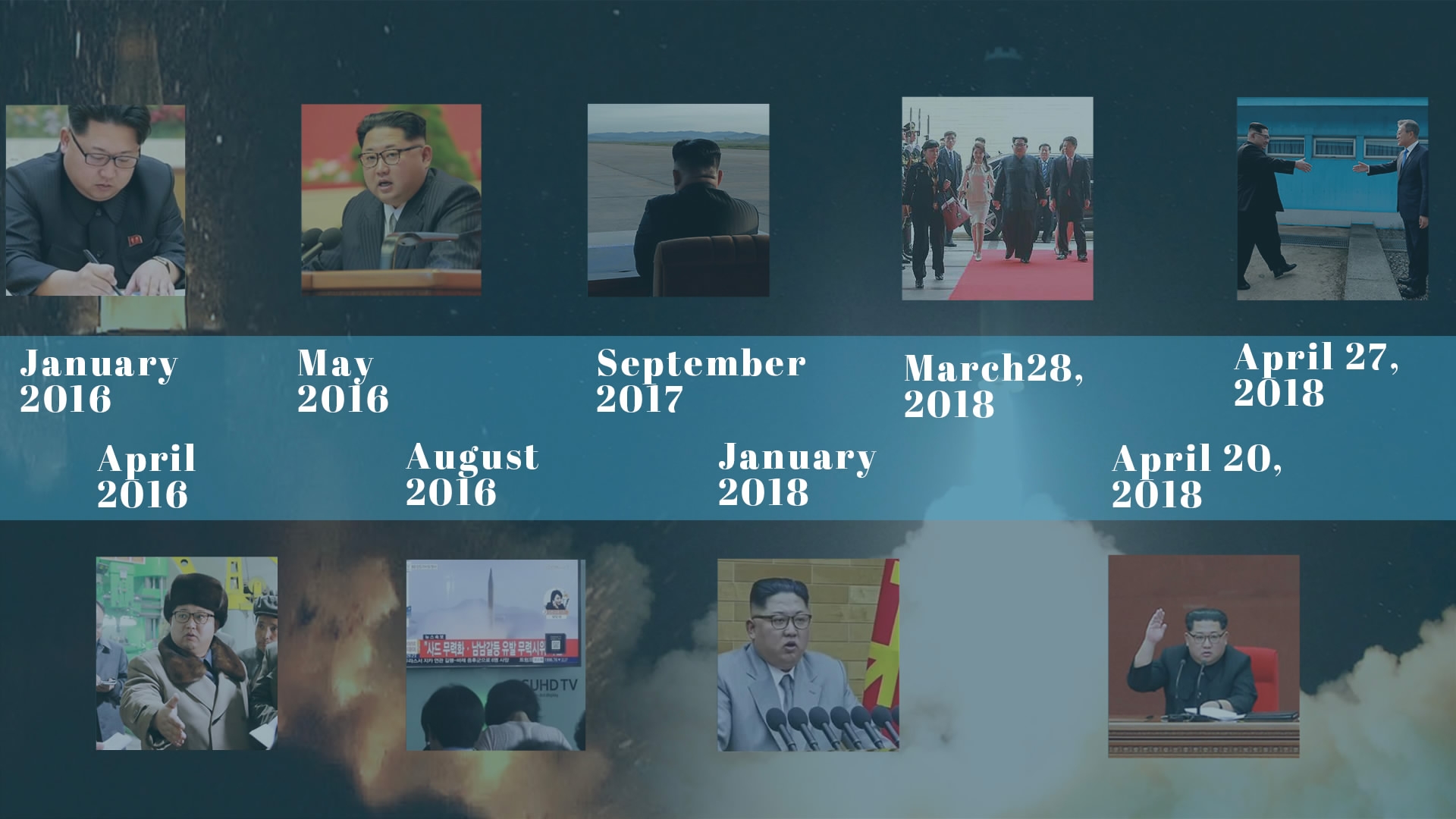
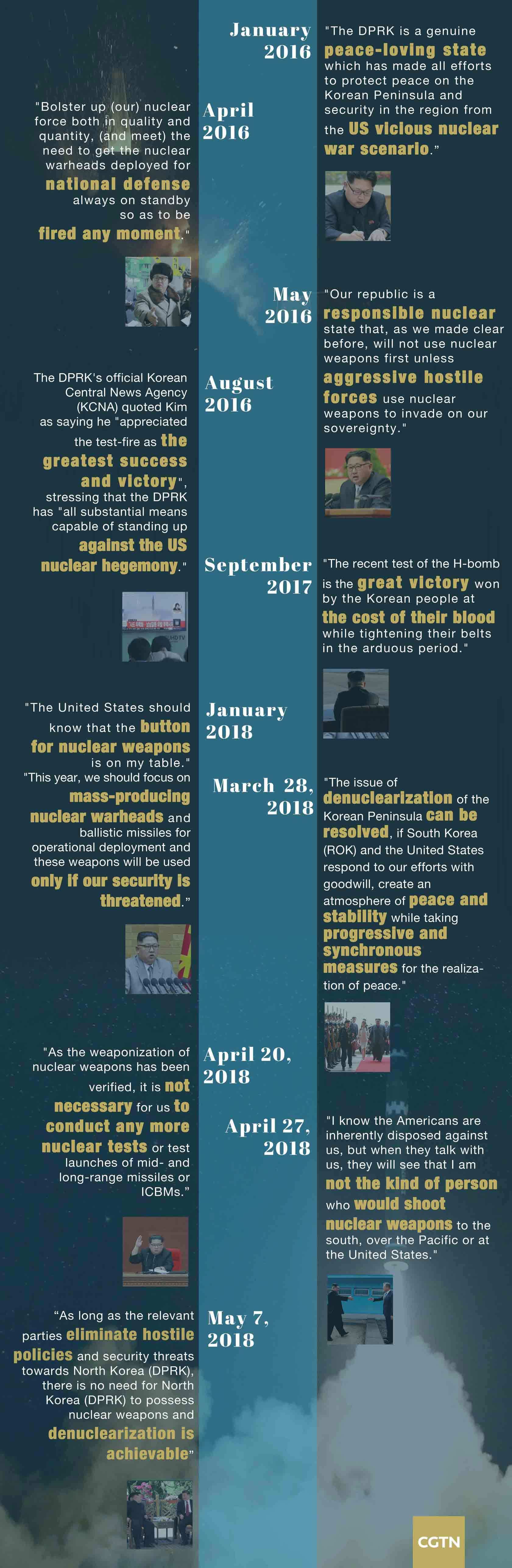
Infographic: Review of Kim Jong Un's changing remarks
CGTN Photo
CGTN Photo
So what are the reasons behind these concessions? Will the two countries actually achieve the goal of denuclearization, or is Kim Jong Un's announcement nothing more than a media tactic? We examine some of the reasons for DPRK's shift from being adamant about its nuclear program to "almost" abandoning it.
Deterrence against American aggression?
The Korean Peninsula remains technically in a state of war as the 1950-53 Korean War ended with an armistice, not a peace treaty.
Clues from Kim Jong Un’s remarks show that the biggest reason for the DPRK's nuclear program is what it claims is it's “self-protection.”
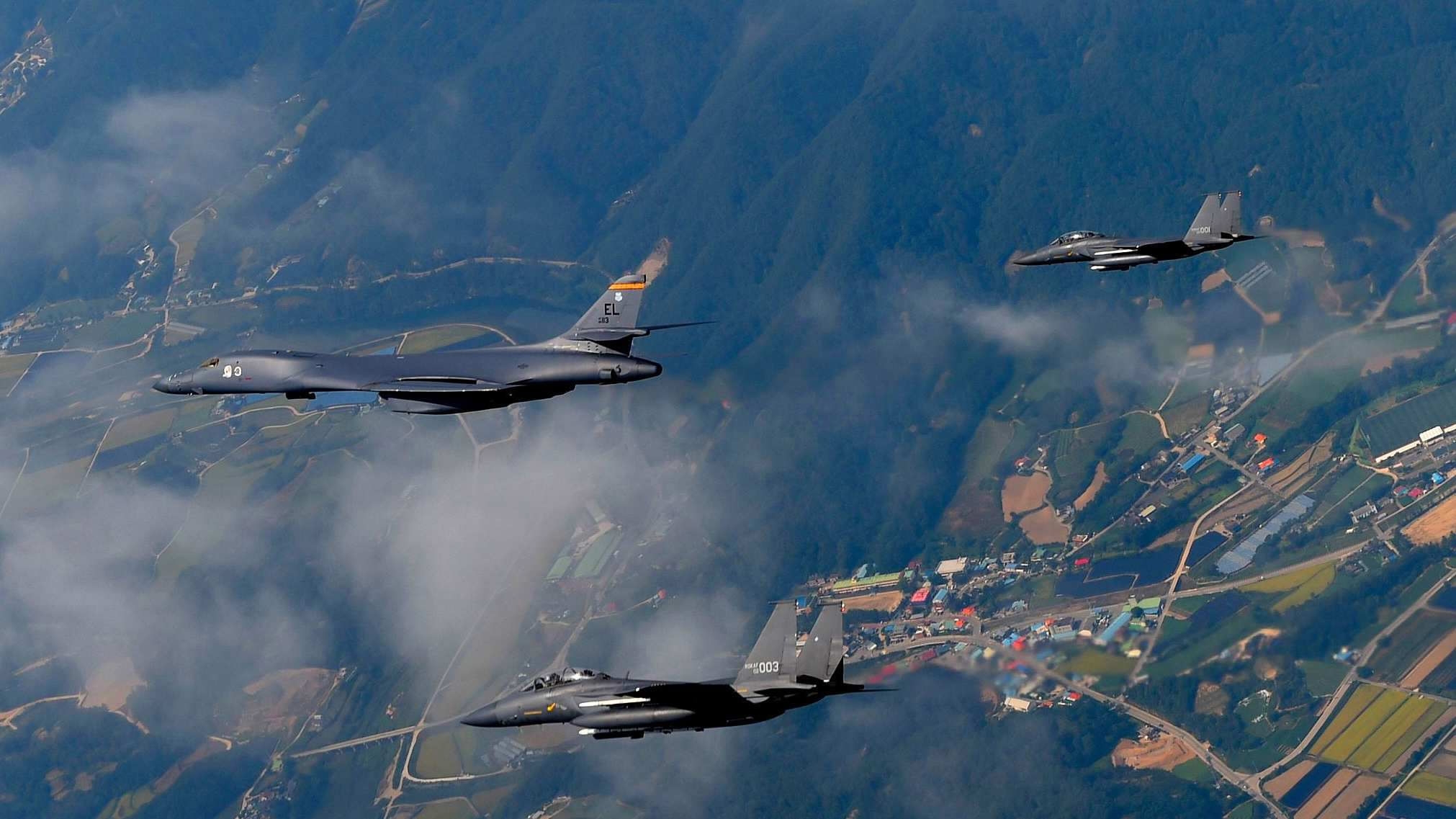
A US Air Force B-1B Lancer(L) deployed to Andersen Air Base, Guam, and two F-15K Slam Eagles assigned to Daegu Air Base, Republic of Korea, flying over ROK skies, September 21, 2016. /VCG Photo
A US Air Force B-1B Lancer(L) deployed to Andersen Air Base, Guam, and two F-15K Slam Eagles assigned to Daegu Air Base, Republic of Korea, flying over ROK skies, September 21, 2016. /VCG Photo
The US-Republic of Korea (ROK) combined military exercises, which were viewed as a threat to DPRK, claimed to not just be an effort to demonstrate their joint operation capabilities to counter DPRK's provocations, but also a sign of respect for the combined forces of the US-ROK alliance.
Win a war with the South?
“If Pyongyang can force an American president to blink in a future Korean crisis, then the US-South Korea military alliance will collapse,” Nicholas Eberstadt said to Financial Times, a Korea expert at the conservative American Enterprise Institute think-tank.
Real denuclearization or diplomacy?
KCNA quoted Kim as saying that “the northern test area has completed its mission and under the proven condition of complete nuclear weapons, the country no longer needs any nuclear tests, mid-range and intercontinental ballistic rocket tests.”
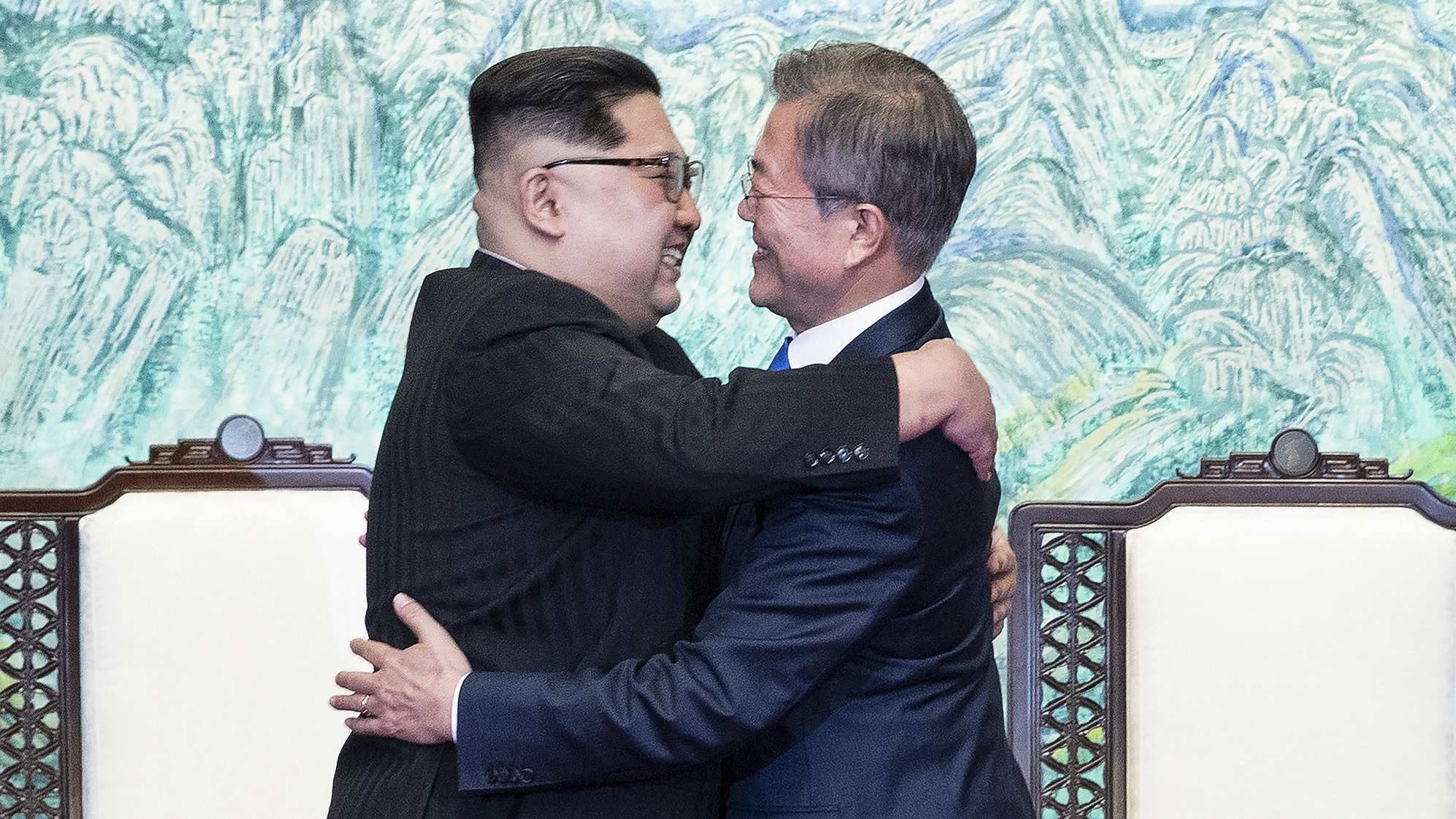
ROK President Moon Jae-in (R) meets with top leader of the DPRK Kim Jong Un in the border village of Panmunjom, April 27, 2018. /VCG Photo
ROK President Moon Jae-in (R) meets with top leader of the DPRK Kim Jong Un in the border village of Panmunjom, April 27, 2018. /VCG Photo
Some media reported that the reason for DPRK’s discontinuance of the nuclear test is the fact that the country has already mastered the technology of nuclear weapons that can be used for war, so the temporary pause button is to win some time in diplomacy.
Meanwhile, there is a possibility that Kim really wants to “concentrate all efforts on building a powerful socialist economy and markedly improving the standard of people's living through the mobilization of all human and material resources of the country," as he announced at the third plenary session of the seventh general assembly of the Workers' Party of Korea.