
Asia Pacific
14:42, 13-May-2019
Sri Lanka Catholics hold first Sunday mass after Easter attacks
 ["china"]
Share







Copied
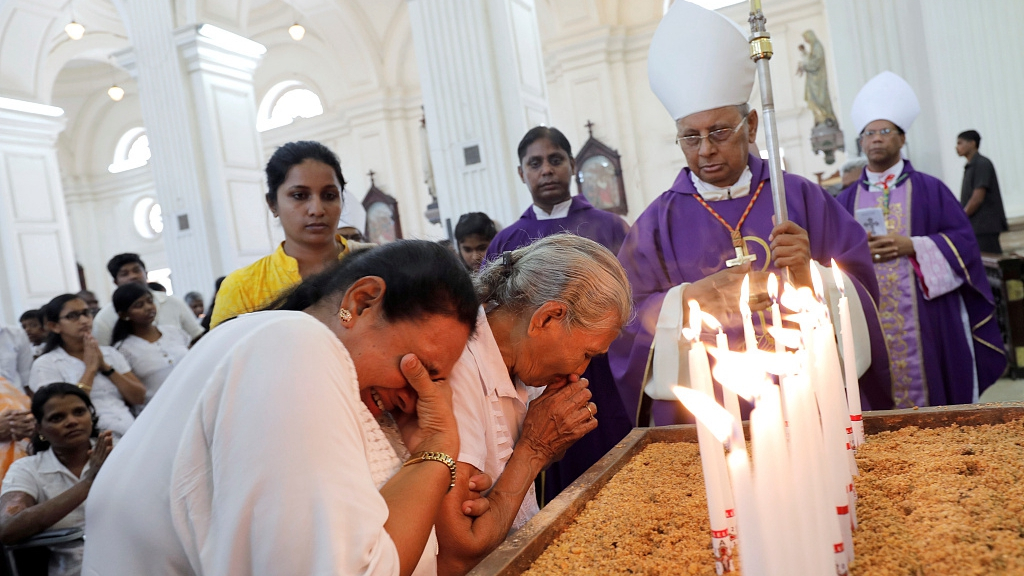
Thousands of Catholics attended mass in Sri Lanka's capital Colombo Sunday amid tight security to prevent a repeat of Easter bomb attacks that killed 258 people.
Soldiers armed with automatic assault rifles guarded St. Theresa's church at Colombo's Thimbirigasyaya residential quarter, while members of the congregation were searched for explosives.
The sprawling church car park was empty as the authorities did not allow any vehicles into the compound as part of high-level security.
The government has blamed local jihadists for the deadly April 21 bombings, which targeted three Christian churches and three luxury hotels.
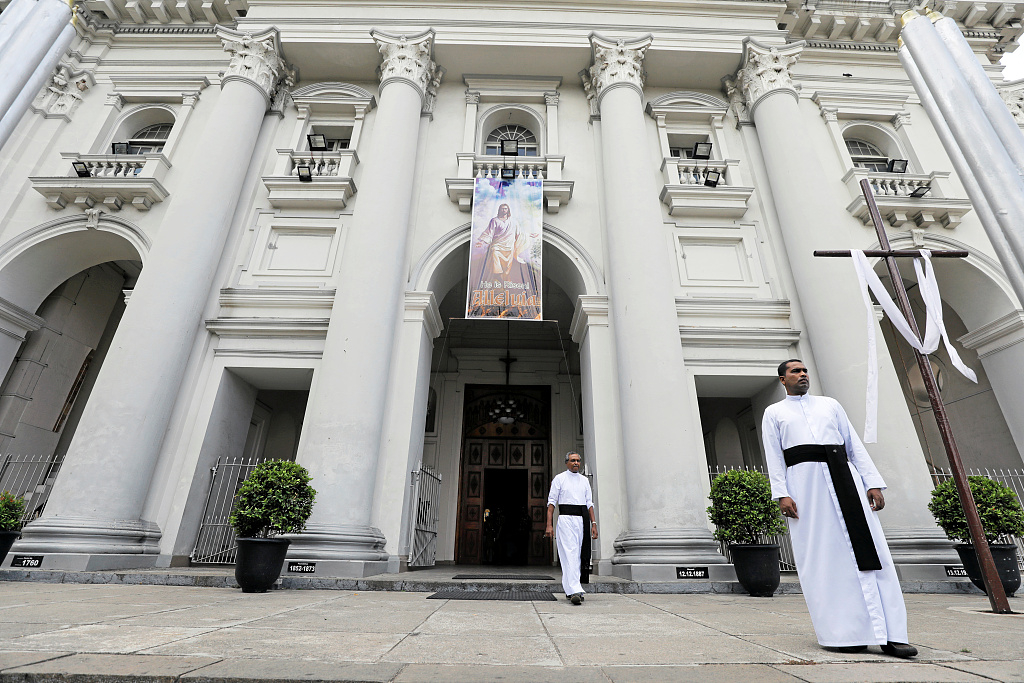
Survivors and families of victims of Sri Lanka's Easter Sunday bombing attacks arrive at St. Lucia Cathedral, Colombo, Sri Lanka, May 11, 2019. /VCG Photo
Survivors and families of victims of Sri Lanka's Easter Sunday bombing attacks arrive at St. Lucia Cathedral, Colombo, Sri Lanka, May 11, 2019. /VCG Photo
Regular services were cancelled across all churches soon after the deadly suicide attacks, but the archbishop of Colombo Cardinal Malcolm Ranjith announced Thursday that mass would be held in his diocese from Sunday.
The Cardinal conducted private Sunday services in the past two weeks, which were broadcast live on national television.
He also said a special mass for the victims of the April 21 attack at the St. Lucia's cathedral on Saturday. The congregation was made up of relatives of victims and survivors of the Easter Sunday attacks.
At least 258 were killed and nearly 500 people were wounded.
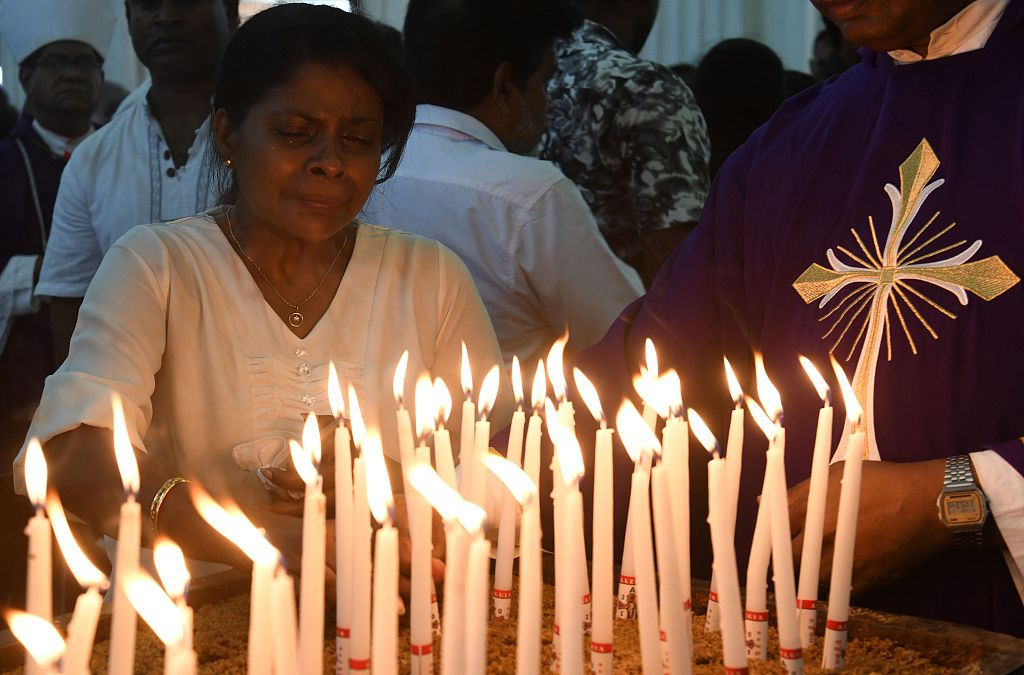
A Sri Lankan Christian devotee lights candles at St Lucia's Cathedral during the holly mass, Colombo, May 11, 2019. /VCG Photo
A Sri Lankan Christian devotee lights candles at St Lucia's Cathedral during the holly mass, Colombo, May 11, 2019. /VCG Photo
Most churches outside Colombo had resumed regular services from last week, but under tight security provided by the local police.
Catholic private schools which remained closed after the Easter holidays will now reopen on Tuesday, church officials said.
All state-run schools, more than 10,000 in total, resumed classes last week after police and security forces deployed armed guards.
But attendance has been low despite a raft of new security measures, including parking restrictions near schools.
The government has blamed a local group, the National Thowheeth Jama'ath (NTJ), for the bombings. The Islamic State group claimed responsibility and the bombers filmed themselves making a pledge of allegiance to the militants' elusive leader Abu Bakr al-Baghdadi before the attacks.
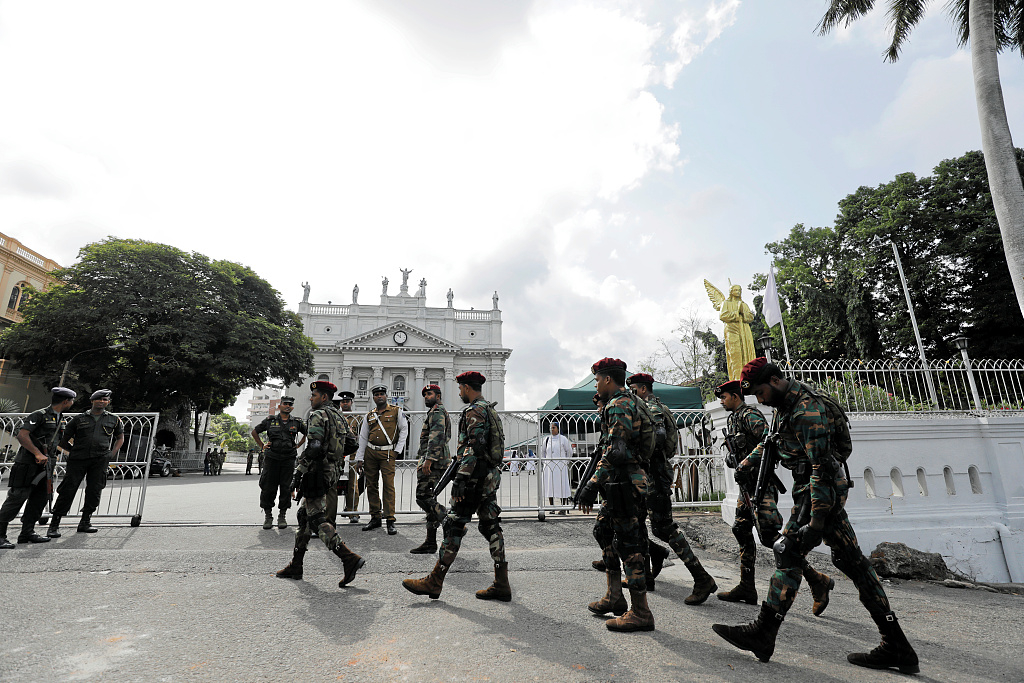
Sri Lanka's commando soldiers walk near the main entrance of St. Lucia Cathedral to keep security, Colombo, May 11, 2019. /VCG Photo
Sri Lanka's commando soldiers walk near the main entrance of St. Lucia Cathedral to keep security, Colombo, May 11, 2019. /VCG Photo
The authorities have banned the NTJ under new emergency laws that were invoked to deal with Islamists responsible for the attacks.
President Maithripala Sirisena has vowed to eliminate the militants and restore normality in the country which is still emerging from a 37-year Tamil separatist war that ended almost a decade ago.
Sri Lanka's police say they have either killed or arrested all those responsible for the bombings but that the threat of global terrorism persists.
Read more:
After the Sri Lanka bombings: Changes and struggles
ISIL claims Sri Lanka blasts, as the country mourns
All suspects in Sri Lanka bombings arrested or dead: acting police chief
Source(s): AFP