
Tech & Sci
09:45, 19-Jul-2018
Protein key component in irregularly excited brain cells: study
Updated
09:43, 22-Jul-2018
 ["china"]
Share







Copied
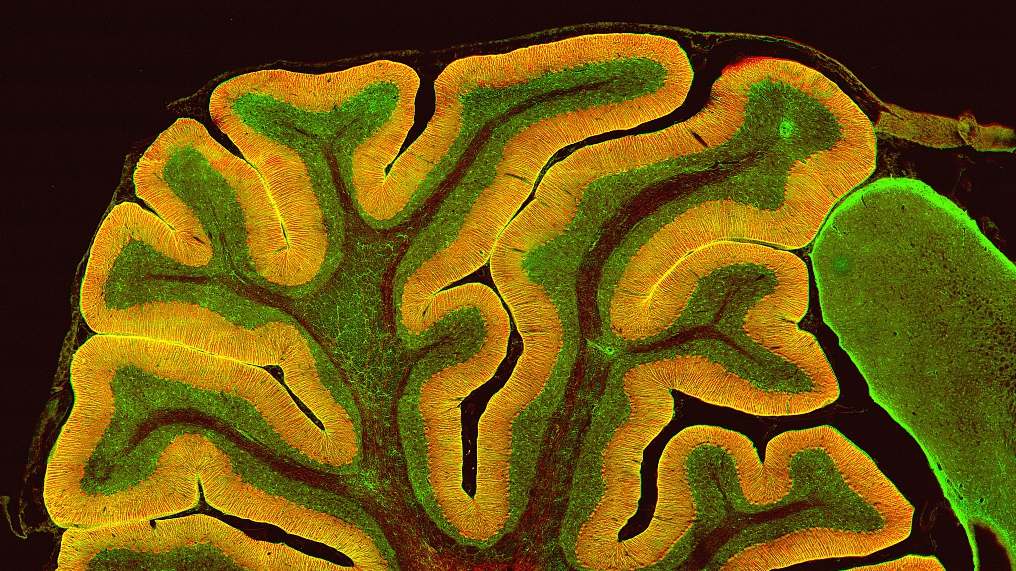
Researchers at the University of Illinois (UI) have identified a key protein involved in the irregular brain cell activity seen in autism spectrum disorders and epilepsy.
Using a mouse model of Fragile X syndrome, the most common inherited autism disorder, the researchers discovered a molecular mechanism involved in the inability to regulate excitability. The protein p53, well-known in cancer biology as a tumor suppressor, is present in higher-than-normal levels in irregularly excitable neurons.
In an earlier study, the researchers found that p53 in neurons breaks down when normal neurons are at a higher excitable state.
In the new study, researchers found that p53, which doesn't break down normally in Fragile X neurons, triggered a cascade of reactions that interfered with the normal signal to return to a calmer state.
"We don't yet know all the parts of this cascade, but we did find that p53 interferes with another important protein, Nedd4-2, that is associated with epilepsy," said Nien-Pei Tsai, a UI professor of molecular and integrative physiology who led the new research.
The researchers tested the cellular effect of reducing the protein by knocking down the p53 gene in their mouse model. They also inhibited the protein in neurons grown in cell culture with a drug used in cancer research to see the effect in communications between groups of neurons and one-to-one synaptic connections.
"We found that in both cases, removal of the p53 protein and inhibition of the protein, the connections between synapses and groups of neurons were able to return to a normal, stable state," Tsai said. "These findings show a previously unknown, and very strong, role that p53 is playing in irregular brain cell function."
The findings, which have opened new avenues for understanding the factors that contribute to these developmental disabilities, have been published in the journal Human Molecular Genetics and Neuropharmacology.
Source(s): Xinhua News Agency