
Politics
09:57, 26-May-2018
Trump: US in 'productive talks' about reinstating summit with Kim
 ["china"]
Share







Copied
01:50
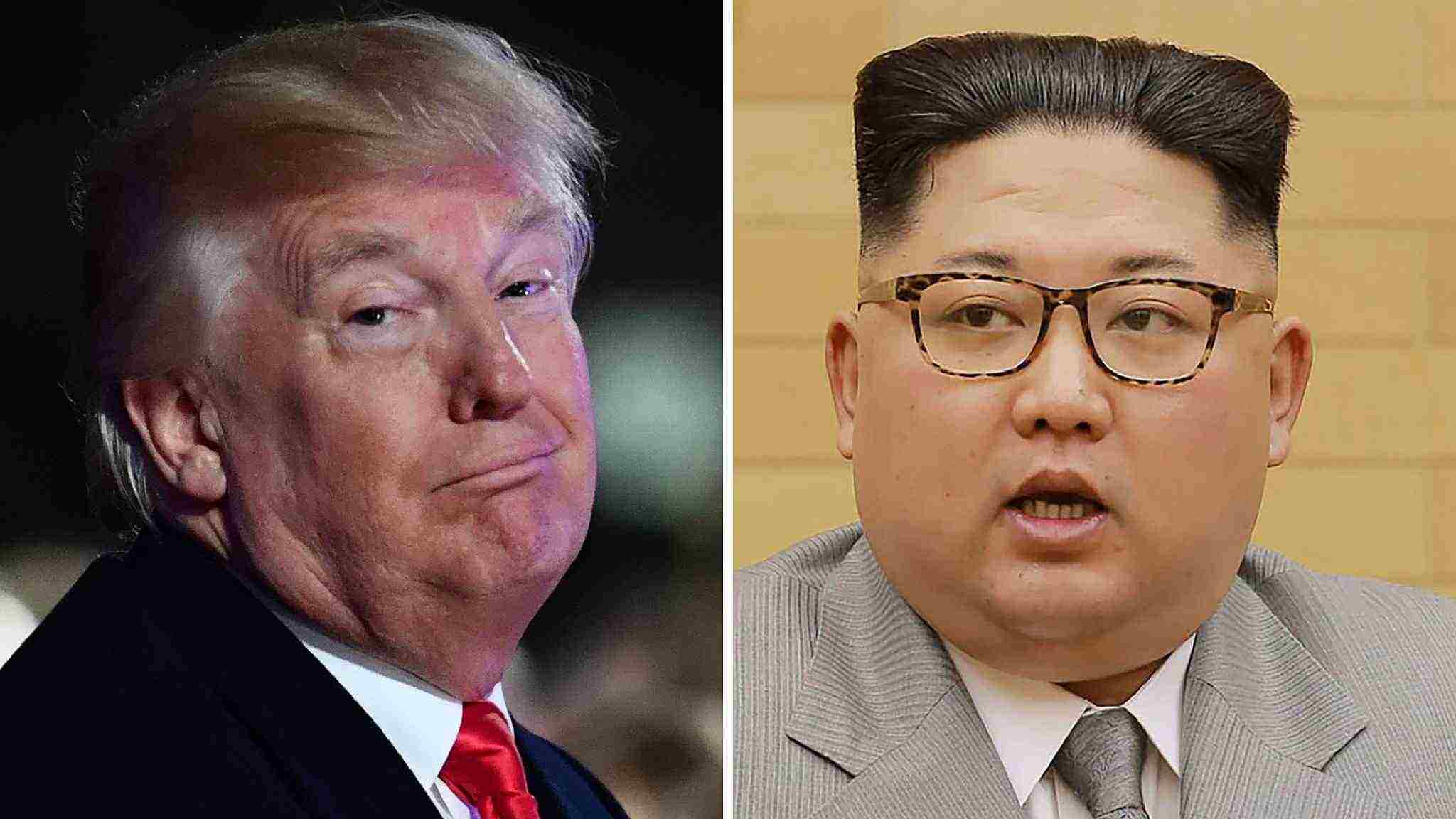
US President Donald Trump tweeted late Friday that the US was having "very productive talks" with the Democratic People's Republic of Korea (DPRK) regarding the summit with its leader Kim Jong Un, a day after he scrapped the meeting.
"We are having very productive talks with North Korea (DPRK) about reinstating the Summit which, if it does happen, will likely remain in Singapore on the same date, June 12th., and, if necessary, will be extended beyond that date," Trump said in a Twitter post.
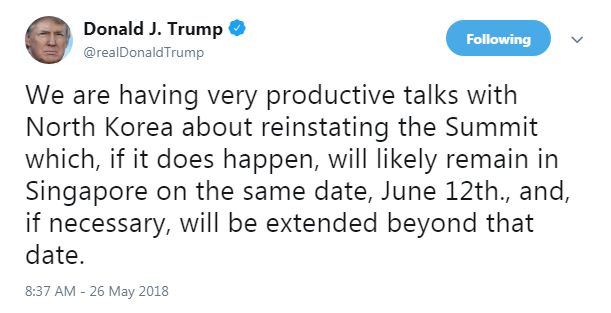
Screenshot of Trump's tweet
Screenshot of Trump's tweet
Shortly after the DPRK demolished its "famous and secret" nuclear site, Trump on Thursday responded with a surprising letter, calling off his planned June 12 summit with Kim, blaming the "tremendous anger and open hostility" from Pyongyang in recent days.
But the DPRK responded Friday by saying it was willing to talk to the US "at any time," a reaction Trump welcomed as "warm and productive." "We're talking to them now," Trump said. "They very much want to do it. We'd like to do it."
The Republic of Korea (ROK) on Saturday welcomed the renewed prospect of the summit. "We find it fortunate that the embers of the North Korea (DPRK)-US talks are reignited. We are watching developments carefully," Presidential Blue House spokesman Kim Eui-gyeom said.
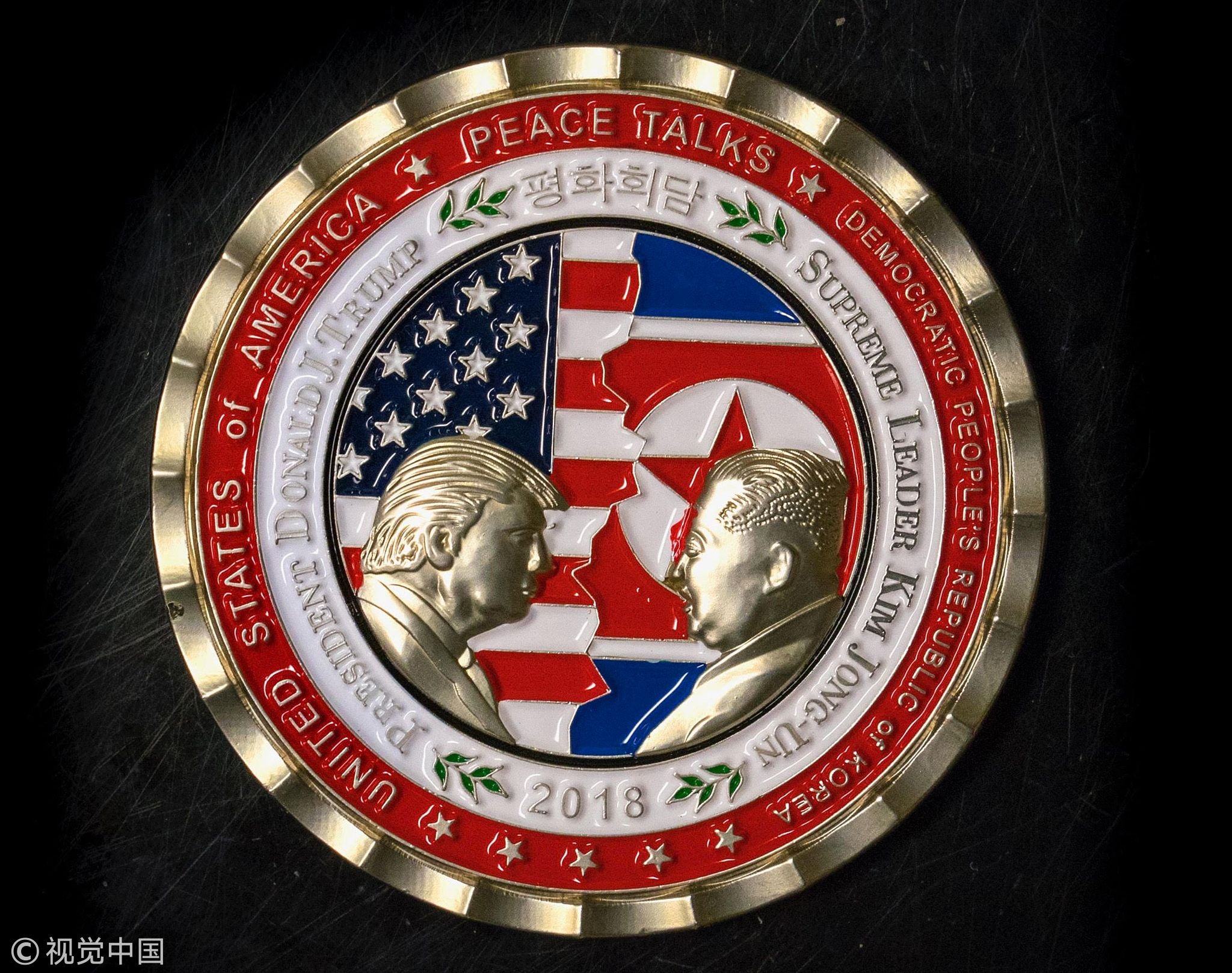
A coin for the upcoming US-DPRK summit is seen in Washington, DC, US. /VCG Photo
A coin for the upcoming US-DPRK summit is seen in Washington, DC, US. /VCG Photo
World leaders hold out hope the summit will still happen
Many of the world leaders that were gathered in St. Petersburg, Russia, on Friday for an international economic forum remain optimistic that the Trump-Kim summit will eventually take place.
Chinese Vice President Wang Qishan said he is still holding out hope that Trump and Kim will sit down and talk, face-to-face. He said both men “have left room to maneuver for each other.”
Wang was speaking at the economic forum in Russia. He shared the stage with other world leaders, including Japan’s Prime Minister Shinzo Abe.
01:52
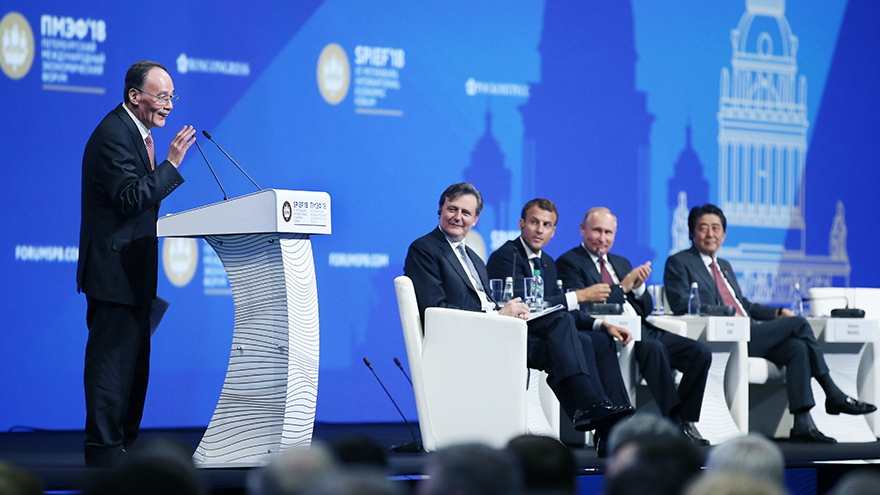
The Japanese prime minister said world leaders should do everything they can to help ensure the talks take place, but dialogue for the sake of dialogue, he said, is pointless.
"France, China and of course the United States, people across the world, we would like them to work together to push the DPRK in the right direction,” Abe said. “In order to do that, we must work together and tackle this problem the DPRK poses.”
Abe also warned world players against making long-term partnerships with Pyongyang before it meets certain conditions.
The event’s host was Russian President Vladimir Putin, who on Thursday defended Kim, saying the DPRK leader “did everything he promised in advance.”
Meanwhile, in Vienna, the Republic of Korea’s (ROK) Prime Minister Lee Nak-yeon told his Austrian host he was regretful that the June 12 meeting won’t happen. “I am not being pessimistic about it and still have hope,” Lee said. “I believe we should revive the historic opportunity for denuclearization on the Korean Peninsula.”
This optimism was echoed in Beijing.
“We strongly hope,” Lu Kung, the Chinese Foreign Ministry spokesman said, “that both the DPRK and the US can cherish the recent positive progress, stay patient, demonstrate good will, move in the same direction, and continue to stay committed to promoting the denuclearization of the peninsula and resolving each other’s concerns through dialogue and consultation.”
Recent setbacks in rapprochement
There's been a series of recent setbacks in relations between the DPRK and the US.
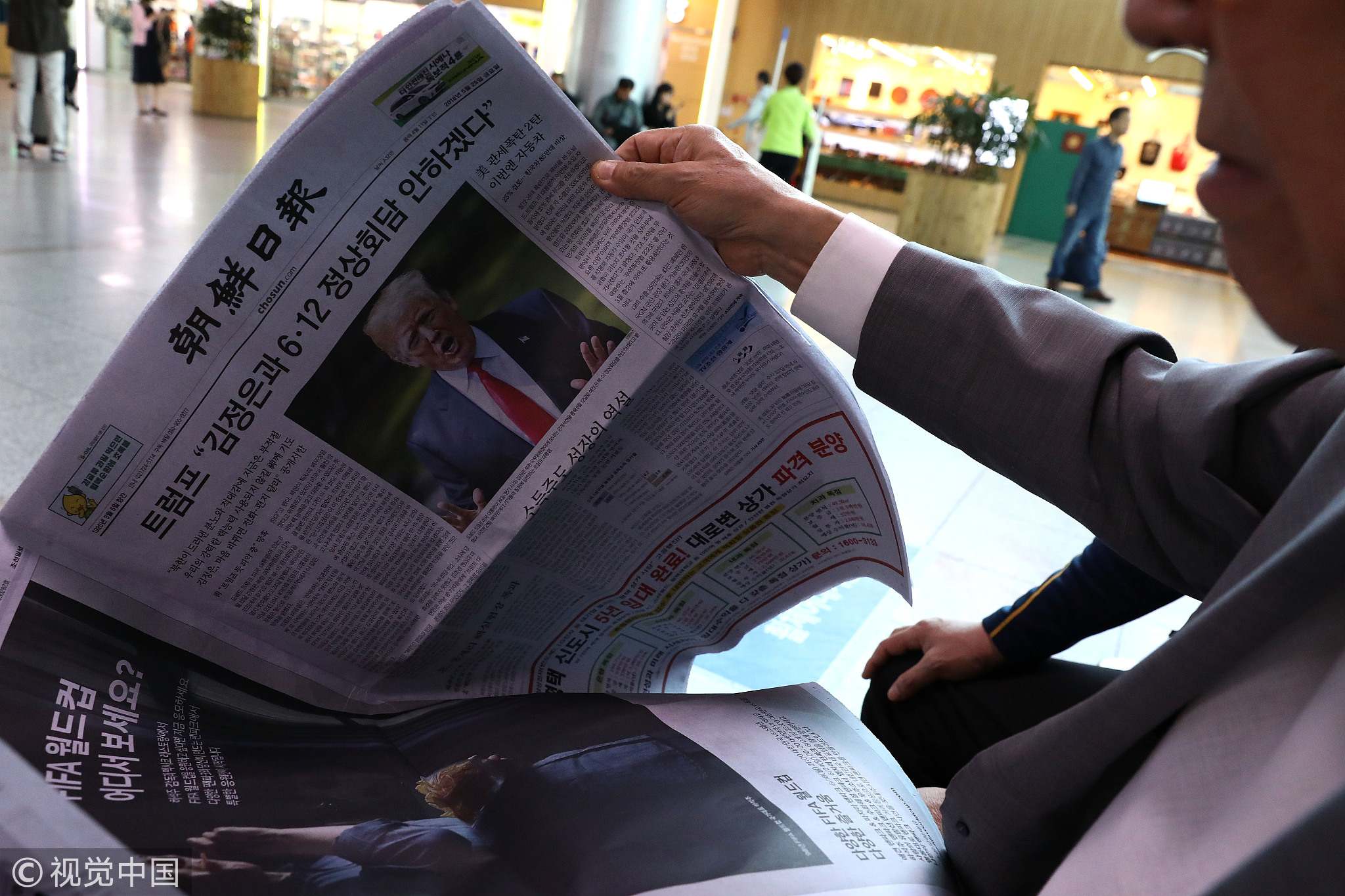
A man reads a newspaper at Seoul railway station in Seoul, Republic of Korea, May 25, 2018. /VCG Photo
A man reads a newspaper at Seoul railway station in Seoul, Republic of Korea, May 25, 2018. /VCG Photo
Two days after the historic meeting between the leaders of the DPRK and the ROK, US president's national security adviser, John Bolton, suggested that denuclearization should follow the Libyan model.
Two weeks later, the ROK and the US began joint military drills that included nuclear-capable warplanes, despite the DPRK describing that as a red line.
Pyongyang protested, calling the drills practice for an invasion and then cancelled high-level talks with the ROK.
It also warned that the joint summit in Singapore was at risk if the US was going to demand a unilateral nuclear surrender.
The White House then suggested Trump was not following any model, including the Libyan one.
But Vice President Mike Pence repeated Trump's warning that he's willing to walk away from the planned meeting in Singapore.
On Thursday Trump scrapped the meeting with Kim, but he changed his tone again on Friday suggesting the meeting could still happen.