
Politics
15:02, 02-Jul-2018
What's behind the German government crisis?
Updated
14:20, 05-Jul-2018
 ["europe"]
Share







Copied

Germany's government faces a critical Monday.
Chancellor Angela Merkel hoped an agreement struck over migration at last week's EU summit would be sufficient to keep her government together after a very public split with coalition partner the Christian Social Democrats (CSU).
Interior minister Horst Seehofer, also the CSU chairman, had indicated he would implement tough new border policies in defiance of Merkel if she did not meet his call for a Europe-wide policy that cracked down on secondary migration into Germany.
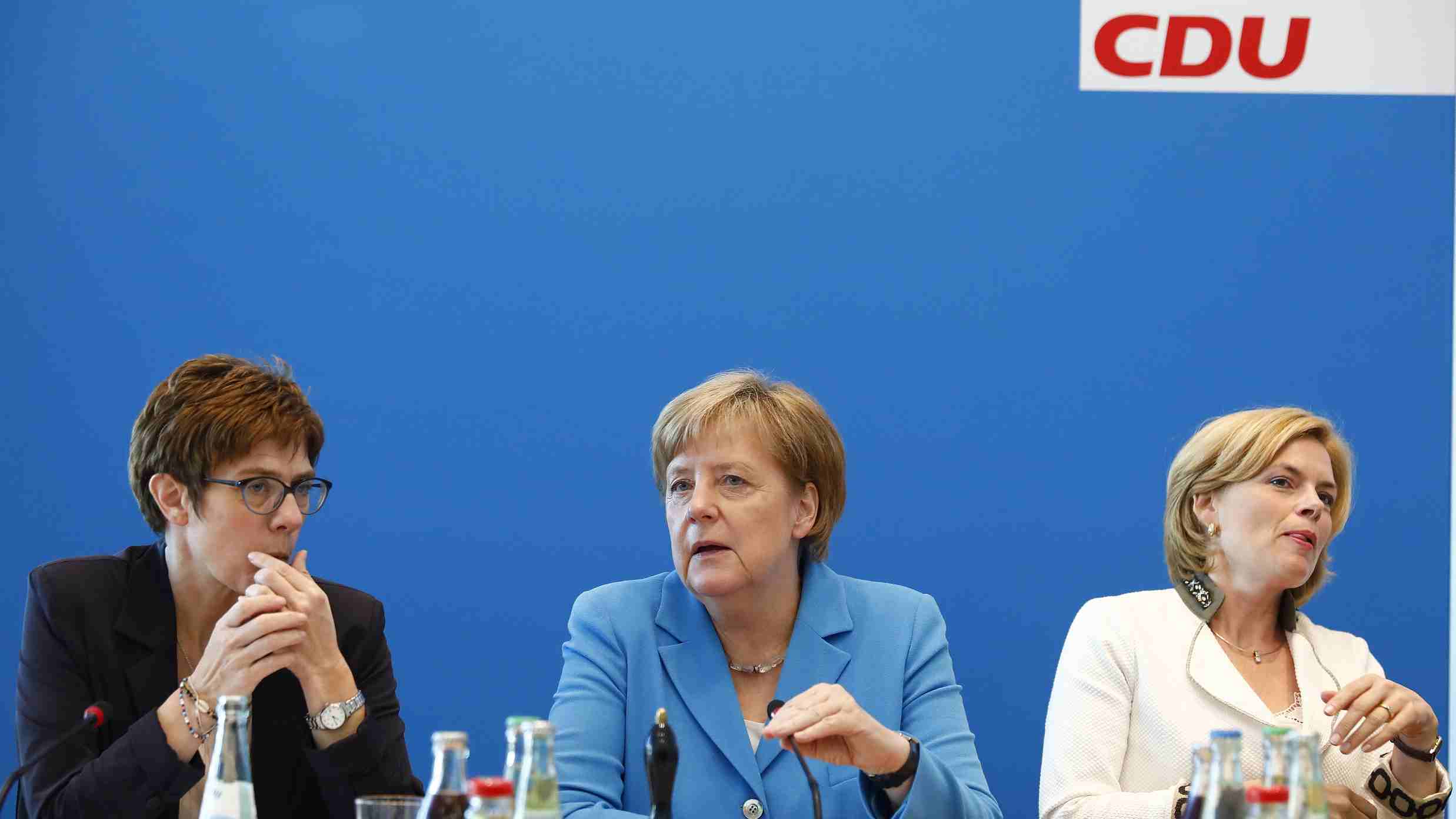
German Chancellor and leader of the Christian Democratic Union (CDU) Angela Merkel at a meeting of the CDU board on July 1, 2018, in Berlin, Germany. /VCG Photo
German Chancellor and leader of the Christian Democratic Union (CDU) Angela Merkel at a meeting of the CDU board on July 1, 2018, in Berlin, Germany. /VCG Photo
Merkel insisted in a Sunday television interview that the EU agreement addressed Seehofer's concerns.
However, the veteran Bavarian threw a surprise on Sunday evening by offering to resign – both as interior minister and CSU chairman – and accusing the chancellor of making "zero" concessions. A meeting with Merkel on Saturday was "pointless and ineffective," he added.
Whichever direction Seehofer chooses after further talks on Monday – defiance or resignation – is unlikely to end the crisis at the heart of the German government.
How did it come to this?
At the height of the migrant crisis in 2015, Merkel welcomed over one million people fleeing war in the Middle East to Germany. The fallout from the policy was widespread, but two consequences are particularly significant to the current dispute.
The first was the revitalization of the far-right Alternative for Germany (AfD) – formed in 2013 in response to the euro crisis – as an anti-migrant party and electoral force. The second was a dispute between long-time allies Merkel's Christian Democratic Union (CDU) and CSU, a party which operates solely in Bavaria. Seehofer was Minister President of Bavaria from 2008 to 2018, and has since had a tense relationship with Merkel.

Participants gather before the start of the Alternative for Germany (AfD) two-day party congress in Augsburg, Germany, June 30, 2018. /VCG Photo
Participants gather before the start of the Alternative for Germany (AfD) two-day party congress in Augsburg, Germany, June 30, 2018. /VCG Photo
The CSU is now facing a strong challenge from the AfD, which held a party congress on Saturday, in regional elections scheduled for October. The coalition partner wants a hardline migration policy to help see off the far-right party; Merkel, whose CDU does not compete in Bavaria, is fearful the CSU's proposal will spark the beginning of the end of open borders in the EU's Schengen area.
What do CDU and CSU want?
Seehofer, who recently joined Austrian Chancellor Sebastian Kurz and Italian interior minister Matteo Salvini in an "axis of the willing" on migration, wants German police to turn away migrants already registered in other EU countries.
Merkel has agreed to tighten controls on migration and said she had struck deals with 16 other EU countries to take back asylum seekers who have been previously registered. The EU last week set out a series of agreements designed to counter secondary migration and improve policing of external borders.
Merkel claims the promises, which included setting up migration centers within the EU, meet Seehofer's demands. The interior minister disagrees.
What's next?
Merkel and Seehofer will hold further talks on Monday. At the urging of the CSU officials, Seehofer held back from resigning on Sunday night and agreed to try once again to reach a compromise with the chancellor.
The best result for the center-right coalition would be a compromise that allowed it to continue, though such a development is unlikely to placate all parties for long. Plus, there is a third member of the coalition – the Social Democrats – which may not accept a hardened border policy.

German interior minister Horst Seehofer leaves a Christian Social Union (CSU) leadership meeting in Munich, Germany, July 2, 2018. /VCG Photo
German interior minister Horst Seehofer leaves a Christian Social Union (CSU) leadership meeting in Munich, Germany, July 2, 2018. /VCG Photo
Seehofer may still resign, but that wouldn't solve the problem – the CSU's stance is unlikely to change, although some party members are reported to have questioned his hardline strategy at a meeting on Sunday. The CSU could nominate a replacement interior minister – or walk away from the coalition.
The interior minister could also be fired if he were to attempt to implement policy without Merkel's blessing. If Merkel forced him out, the CSU would probably walk away from an alliance with the CDU which has held since 1949.
New federal elections would be a possibility if the CSU quits the coalition, though Merkel could try to strike a deal with the Free Democrats or the Greens to form a new governing alliance -- or battle on with a minority.