
Tech & Sci
14:55, 27-Apr-2018
Census finds more gorillas living dangerously on forest edge
 ["africa"]
Share







Copied
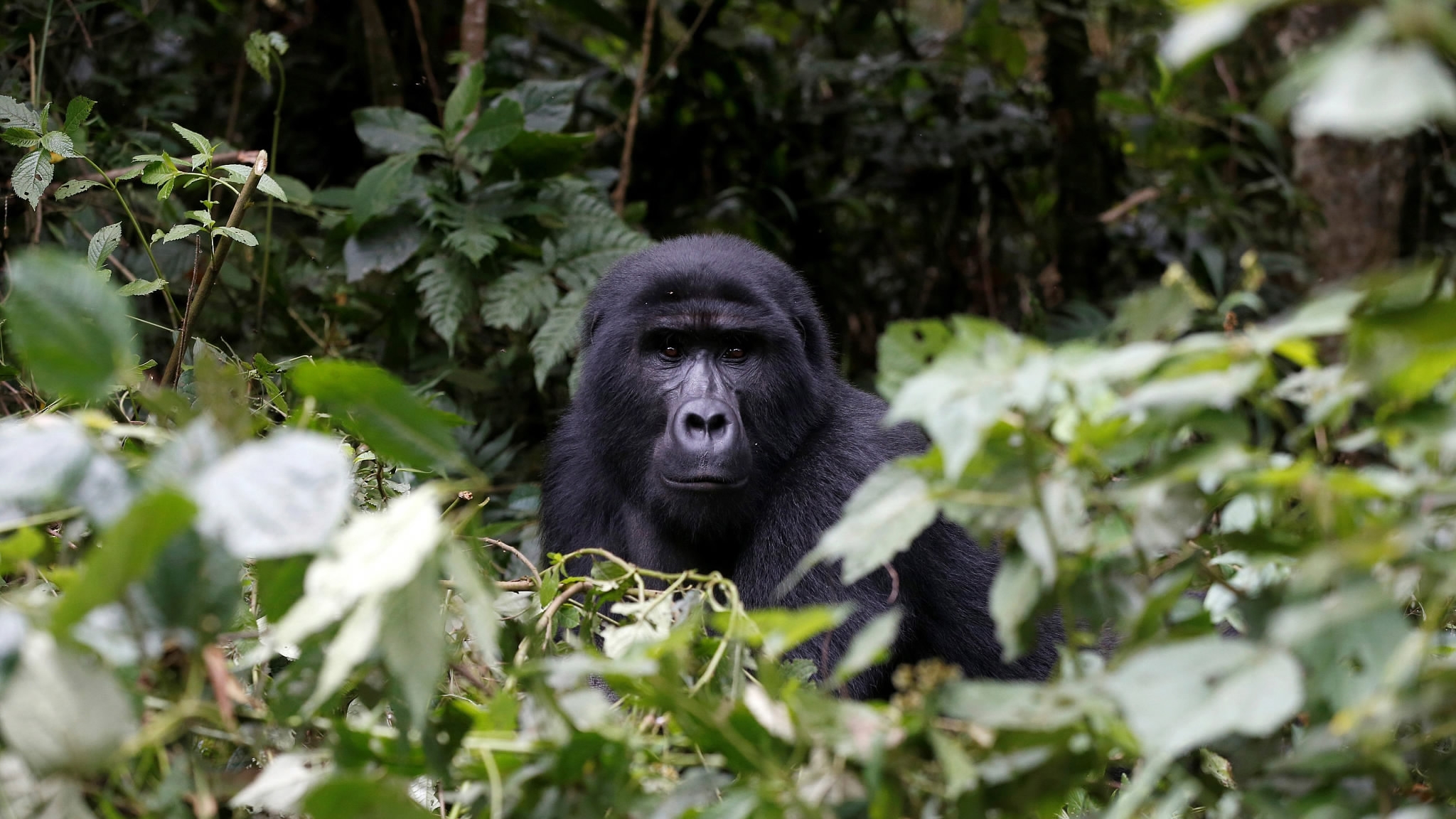
After a decade-long survey of Western Equatorial region of Africa, researchers have claimed there are far more gorillas than previously estimated.
However, a vast majority of the newly discovered gorilla population lives outside the protected forest zone making them an easy target for poachers and diseases.
The survey estimates 360,000 gorillas and nearly 130,000 chimpanzees inhabit the forests of the region. Worryingly, 80 percent of the great apes are living outside protected areas, and at present gorilla populations are declining at the rate of 2.7 percent annually.
The massive survey included 54 researchers. The fieldwork covered 59 sites in five countries covering 186,479 square km, a distance longer than the north-south axis of Africa. The surveyors extensively screened the habitat of western lowland gorillas and central chimpanzees including their nest.
These two subspecies represent close to 99 percent of all gorillas, and one-third of all chimpanzees. The gorilla estimate is around one-third higher, and the chimpanzees are about one-tenth higher than previously counted.
“Our study underscores the huge importance of intact forests to gorillas and chimpanzees and of preventing illegal felling of good quality forests,” Fiona Maisels, a member of the study team said.
The study titled, “Guns, germs, and trees determine density and distribution of gorillas and chimpanzees in Western Equatorial Africa” published in Science Advances claims a large number of apes living outside the protected area are making them vulnerable to poaching, deforestation, and diseases.
“With the vast majority of unprotected forests being opened up to selective logging, and degradation caused by multiple rotations becoming the norm, it is vital that we step up our efforts to conserve great apes,” researchers warned.
The gorilla population has plummeted to nearly 20 percent in the last eight years. International Union for Conservation of Nature’s (IUCN) Red List of Threatened Species has categorized gorillas as ‘critically endangered’ and chimpanzees as ‘endangered’.
Elizabeth Williamson, IUCN Red List Authority Coordinator for great apes, pointed out a combination of responsible industrial practices, conservation policies, and a network of well-managed parks can provide wildlife managers with a “winning formula” for conserving great apes in Central Africa. “Our study has revealed that it is not too late to secure a future for gorillas and chimpanzees.”
According to previous studies, great apes play pivotal ecological roles in forest ecosystems. They are considered to be “large-bodied seed dispersers’ and, without them, “the forest will eventually fail to regenerate, with disastrous long-term consequences.”
Explaining why gorillas are declining faster than chimpanzees, researchers maintained gorillas move in groups. And male gorillas stand up to protect their clan whenever danger lurks, and become an easy target for poachers. Chimpanzees, on the other hand barely move in groups.
Increasing the number of well-equipped and highly trained guards, developing effective anti-poaching strategies and a forest regeneration policy will help in boosting the great ape's population, researchers suggested.
[Top Image: A male mountain gorilla from the Mukiza group is seen in the forest within the Bwindi National Park near the town of Kisoro, Uganda on March 31, 2018. /VCG Photo]