
Politics
10:01, 13-Sep-2018
Venezuelan President Nicolas Maduro to pay a state visit to China on Sept. 13-16
Updated
09:37, 16-Sep-2018
 ["china"]
Share






Copied
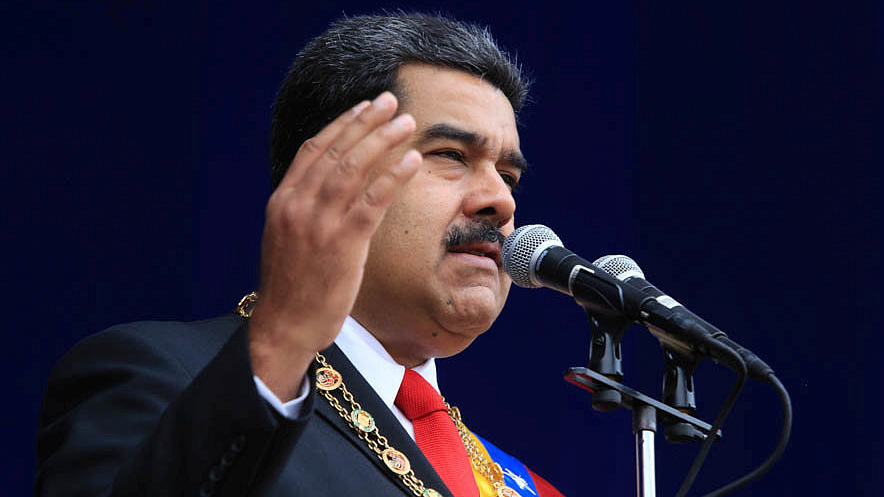
At the invitation of Chinese President Xi Jinping, Venezuelan President Nicolas Maduro will pay a state visit to China from Thursday to Sunday, Chinese Foreign Ministry spokesman Lu Kang said on Thursday.
Venezuela and China established diplomatic relations in 1974 and the bilateral relationship has witnessed faster development since the establishment of their strategic partnership for common development in 2001.
The bilateral trade volume has reached 8.92 billion in 2017 and the two sides maintained high-level exchanges and dynamic people-to-people and cultural exchanges.
Profile: Maduro, Venezuelan leader loyal to Chavez's socialist legacy
Maduro was reelected for a second six-year term in the presidential election in May.
Maduro was first elected in 2013, pledging to strengthen the Bolivarian Revolution launched by former President Hugo Chavez.
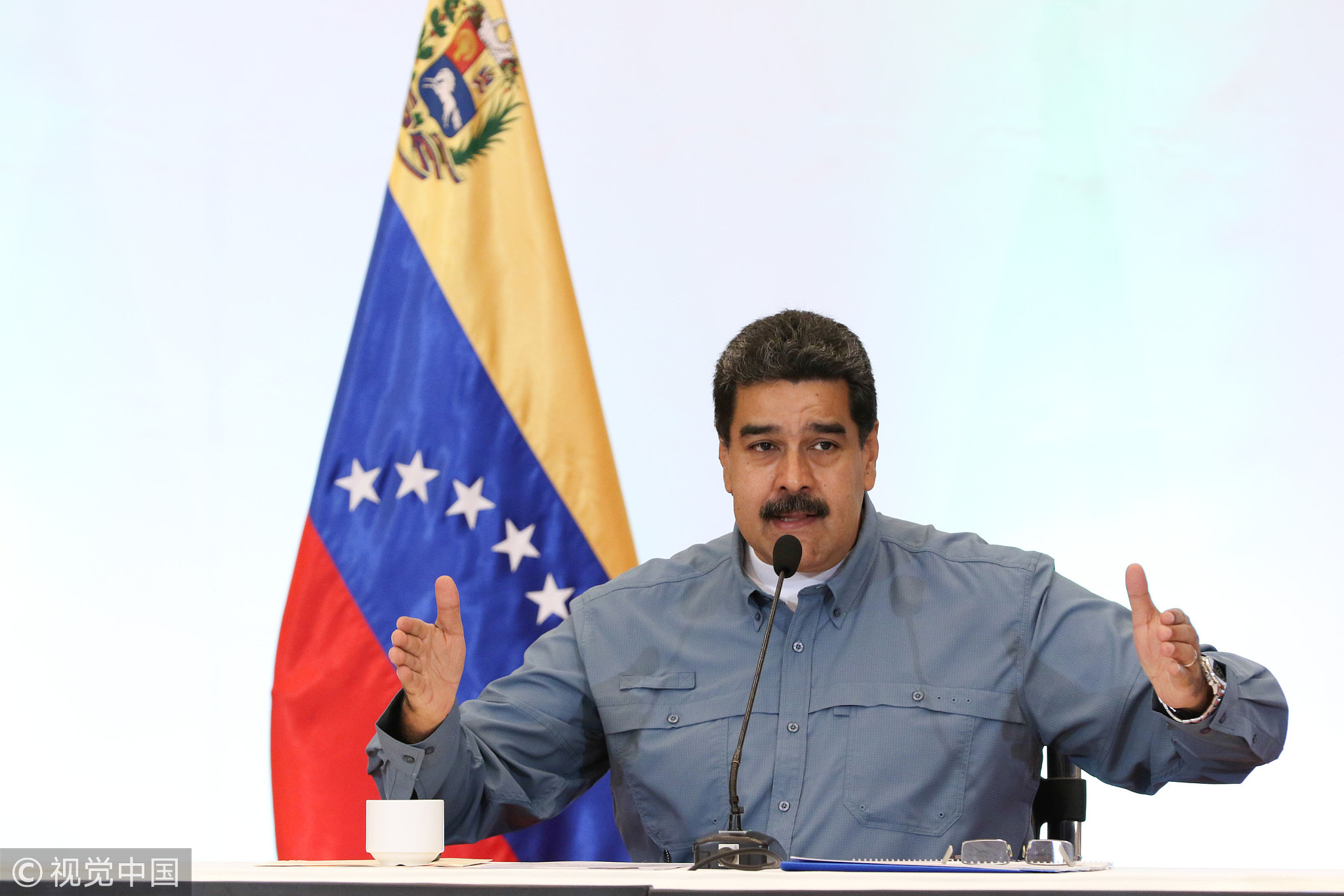
esident Nicolas Maduro speaking during a meeting with members of the ruling United Socialist Party of Venezuela (PSUV) in Caracas on June 4, 2018. /VCG Photo
esident Nicolas Maduro speaking during a meeting with members of the ruling United Socialist Party of Venezuela (PSUV) in Caracas on June 4, 2018. /VCG Photo
Born in1962 into a working-class family in the capital Caracas, Maduro went on to work for seven years as a bus driver for the city's Metrobus transit system. There, he founded the Caracas Metro Union and also served as coordinator of the Bolivarian Workers Force.
By 1999, Maduro was elected deputy of the Constituent Assembly charged with drafting a new constitution, which Venezuelans approved in a referendum in December that year.
In 2000, Maduro was elected deputy to the National Assembly. In 2005, he was elected president of the legislative body until Chavez appointed him as foreign affairs minister in 2006.
He later served as vice president of the country until 2013, the year Chavez died from cancer.
In his final address to the nation in December 2012, prior to traveling to Cuba for the last time to undergo a surgery, Chavez called on Venezuelans support Maduro as his successor.
Chavez described Maduro as having "the greatest capacity" to continue leading, "always along with the people, and subordinate to the interests of the people, the fate of this country."
Maduro did go on to win the presidency in April 2013, garnering more than 7.5 million votes.
During his five years in office, Maduro has faced immense difficulties, including economic sanctions imposed by the United States and Europe.
Maduro's 2013-19 term began with a wave of violent protests that marked the start of a protracted campaign by the right-wing opposition to overthrow his government.
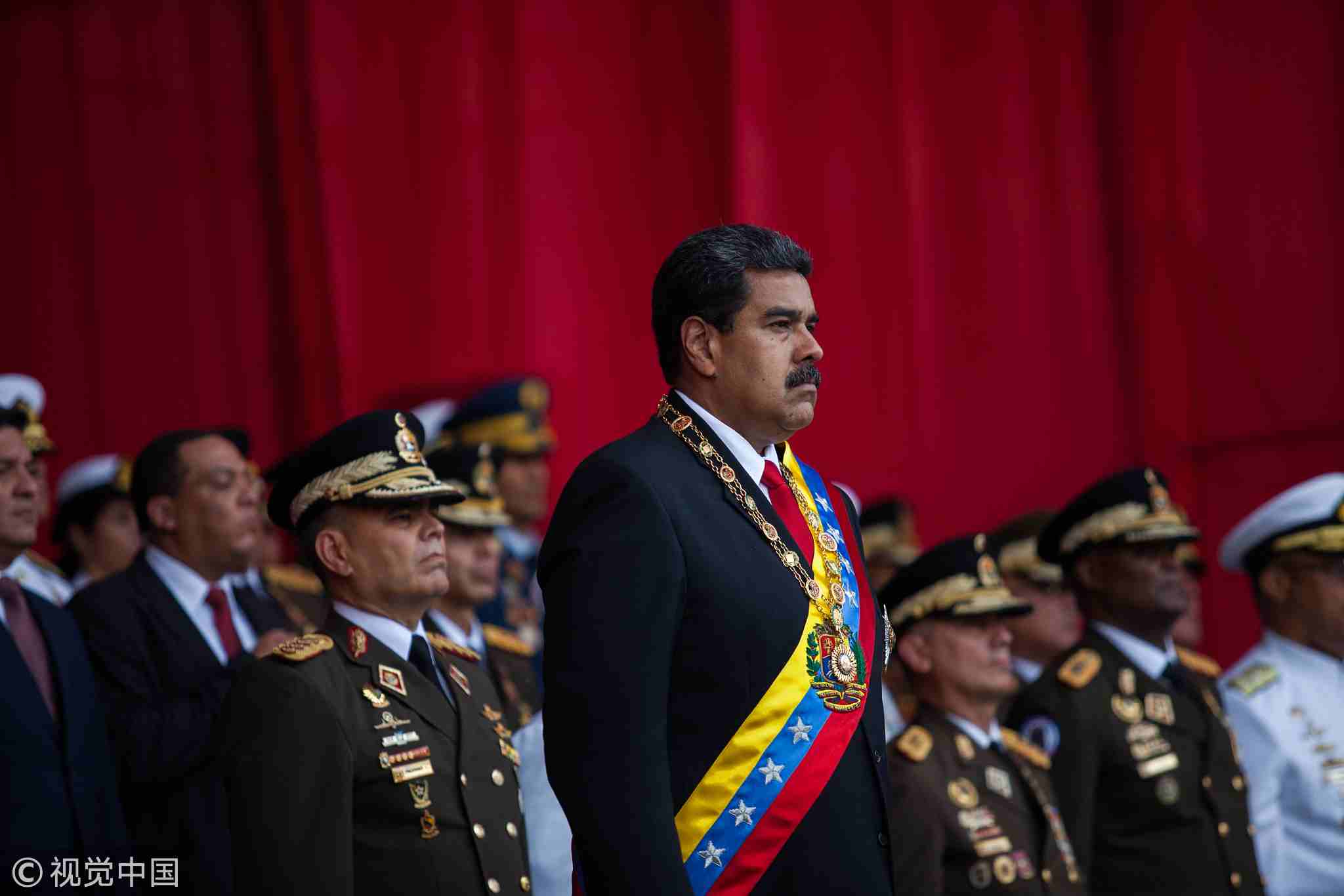
Nicolas Maduro, Venezuela's president, attends a 'Vow of Loyalty event at the Ministry of Defense in Caracas, Venezuela, on May 24, 2018. /VCG Photo
Nicolas Maduro, Venezuela's president, attends a 'Vow of Loyalty event at the Ministry of Defense in Caracas, Venezuela, on May 24, 2018. /VCG Photo
The economic and political battles being waged between the country's progressive and conservative forces have sparked shortages of staple foods and essential daily necessities, such as medicine.
In 2016, the inflation rate reached 274 percent, according to the latest figures from the Central Bank of Venezuela.
Despite 22 rounds of wage increases over the past five years, salaries have failed to keep up with skyrocketing inflation.
In 2017, Maduro called for the election of a National Constituent Assembly to revise the constitution, in a bid to break the power deadlock between the executive branch and the opposition-controlled legislature.
In February 2018, his government unveiled the world's first oil-backed cryptocurrency, the Petro, to counter the financial and economic sanctions by independently raising capital.
He has also spearheaded economic reforms to diversify the economy, which has long relied on the revenue generated by oil exports.
(With inputs from Xinhua)