
Opinions
09:41, 05-Aug-2018
Opinion: Is ASEAN taking sides in the Sino-American battle?
Updated
08:51, 08-Aug-2018
 ["china"]
Share







Copied
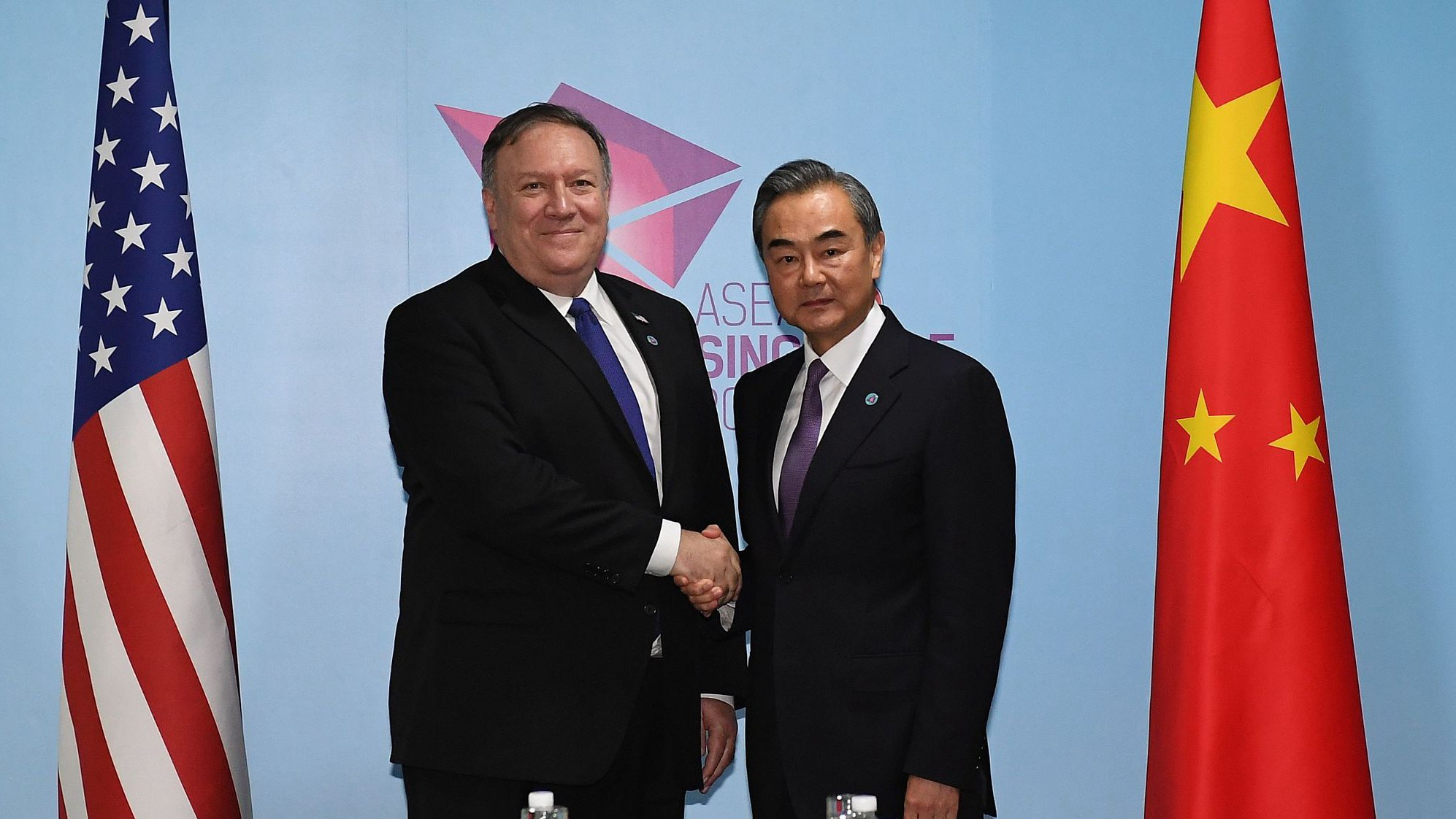
Editor's note: Richard Javad Heydarian is a specialist in Asian geopolitical and economic affair and political science assistant professor, at De La Salle University and Ateneo De Manila University, the Philippines. The article reflects the author's opinion and not necessarily the view of CGTN.
The Sino-American competition for influence in Southeast Asia has reached a new historical juncture. Over the past week, the two superpowers have been steeped in a high-velocity diplomatic campaign to outmaneuver each other in the region.
Each superpower has advanced its own vision of the region with the Association of Southeast Asian Nations (ASEAN) as a key partner.
For China, it’s a vision of deeper bilateral cooperation anchored by its trillion-dollar Belt and Road Initiative (BRI) as well as joint naval exercises and energy exploration deals in the contested waters of the South China Sea.
The United States, meanwhile, has forwarded a new geopolitical paradigm in the so-called “Indo-Pacific.” It has advocated for a "free, open and rules-based order," which is aimed at constraining China’s growing influence and preserving its own hegemony in Asia.
As for the ASEAN, it has welcomed growing competition among external powers to enhance its room to maneuver, solicit maximum security and developmental assistance, and preserve its deeply cherished autonomy.
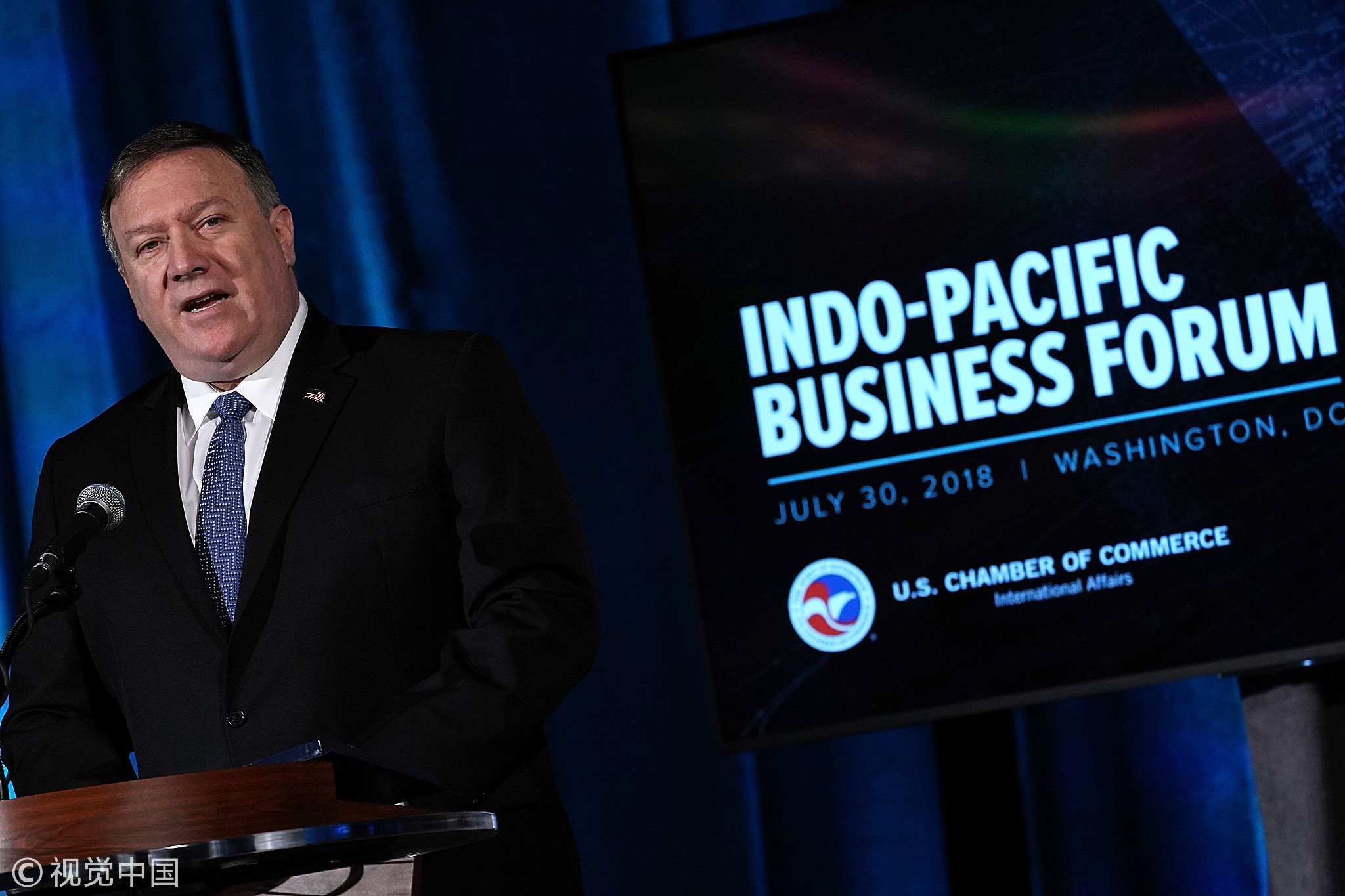
July 30, 2018. US Secretary of State Mike Pompeo speaks during the Indo-Pacific Business Forum at the US Chamber of Commerce./ VCG Photo
July 30, 2018. US Secretary of State Mike Pompeo speaks during the Indo-Pacific Business Forum at the US Chamber of Commerce./ VCG Photo
Over the past week, Chinese State Councilor and Foreign Minister Wang Yi was at the center of a flurry of high-velocity diplomatic meetings aimed at strengthening Beijing’s cooperation with all key actors across the world, ranging from the European Union to Iran and Canada.
At the heart of his meetings was China’s open commitment to uphold existing international agreements, including the Iran nuclear deal, the Paris Agreement on climate change, and the World Trade Organization (WTO) regime of rules and regulations on trade.
The highlight of his diplomatic meetings, however, was that with ASEAN foreign ministers, with both sides announcing a new “milestone” in their decades-long negotiation of a Code of Conduct (COC) in the South China Sea.
After years of painstaking and seemingly open-ended negotiations, the two sides have finally agreed on a "Single Draft COC Negotiating Text," which will serve as the basis for establishing a final regime of peace and stability in the contested waters.
Singapore’s Foreign Affairs Minister Vivian Balakrishnan described the draft as the “living document and the basis of future code of conduct negotiations.” Visibly pleased by the direction of their bilateral talks with China, ASEAN foreign ministers “warmly welcomed the continued improving cooperation” with Beijing, particularly in the realm of maritime security.
This could serve as a prelude for regular joint naval exercises as well as joint exploration of energy resources in the contested waters. China has called for the exclusion of external powers such as America from such initiatives.
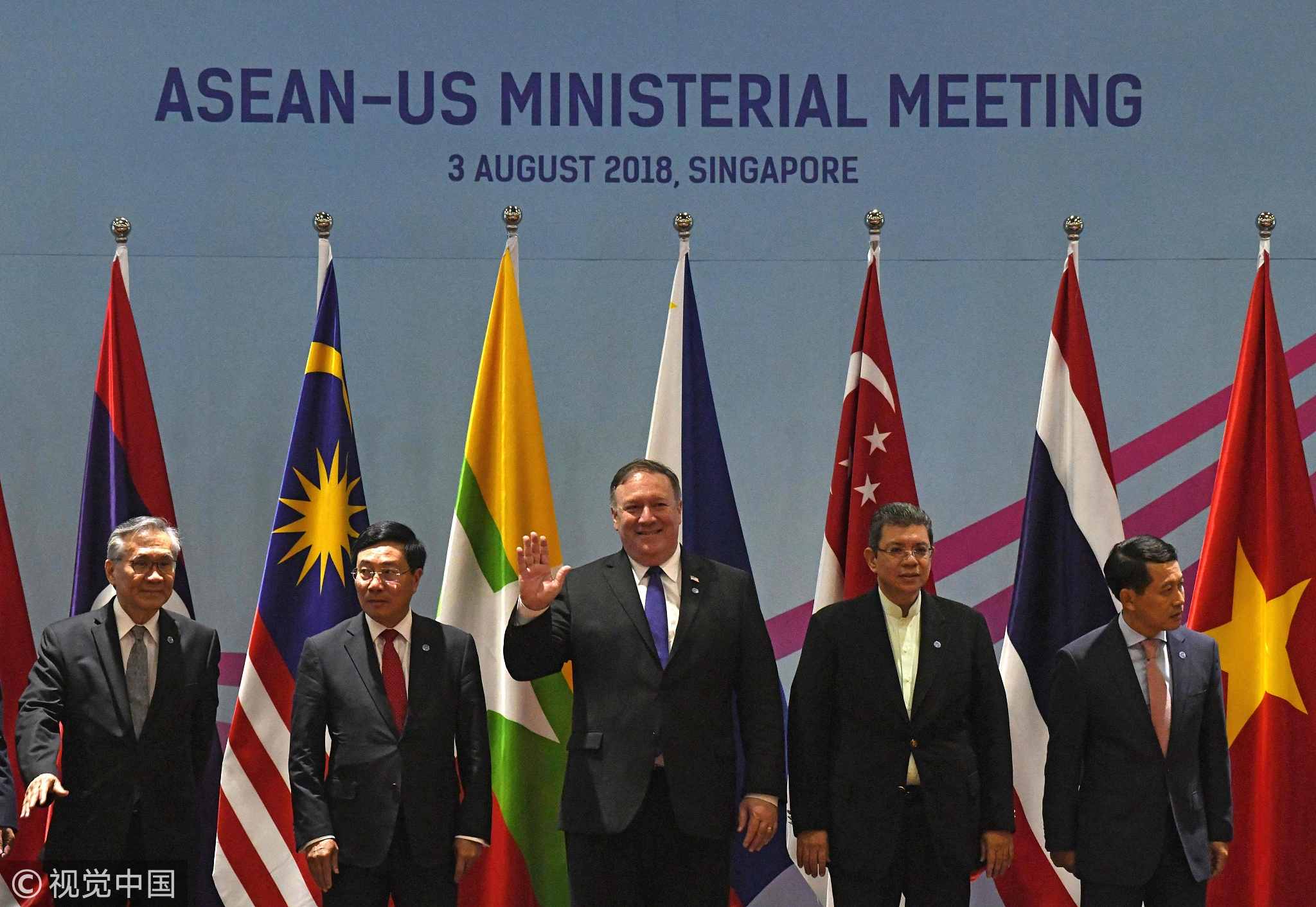
US Secretary of State Mike Pompeo (C) poses with leaders, ministers and representatives in Singapore from August 1 to 4 for the ASEAN Ministerial Meeting (AMM). / VCG Photo
US Secretary of State Mike Pompeo (C) poses with leaders, ministers and representatives in Singapore from August 1 to 4 for the ASEAN Ministerial Meeting (AMM). / VCG Photo
A few days later, China and the ASEAN held their first-ever joint naval exercise in the South China Sea in Singapore’s Changi Naval Base, focusing on ways to enhance mutual confidence and inter-operability vis-à-vis non-traditional security threats such as piracy and terrorism.
The Trump administration, however, is bent on preserving American influence in Southeast Asia. It dispatched US Secretary of State Mike Pompeo to the ASEAN meeting as well as official visits to key regional states of Indonesia, Malaysia and Singapore.
During his engagements in the region, Pompeo announced a 300 million US dollar security aid package to Southeast Asia, particularly in the realm of maritime cooperation. Earlier, he announced a 117 million US dollar fund aimed at mobilizing private capital and high-technology investments in Southeast Asia.
The American diplomat wasted no chance to question the purpose and quality of China’s infrastructure investments in the region under the umbrella of the trillion-dollar BRI. Washington may not be able to match China’s offers dollar-by-dollar, but it has stepped up its public diplomacy campaign to denigrate and dampen the impact of Beijing’s rising economic influence in the region.
Through new maritime security initiatives, it also hopes to rally smaller regional states against China in the South China Sea.
The ASEAN countries, however, are in no mood to take sides in this intensified Great Power rivalry. What they’re most interested in is attracting maximum possible investments for national development objectives, help end trade wars launched by Washington against the world, as well as avoiding a dangerous collision in the South China Sea. What’s at stake is no less than the future of peace and prosperity in Asia.