
World
09:59, 01-Jun-2018
‘Murdered’ Russian journalist defends faking own murder
 ["china"]
Share







Copied
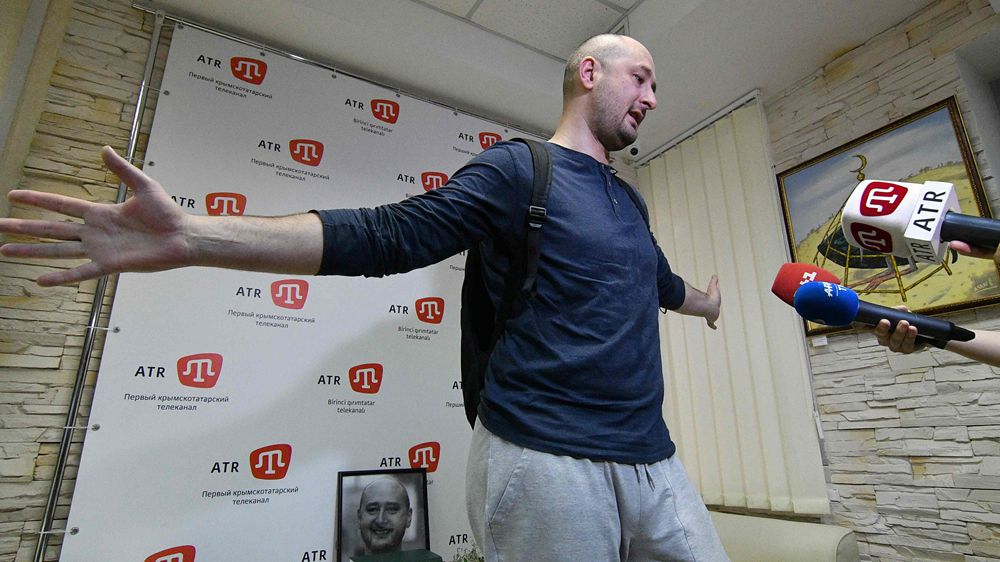
Russian journalist Arkady Babchenko on Thursday defended faking his own murder with the cooperation of the Ukrainian security services, after the shock operation was criticized by fellow reporters.
Kiev has come under fire after it admitted staging the killing in a bid to foil what it said was a real assassination plot by Moscow against the anti-Kremlin journalist.
Babchenko made a scarcely credible reappearance at a press conference in Kiev on Wednesday, less than 24 hours after the Ukrainian authorities reported he had been shot dead at his home in a contract-style killing.
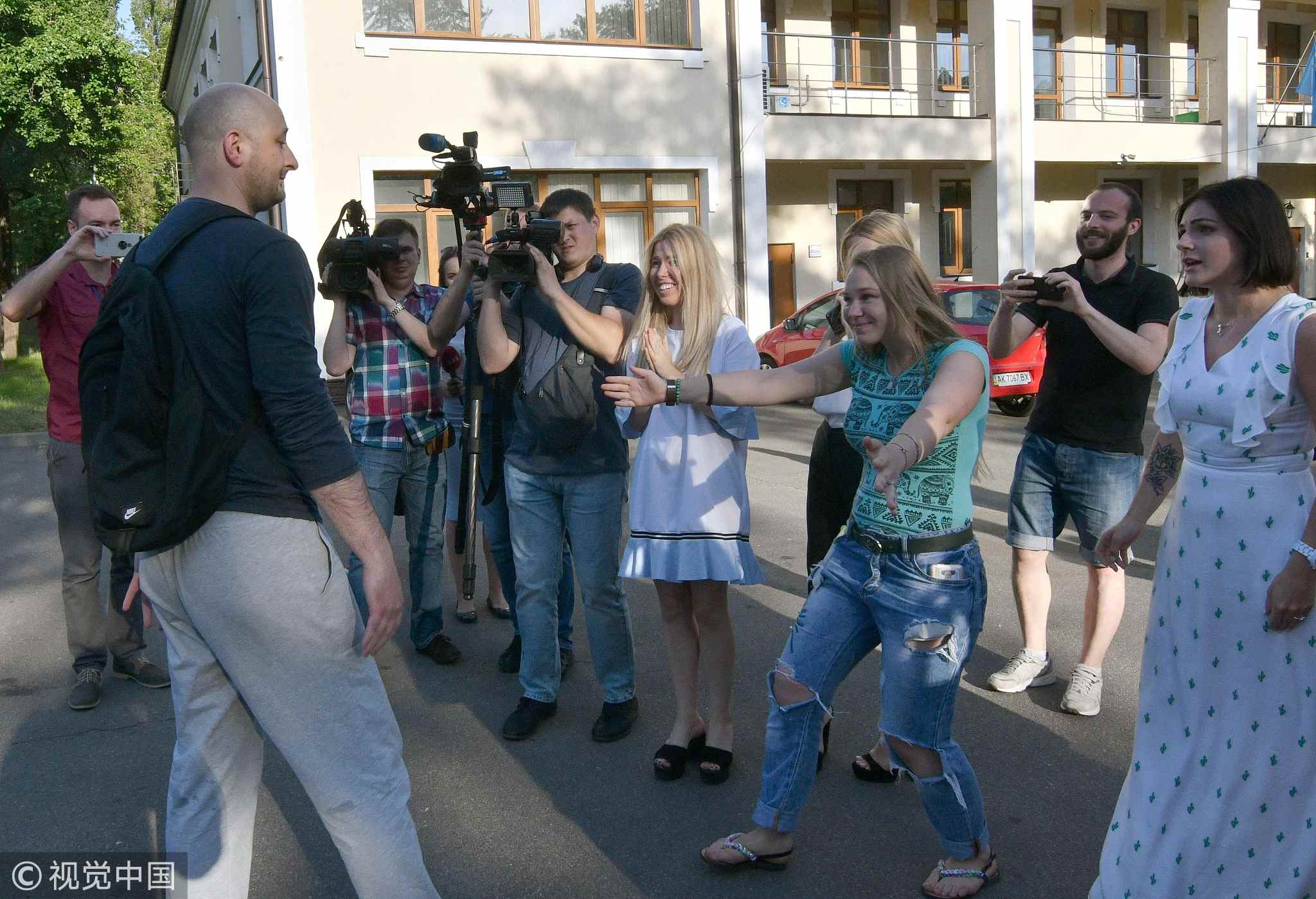
Arkady Babchenko (L) is welcomed by his colleagues as he arrives at his workplace, May 31, 2018. /VCG Photo
Arkady Babchenko (L) is welcomed by his colleagues as he arrives at his workplace, May 31, 2018. /VCG Photo
"My goal was to stay alive and ensure the safety of my family. That is the first thing I am thinking about. Journalist standards are the last thing I am thinking about now," the Russian said at a second press conference on Thursday.
After initial expressions of relief that Babchenko was alive, many fellow journalists have sharply criticized the staging of his death for undermining the credibility of the profession.
"Friends, I couldn't care less. I don't care whether you believe it next time... as when I'm dead it won't matter to me anymore," Babchenko replied.
The Kremlin, which had called accusations of Russian involvement "the height of cynicism", said on Thursday it was glad Babchenko was alive, but found the staging of his death strange.
Ukrainian politicians robustly defended the ruse. Interior Minister Arsen Avakov said he was surprised and shocked by "pseudo-moral" criticism from abroad.
Babchenko's staged killing fooled the world's media and led to press freedom groups raising fears about the impact it could have on the work of journalists around the globe.
Some said the staged death could only lead to more accusations of "fake news", at a time when the distinction between credible and non-credible sources is becoming ever more crucial.
'Line between truth and fiction'
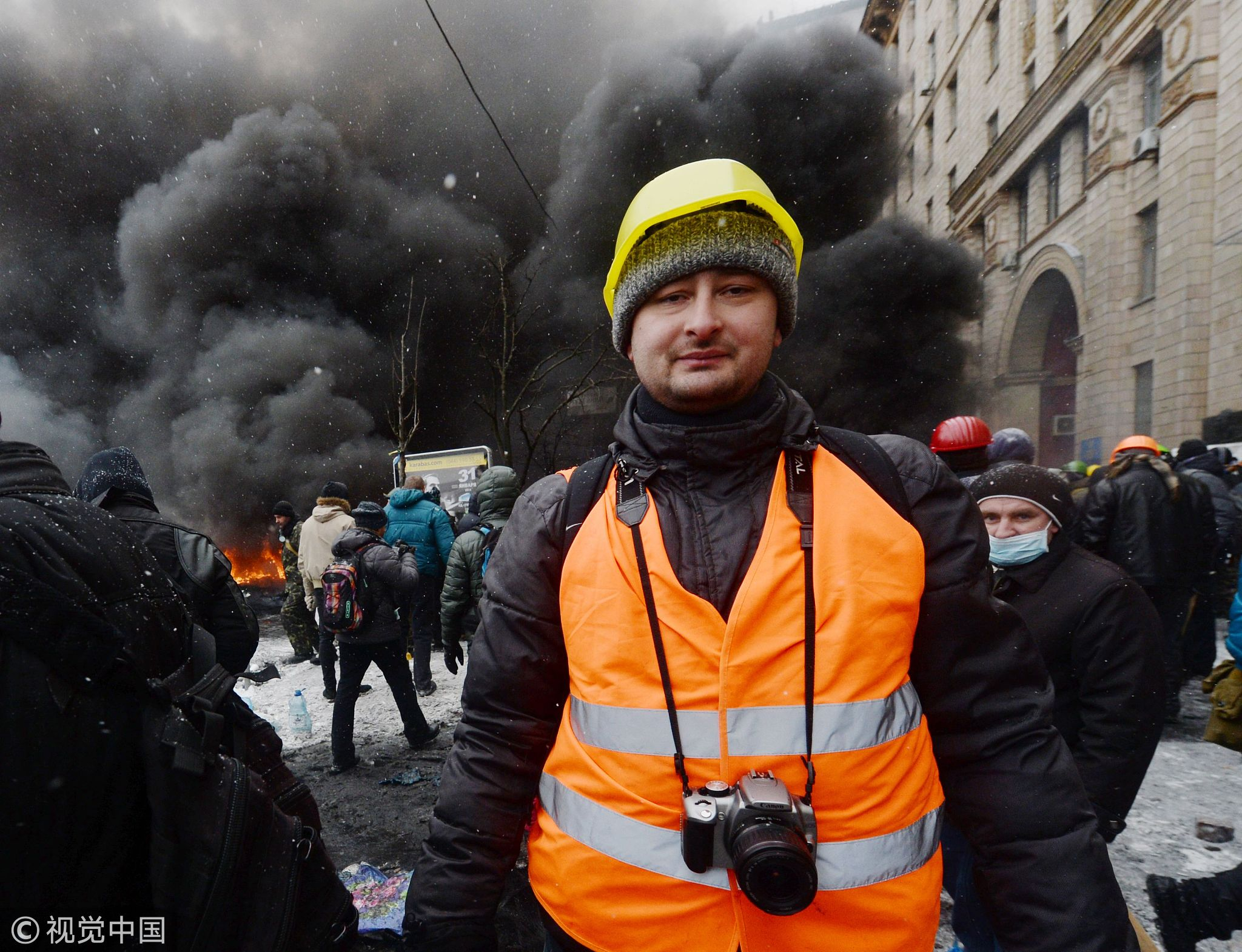
Russian journalist Arkadiy Babchenko during Maidan events in Kiev, January 22, 2014. /VCG Photo
Russian journalist Arkadiy Babchenko during Maidan events in Kiev, January 22, 2014. /VCG Photo
An editorial in Russian daily Vedomosti argued that the Babchenko operation "blurred the border between truth and fiction" and would lead to more distrust of the media.
Several commentators and reporters said it would also be difficult to trust official statements from the Ukrainian state again.
Ukrainian law enforcement officials were due to hold a closed-door meeting with Western diplomats on Friday to present them with information about the operation, a Ukrainian source said.
Babchenko, who told the press he had been preparing to stage his death with secret services for several weeks, dismissed the criticism.
"I wish all these moralizers could be in the same situation -- let them show their adherence to the principles of their high morals and die proudly holding their heads high without misleading the media," he wrote on Facebook.
Other commentators urged the media to focus on the fact that Babchenko is alive.
"The main thing is that the killing of a journalist was foiled, the organizers are caught and the journalist is alive," said Russian political commentator Evgeny Roizman.
'Foiled cynical plot'
Kiev sought to justify Babchenko's "murder."
"Thanks to this operation we were able to foil a cynical plot and document how the Russian security service was planning for this crime," security service head Vasyl Grytsak said when he reintroduced Babchenko, alive and well, to the world.
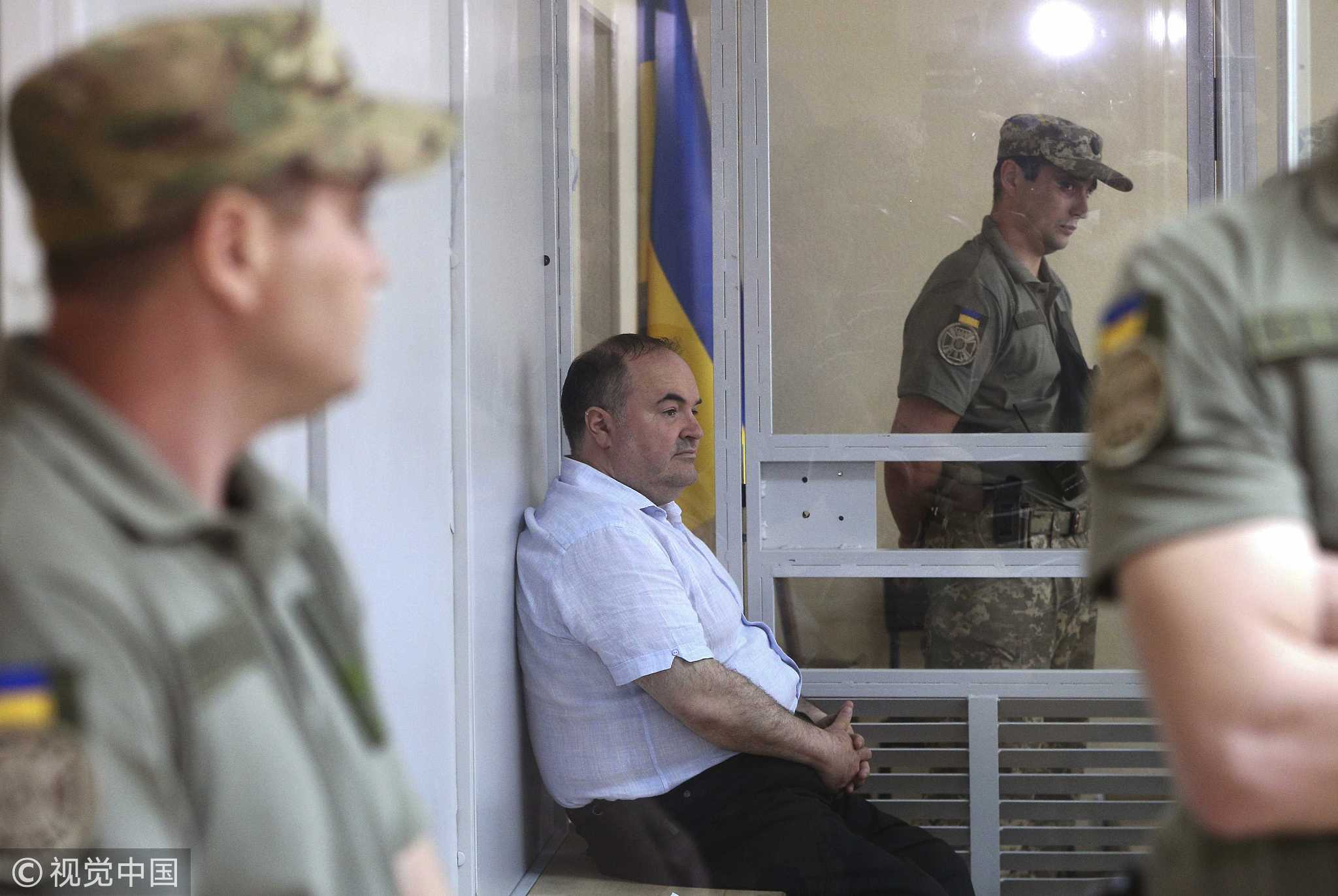
Borys Herman, who according to Ukrainian authorities is suspect in a plot to murder Russian journalist Arkady Babchenko, attends a court hearing in Kiev, Ukraine, May 31, 2018. /VCG Photo
Borys Herman, who according to Ukrainian authorities is suspect in a plot to murder Russian journalist Arkady Babchenko, attends a court hearing in Kiev, Ukraine, May 31, 2018. /VCG Photo
Grytsak said the authorities had arrested the alleged mastermind of a plot against Babchenko, saying a Ukrainian citizen had offered to pay a hitman to carry out the killing after being recruited by Russian special forces and paid 40,000 US dollars.
A Kiev court on Thursday evening decided to hold the man in custody for 60 days, the Interfax-Ukraine news agency reported, naming him as Borys Herman, head of a Ukrainian-German weapons firm.
(Cover: Russian journalist Arkady Babchenko reacts as he arrives at his workplace, the ATR TV channel, where his colleagues laid flowers by a portrait of him in his memory, May 31, 2018. /VCG Photo)
Source(s): AFP
,Reuters