
Tech & Sci
16:04, 16-Aug-2018
India's lunar ambitions signal rise of developing space powers
Updated
15:10, 19-Aug-2018
 ["other","India"]
Share







Copied
India’s second mission to the moon has been delayed once again. The mission is now scheduled to take place early next year, according to the head of the country’s space agency.
Kailasavadivoo Sivan, chairman of the India Space Research Organization (ISRO), said that the window for landing the orbiter Chandrayaan-2 on the lunar surface will be sometime between January and March 2019. This is the second delay this year for the country’s lunar mission.
India sent its first craft to the moon back in 2008, but this mission is the first time that the country will attempt to land a rover there.
The lunar mission is part of India’s broader plan to invest in space exploration and development. Though the country’s focus on a successful moon landing comes almost five years after China landed its first rover there, and nearly 50 years since the US had astronauts walk on the surface, it has made headway much farther away from Earth’s orbit. In 2014, India successfully sent a satellite to Mars, becoming the first country in Asia to do so.
Indian Prime Minister Narendra Modi even announced Wednesday on the country’s Independence Day that it will send a human into space by 2022.
How does India stack up against emerging space powers?
Though the country is still playing catch-up with established space giants such as the US, EU, and Russia, it has set ambitious milestones similar to those of the neighboring China.
While India’s space program has been plagued with setbacks – such as its failure to establish contact with a communication satellite in April – the country has a key advantage: low costs. The Times of India notes that the domestic space program is using relatively cheap technology and reliable launches to raise its competitiveness. This reputation has attracted foreign customers interested in launching commercial satellites, says the daily.
The aspiration to use space-based technologies, however, has not been limited to economic heavyweights, as policymakers have proposed that investing in the industry can benefit impoverished or developing countries.
The Africa Union released an African Space Strategy last year, calling for the use of such technologies to transform the continent’s “resource-based economies into knowledge-based economies.” Applications include using geospatial data from small satellites to establish reliable communications and Internet access, monitor climates to predict natural disasters, and manage natural resources. Kenya, for instance, discovered aquifers in Turkana using a satellite, a finding that could provide a reliable supply of water to the arid region for 70 years, reported the BBC.
But some countries have been criticized for allocating its meager resources to an endeavor that doesn’t ameliorate suffering in the short term. Ethiopia announced in early 2017 that it would launch a satellite into orbit in 3-5 years, according to the AP, shortly after a severe drought.
Although investments in space-based technologies may look like moonshots to many on the ground, the falling costs of satellites and other space components are driving more countries to invest heavily in the sector, both for groundbreaking science and socioeconomic development.
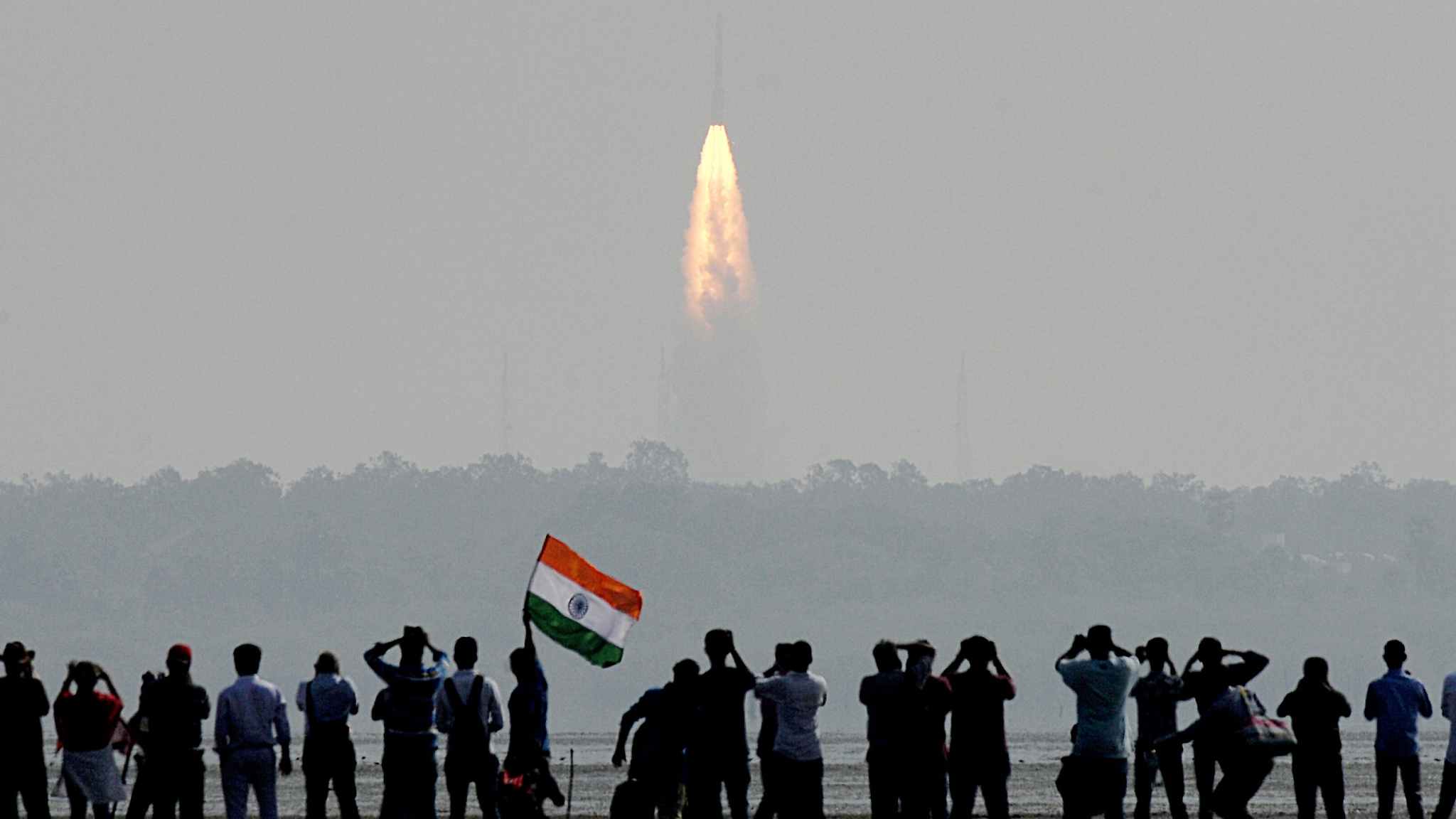
(Cover image: This file photo shows people watching the launch of the Indian Space Research Organisation (ISRO) Polar Satellite Launch Vehicle (PSLV-C37) at Sriharikota, India, on Feb. 15, 2017. /VCG Photo)