
Environment
13:01, 31-Mar-2019
World's landmarks turn lights off to mark Earth Hour 2019
 ["china"]
Share







Copied
00:59
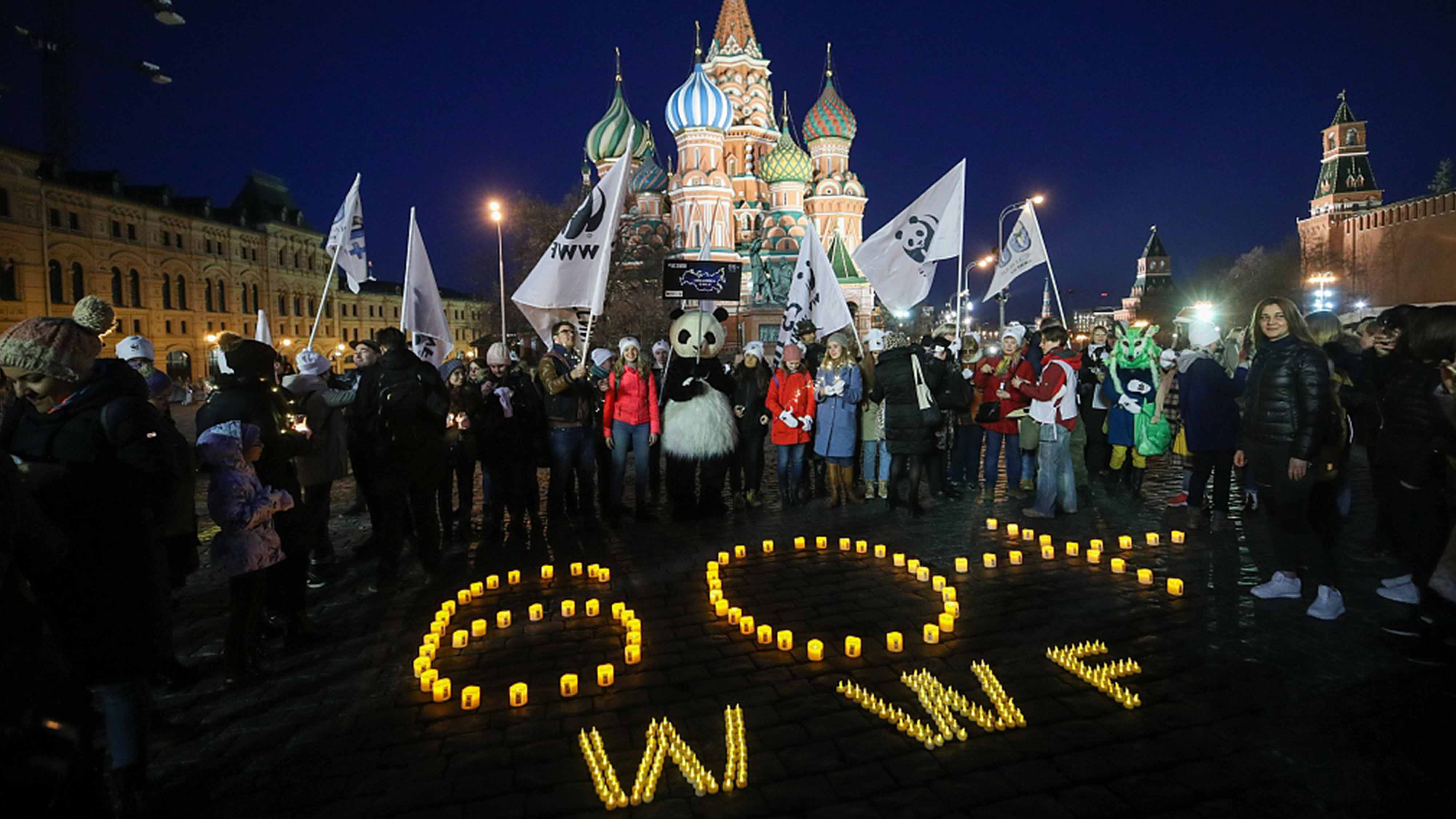
Cities around the world turned off their lights on Saturday night in response to "Earth Hour," a worldwide initiative to raise awareness of environmental issues.
First organized by the World Wide Fund for Nature (WWF) in 2007, Earth Hour is now the world's largest grassroots movement for saving the environment, with this year's focus on the challenges facing biodiversity.
Lights out in iconic landmarks
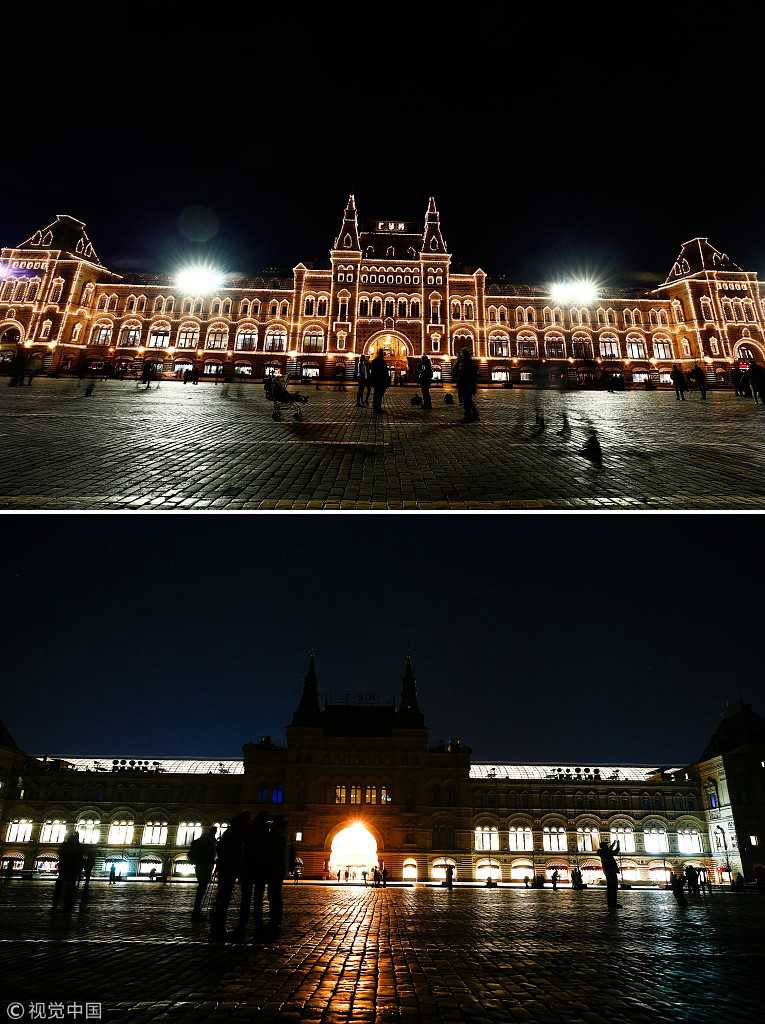
The Department Store of Glavny Universalny Magazin at the Red Square before (top) and after (bottom) its lights were turned off to mark Earth Hour in Moscow, Russia, March 30, 2019. /VCG Photo
The Department Store of Glavny Universalny Magazin at the Red Square before (top) and after (bottom) its lights were turned off to mark Earth Hour in Moscow, Russia, March 30, 2019. /VCG Photo
The campaign was first held on March 31, 2007, in Sydney, Australia, which attracted more than 2.2 million Sydney households and businesses. Since then, it has spread around the world with astonishing speed.
More than 180 countries and regions have joined in this year, plunging themselves into darkness for one hour from 8:30 p.m. local time.
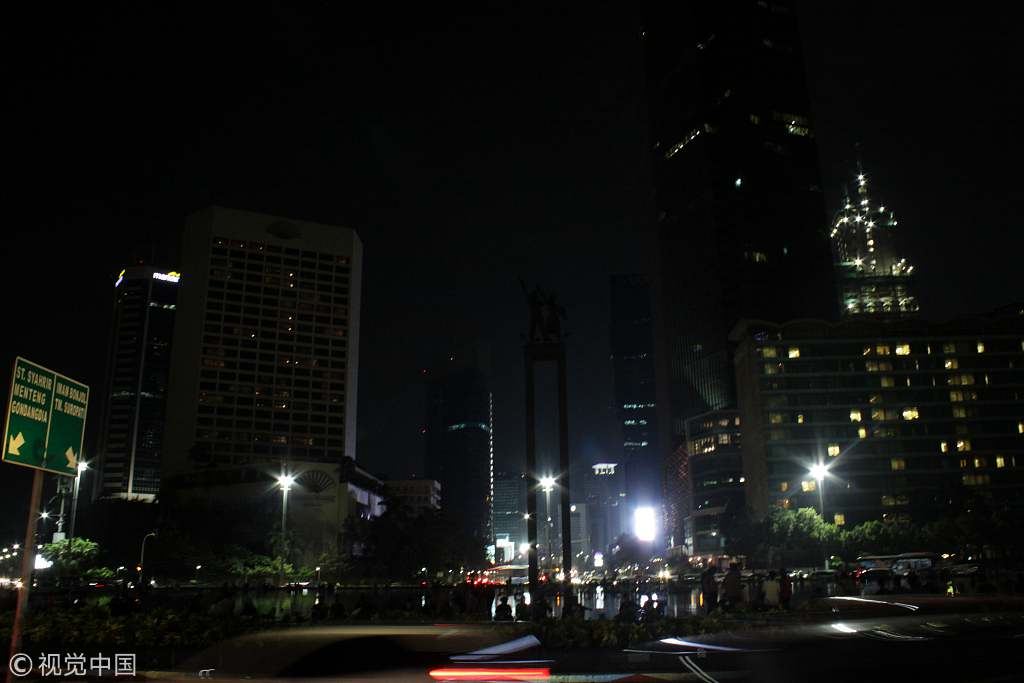
The Hotel Indonesia Roundabout, one of Jakarta's landmarks, become darkened during Earth Hour in Jakarta, Indonesia, March 30, 2019. /VCG Photo
The Hotel Indonesia Roundabout, one of Jakarta's landmarks, become darkened during Earth Hour in Jakarta, Indonesia, March 30, 2019. /VCG Photo
From China's Olympic Tower to France's Eiffel Tower, Italy's Colosseum, India's India Gate, Australia's Sydney Harbor Bridge… lights of landmarks were switched off.
"Australia has just faced its hottest summer on record and there is no hiding from the fact that our climate is changing," said Leeanne Enoch, minister for Environment, Queensland.
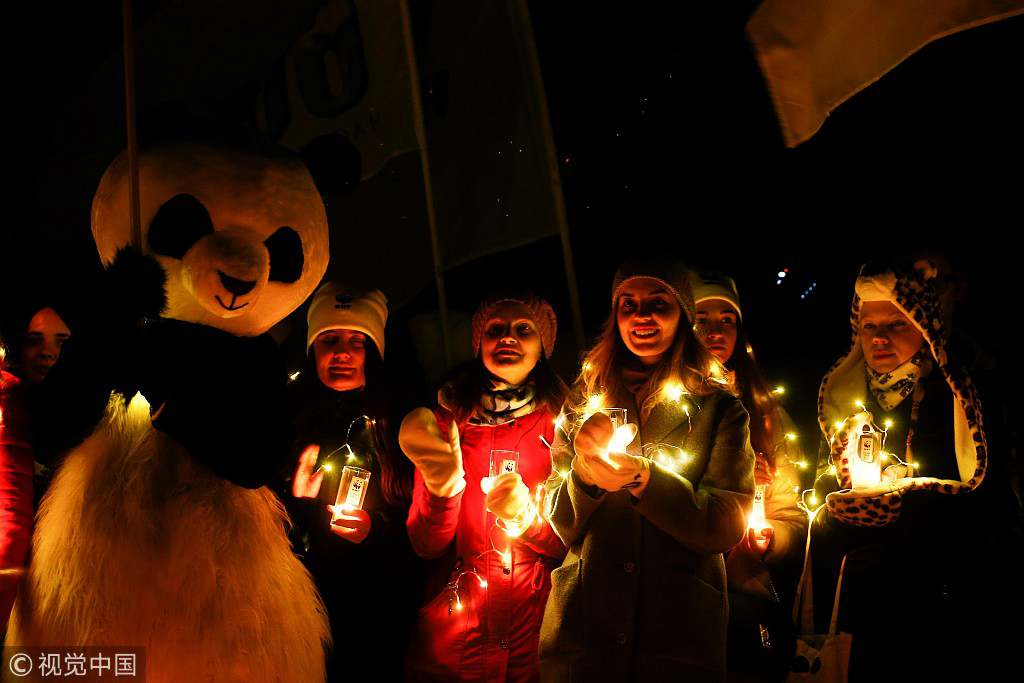
Activists light candles as they gather at Red Square during the Saint Basil's Cathedral's lights were turned off to mark Earth Hour in Moscow, Russia, March 30, 2019. /VCG Photo
Activists light candles as they gather at Red Square during the Saint Basil's Cathedral's lights were turned off to mark Earth Hour in Moscow, Russia, March 30, 2019. /VCG Photo
Individuals and corporation also took part in the symbolic gesture.
Declining biodiversity matters
Biodiversity has become one of the world's most concerning environmental issues.
"On average, we've seen an astonishing 60% decline in the size of populations of mammals, birds, fish, reptiles, and amphibians in just over 40 years," said the Living Planet Report 2018 released by WWF, which means that biodiversity is declining and the health of our planet is deteriorating.
In recent decades, species have been disappearing at a rate 100 to 1,000 times faster than they did hundreds of years ago. Human activity directly poses the greatest threat to biodiversity, according to the report.
"We are living through the Great Acceleration – a unique event in the 4.5 billion-year history of our planet – with exploding human population and economic growth driving unprecedented planetary change through the increased demand for energy, land and water."

Loss of biodiversity has become one of the world's most concerning environmental issues. /VCG Photo
Loss of biodiversity has become one of the world's most concerning environmental issues. /VCG Photo
The event aims to alert people of the loss of the world's biodiversity and the urgency to protect the integrity of the ecosystem, Jean-Paul Paddack, WWF's Global Initiatives Director, said in an interview with Xinhua News Agency.
The campaign raises people's awareness of environmental protection, said Paddack. At least in March every year, people from all walks of life, including the government, enterprises, can gather together to pay attention to and discuss the planet's environment and climate change.
Paddack believes that Earth Hour can be expanded and more people can be mobilized, expecting all countries in the world to participate.