
Culture
13:42, 19-Oct-2018
Lebanon bones up on animal welfare as pet businesses seize new opportunities
Updated
13:21, 22-Oct-2018
 ["other"]
Share







Copied
01:08
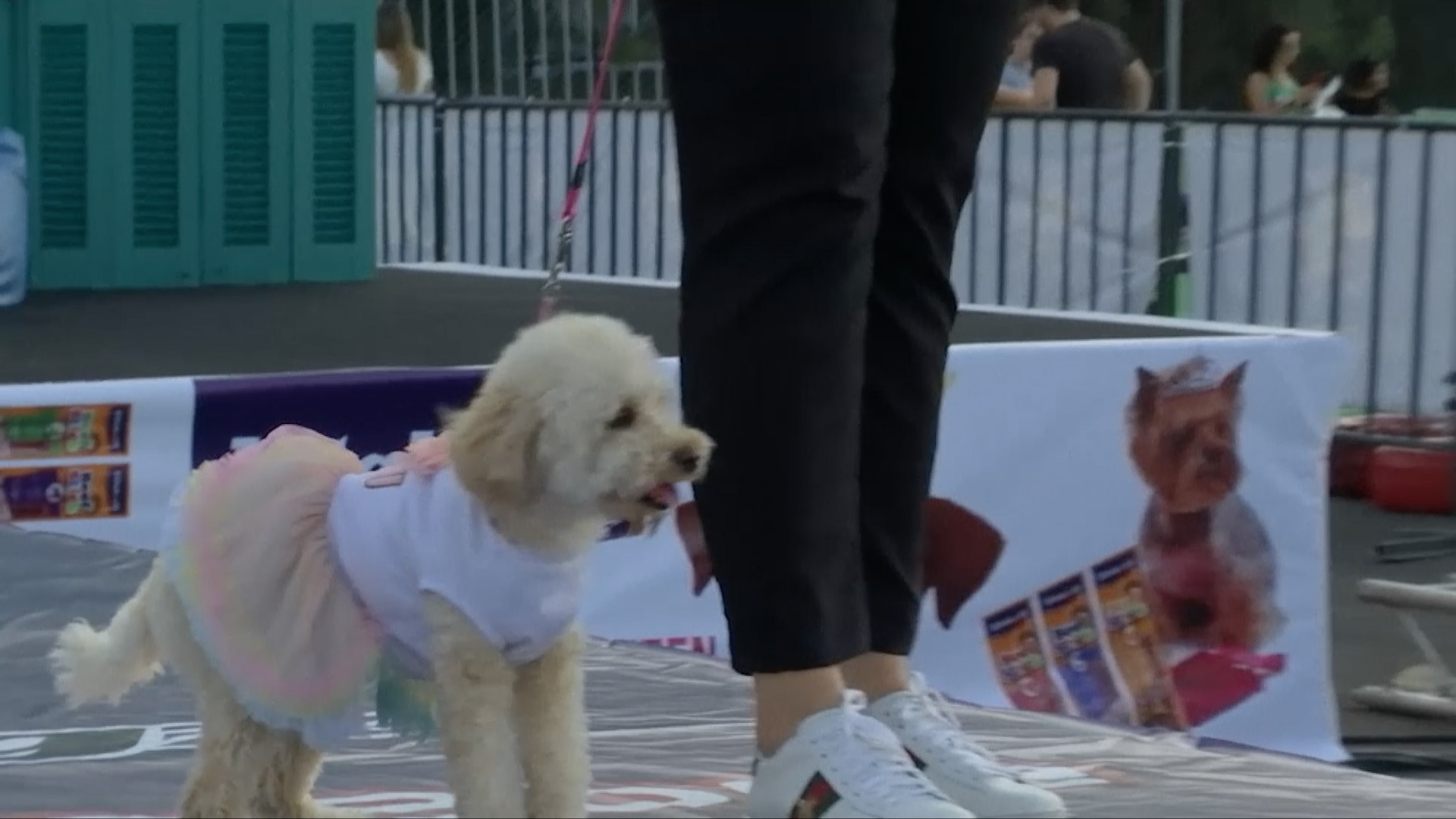
Bella walked out in a white top and a tulle skirt in pastel colors. She dominated the runway as the music blasted and the crowd roared. Other beauty pageant contestants followed. But despite the waves of applause she received, the crown and sash still went to another contender – though Bella was too busy sniffing other competitors to react to the results.
Bella is actually a dog, and the costume competition was part of a two-day event for canines and their human caretakers in Beirut.
WoofFest is touted as the largest dog festival in Lebanon and aims to celebrate man's best friends and their unconditional love.
The al fresco fiesta was held last weekend, a few months after the first edition took place in April to much fanfare and with 500 dogs in attendance.
"We all want the opportunity to celebrate our dogs and thank them for standing by our sides," Roula Mezher, managing director of Mindwhisk Events, told Lebanese newspaper Annahar back in March.
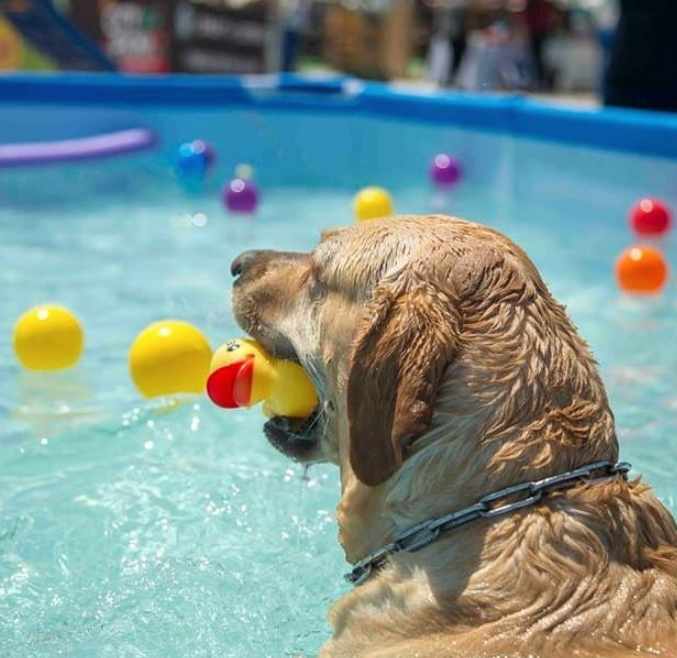
A labrador is having fun in the pool at WoofFest in Beirut, Lebanon. /Photo via Mindwhisk Events Facebook page
A labrador is having fun in the pool at WoofFest in Beirut, Lebanon. /Photo via Mindwhisk Events Facebook page
The event was an outlet for furballs to let loose, flaunt their skills and burn off extra energy on the obstacle courses or in the swimming pool. It was also a chance for dogs to socialize with other furry friends, while their owners interact with like-minded animal lovers.
Conditional compassion
For the longest time, caring for animals was a bone of contention in Lebanon, and proponents of animal welfare were snubbed and ridiculed.
"Animal welfare wasn't a priority in Lebanon, and with the difficult history of the country, it is understandable why this would not be a priority," Jason Mier, executive director of animal welfare organization Animals Lebanon, told CGTN Digital.
Chronic political turmoil and successive economic crises deeply impacted the quality of life in Lebanon and bred a conviction that human dignity is disregarded amid high poverty and unemployment rates and dysfunctional public services.
Pets used to be regarded as a physical token of wealth, a fashion statement of sorts, but animal welfare remained an unaffordable luxury. It's been a long-held belief in the country that honoring humans and securing their basic rights must precede any call for compassion towards four-legged creatures.
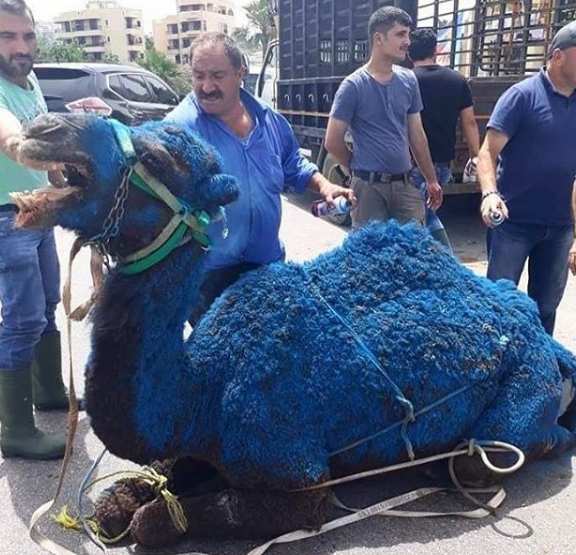
Camels are spray painted in blue to show support during a political rally in Saida, south Lebanon. /Photo via Animals Lebanon Instagram account
Camels are spray painted in blue to show support during a political rally in Saida, south Lebanon. /Photo via Animals Lebanon Instagram account
"When we first started Animals Lebanon, people openly and frequently mocked us," said Mier, who moved to Beirut over a decade ago.
"We had to be fools, wasting our time, confused that we did not see that other issues were more important, that animals did not have feelings, [and] were ours to use as we want."
But every dog has its day, and Lebanon is learning new tricks.
Unleashing awareness
"What we are seeing, and helped bring about, is a new recognition of the importance of animal welfare," noted Mier.
The advent of a legal framework to protect furry, feathery and scaly creatures last August was a bellwether of change – years in the making – and the zenith of painstaking efforts championed by Animals Lebanon.

A German shepherd and his best friend relax at WoofFest in Beirut, Lebanon. /Photo via Mindwhisk Events Facebook page
A German shepherd and his best friend relax at WoofFest in Beirut, Lebanon. /Photo via Mindwhisk Events Facebook page
"We've focused for eight years on researching, drafting, revising, lobbying, and finally sitting next to the president to see Lebanon's first animal protection and welfare law be signed and come into force," Mier shared with CGTN.
The law criminalizes the abuse of domestic and wildlife animals and outlines regulations for establishments dealing with animals, including pet shops, zoos, and slaughterhouses. Violators face a maximum of two years behind bars and up to 50 million Lebanese pounds (over 3,300 US dollars) in fines.
"This process alone helped open up discussions about animals, made it socially acceptable to care about animals, and brought renewed attention [to animal welfare]," he said.
When footage of stray dogs convulsing and foaming at the mouth after being poisoned by municipal officers on the outskirts of Beirut emerged late last year, public and official condemnation was swift.
"Within 24 hours the public had organized demonstrations, media were covering this nationally and internationally, the minister of interior launched an investigation, [and] the president issued a statement condemning such killing."

Lebanese President Michel Aoun was one of many official voices to condemn the poisoning of stray dogs. /Photo via President Aoun's Facebook page
Lebanese President Michel Aoun was one of many official voices to condemn the poisoning of stray dogs. /Photo via President Aoun's Facebook page
In a watershed verdict in August this year, a Lebanese man was given a 10-day prison sentence for torturing many dogs in 2016, including in one case tying a pooch to a street pole and running it over.
Cashing in on care
Increased awareness of being kind to critters has benefited not only the animals but also entrepreneurs in Lebanon.
Owners looking to pamper their pets can choose from an array of services beyond the traditional grooming and nail clipping.
Canine couture is helping pooches strut their stuff on the street in style, pet-friendly bakeries are satisfying owners' cravings to fete their furry friends' birthdays with sweets and treats, while pet sitting services are keeping the cuddly companions company when they're home alone.
The boom in pet businesses in Lebanon is part of a broader trend sweeping across the Middle East.
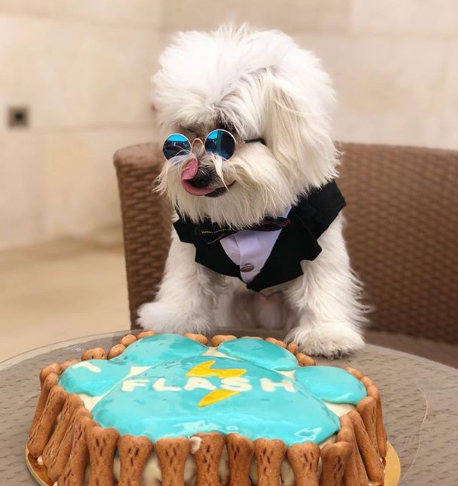
Dogs can also have cakes on their birthday! /Photo via The Pupcake Factory Instagram account
Dogs can also have cakes on their birthday! /Photo via The Pupcake Factory Instagram account
Spending on pets in the Middle East and Africa increased by around 25 percent between 2012 and 2017, the second highest growth over the period after Asia-Pacific (excluding Japan), according to Euromonitor International data.
The potential for further growth seems promising in the region, mainly because of its currently small share in the over 109-billion-US-dollar market. Estimates had projected sales of pet care products in the region would reach 900 million US dollars in 2017, with a compound annual growth rate of four to five percent in the five-year period through 2022, higher than in North America (two percent) and Western Europe (1.5 percent).
It's a tail-wagging time for animals in Lebanon, and activists are not resting on their laurels.
"We are working to have specially trained public prosecutors and judges, and ultimately a specialization within the police to enforce [the] law", Mier said of Animals Lebanon's new endeavors, which also include incorporating animal welfare lessons in the national education curriculum.