
Politics
15:27, 06-Jul-2018
Brexit showdown as May aims to unite warring cabinet
Updated
14:50, 09-Jul-2018
 ["europe"]
Share







Copied
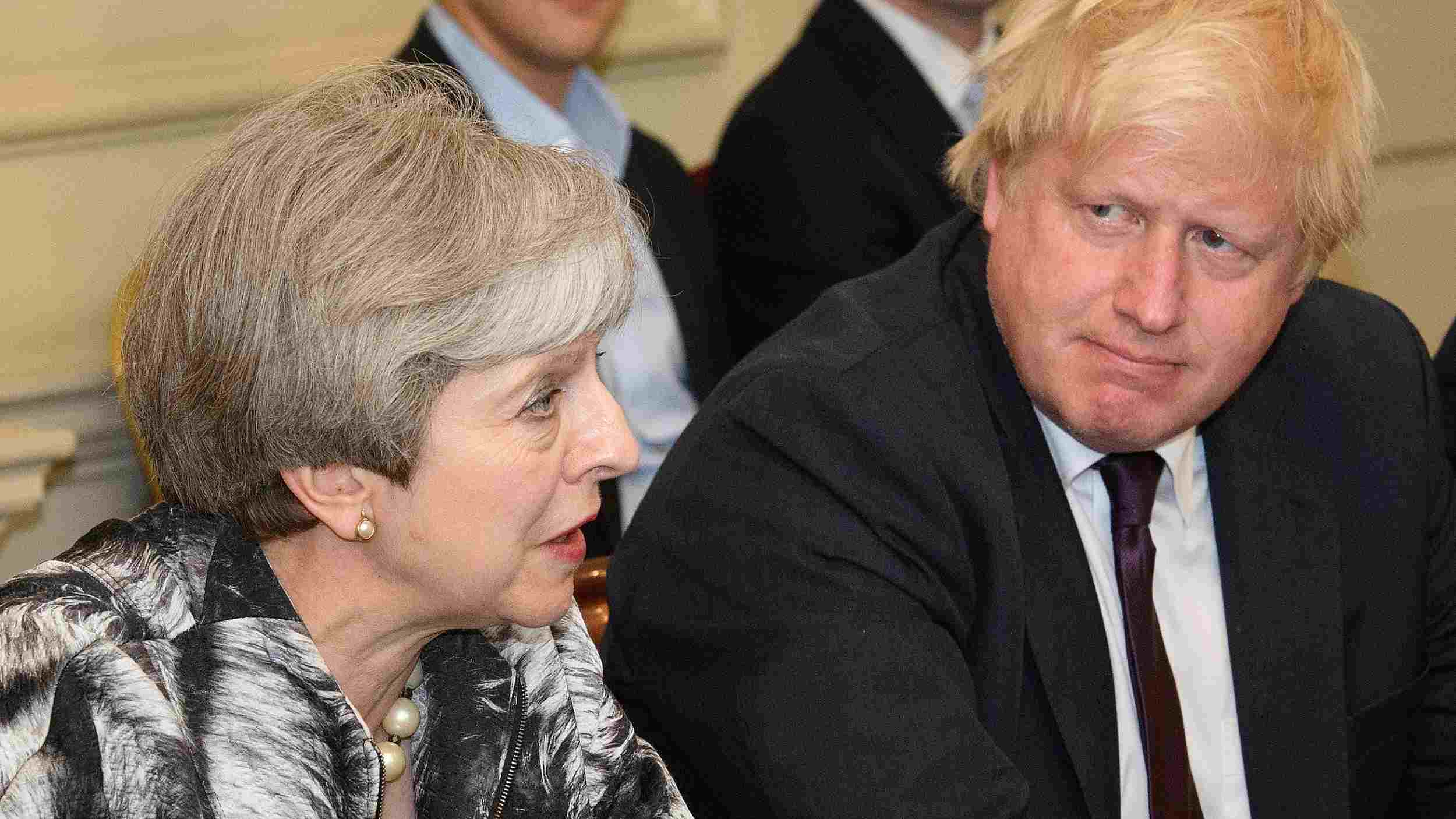
Britain's divided Cabinet meets for the latest in a line of crunch meetings over Brexit on Friday.
The showdown could finally yield some concrete answers about the relationship Britain wants with the European Union – or result in resignations and government turmoil. MPs are calling the Cabinet get-together the “body bag summit,” Politico reported.
Any decisions made will be closely watched in Brussels and around the globe – the path Britain takes will have direct consequences for future bilateral trade deals with the world's fifth largest economy.
Deals or resignations?
The 28 ministers will meet at Chequers, the prime ministerial retreat northwest of London – phones will be confiscated, British media has been briefed, and talks are expected to go on long into the night.
Prime Theresa May, who held talks with German Chancellor Angela Merkel on Thursday, has attempted to navigate a course towards departure from the EU in March 2019 with her Conservative party divided.
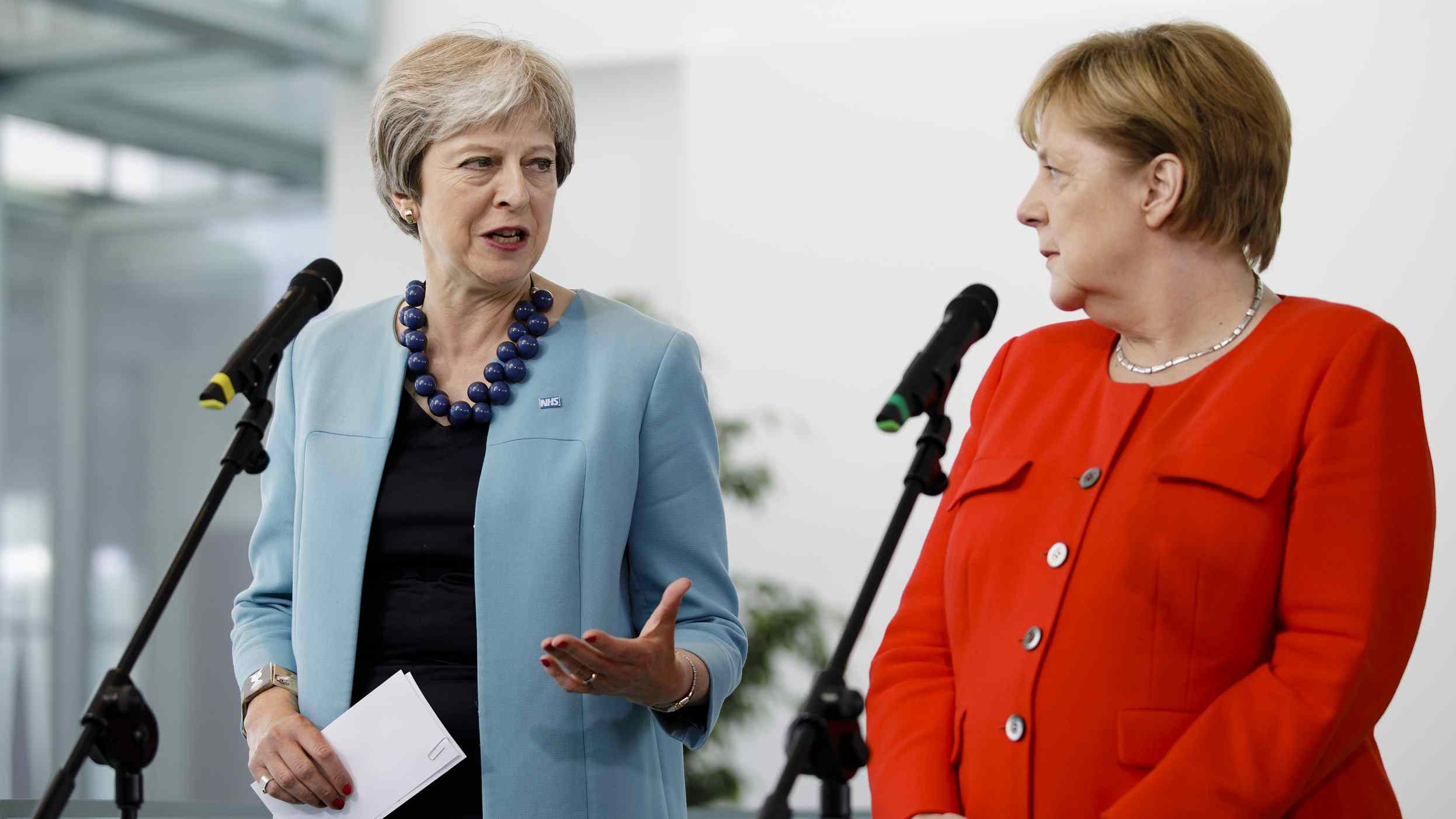
German Chancellor Angela Merkel (R) meets Theresa May, British prime minister, on July 5, 2018 in Berlin, Germany. /VCG Photo
German Chancellor Angela Merkel (R) meets Theresa May, British prime minister, on July 5, 2018 in Berlin, Germany. /VCG Photo
She has sought to prevent the split boiling over by maintaining a balance in her Cabinet between those who support a decisive break from the EU and others who want to retain as close a relationship as possible.
That split has been managed by not taking firm decisions – but now, under growing pressure from Brussels, a final call has to be made, and May appears to have leaned towards a softer Brexit.
That could mean a compromise deal, which may not be supported by others in May's Conservatives, or ministers walking out of the Cabinet, the party entering a period of conflict, and the stalemate over Britain's future direction continuing.
May's masterplan
May is set to outline a "third way" proposal for Britain's relations with the EU on Friday, with warnings from the business community over trade disruption ringing in her ears.
The prime minister is expected to claim the new plan, dubbed a "facilitated customs arrangement" by her officials, will allow Britain to strike free trade deals with other countries, and solve the Irish border problem by keeping frictionless trade borders with the EU.
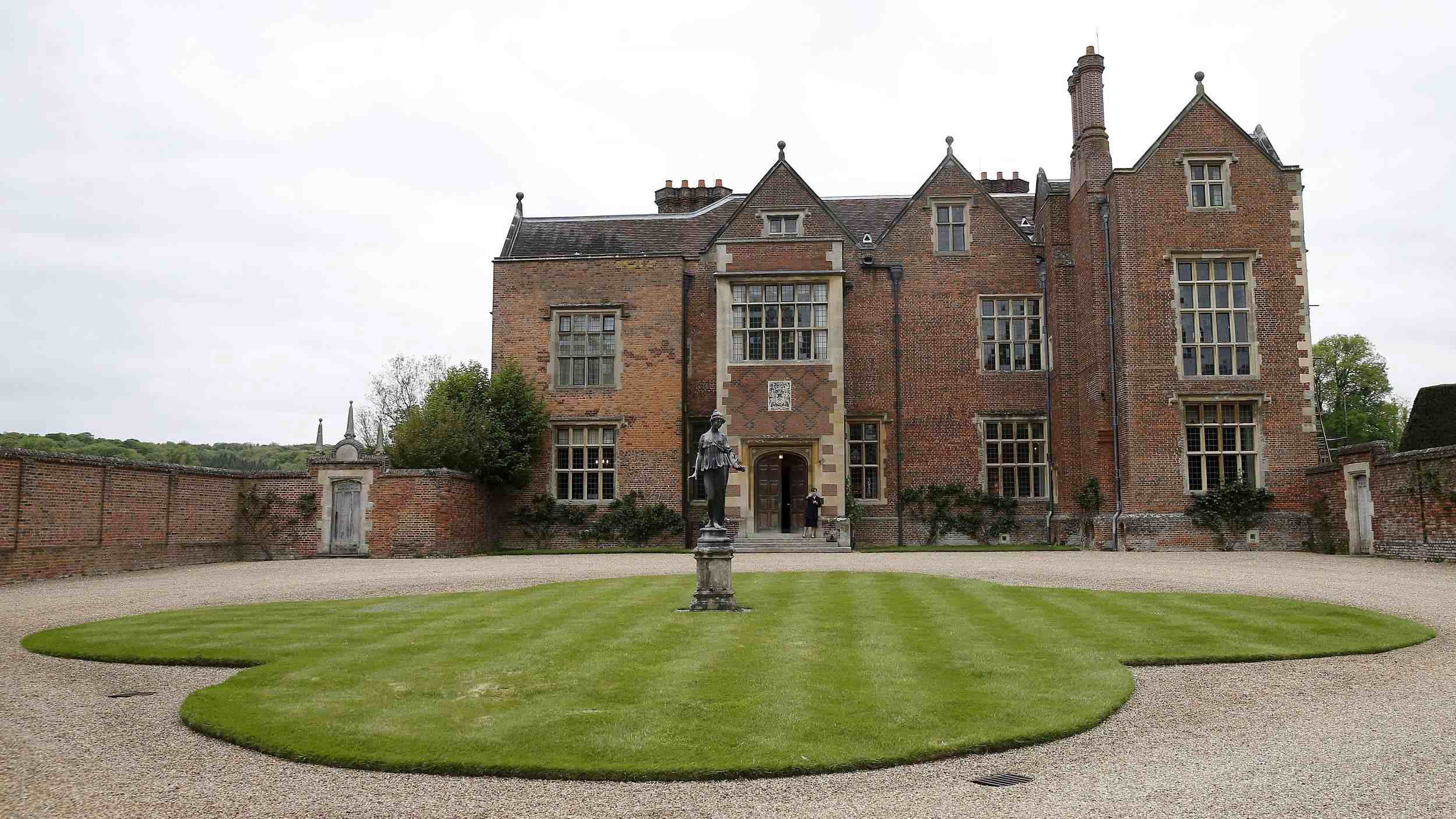
Chequers, the British prime minister's official country residence, near Ellesborough in southern England. /VCG Photo
Chequers, the British prime minister's official country residence, near Ellesborough in southern England. /VCG Photo
It would see Britain closely mirror EU rules, use technology to determine where goods will end up and which tariffs should be applied, and allow Britain to set its own tariffs on incoming goods. Details of the UK-EU relationship on services – which make up 80 percent of the British economy – has not been clearly outlined.
A government document leaked on Thursday suggested the plan would keep Britain aligned with EU on goods and maintain standards on "agri-goods" – this would make a trade deal with the US difficult, because the EU has banned the import of certain foods developed in the US.
Party resistance
Seven hardline pro-Brexit ministers, led by foreign secretary Boris Johnson and including Brexit secretary David Davis and influential minister Michael Gove, met on Thursday to discuss strategy. Reuters reported that Davis had already written to May, describing her plan as "unworkable."
The pro-Brexit ministers worry that the proposal will prevent Britain from striking free trade deals post-Brexit – a driving force for many politicians' support for leaving the EU. Liam Fox, the international trade secretary, was assured by May on Thursday that Britain would be able to make trade deals under her plan, Bloomberg reported.
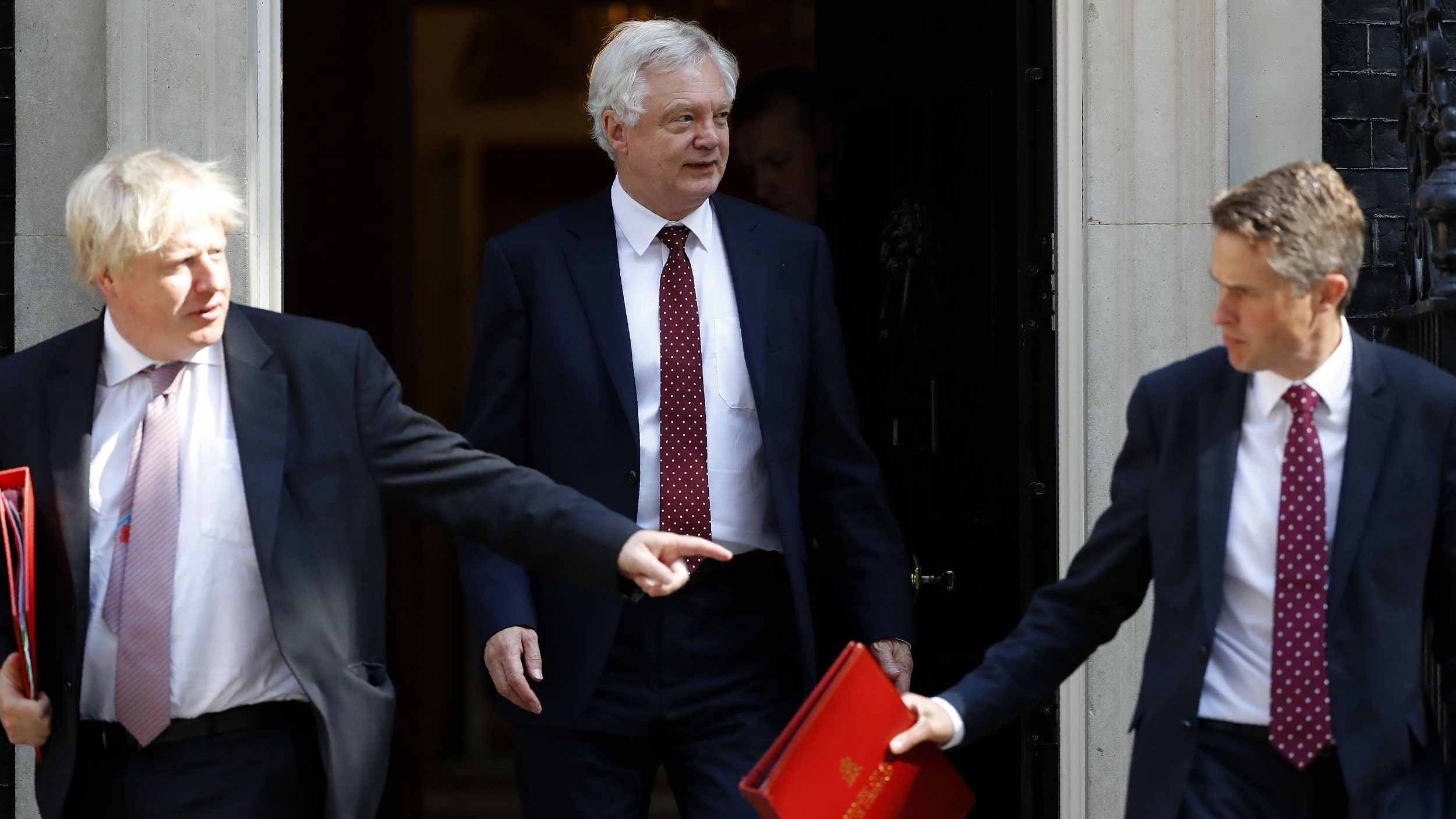
Britain's foreign secretary Boris Johnson (L), Brexit secretary David Davis (C) and defense secretary Gavin Williamson leave 10 Downing Street in central London after attending a Cabinet meeting on July 3, 2018. /VCG Photo
Britain's foreign secretary Boris Johnson (L), Brexit secretary David Davis (C) and defense secretary Gavin Williamson leave 10 Downing Street in central London after attending a Cabinet meeting on July 3, 2018. /VCG Photo
Euroskeptic Conservative MPs reacted with horror to the leaked proposal. "We would be out of Europe but still run by Europe," said former minister Owen Paterson. Leading Brexiteer Jacob Rees-Mogg told the Daily Telegraph the plan would make Britain "essentially a vassal state."
For now, the prime minister must try to bring her Cabinet together behind a solution that is also acceptable to the EU – and hope the rest of her party follows.
Ministers will be asked to sign up to a White Paper – the concept of collective responsibility in the British cabinet means that any minister who refuses to sign up to a deal would be bound to resign.
“A select number of ego-driven, leadership-dominated Cabinet ministers need to support the PM in the best interests of the UK," a government source told Politico, "or their spots will be taken by a talented new generation of MPs who will sweep them away.”
Why does it matter outside Europe?
Britain has been under pressure from EU leaders to "intensify" progress on negotiations. The EU's chief Brexit negotiator Michel Barnier said last week he wanted to see "workable and realistic proposals," while European Council President Donld Tusk warned: "This is the last call to lay the cards on the table."
Any agreement in Britain will be the starting point for fresh negotiations with Brussels, with a final deal targeted in the autumn.
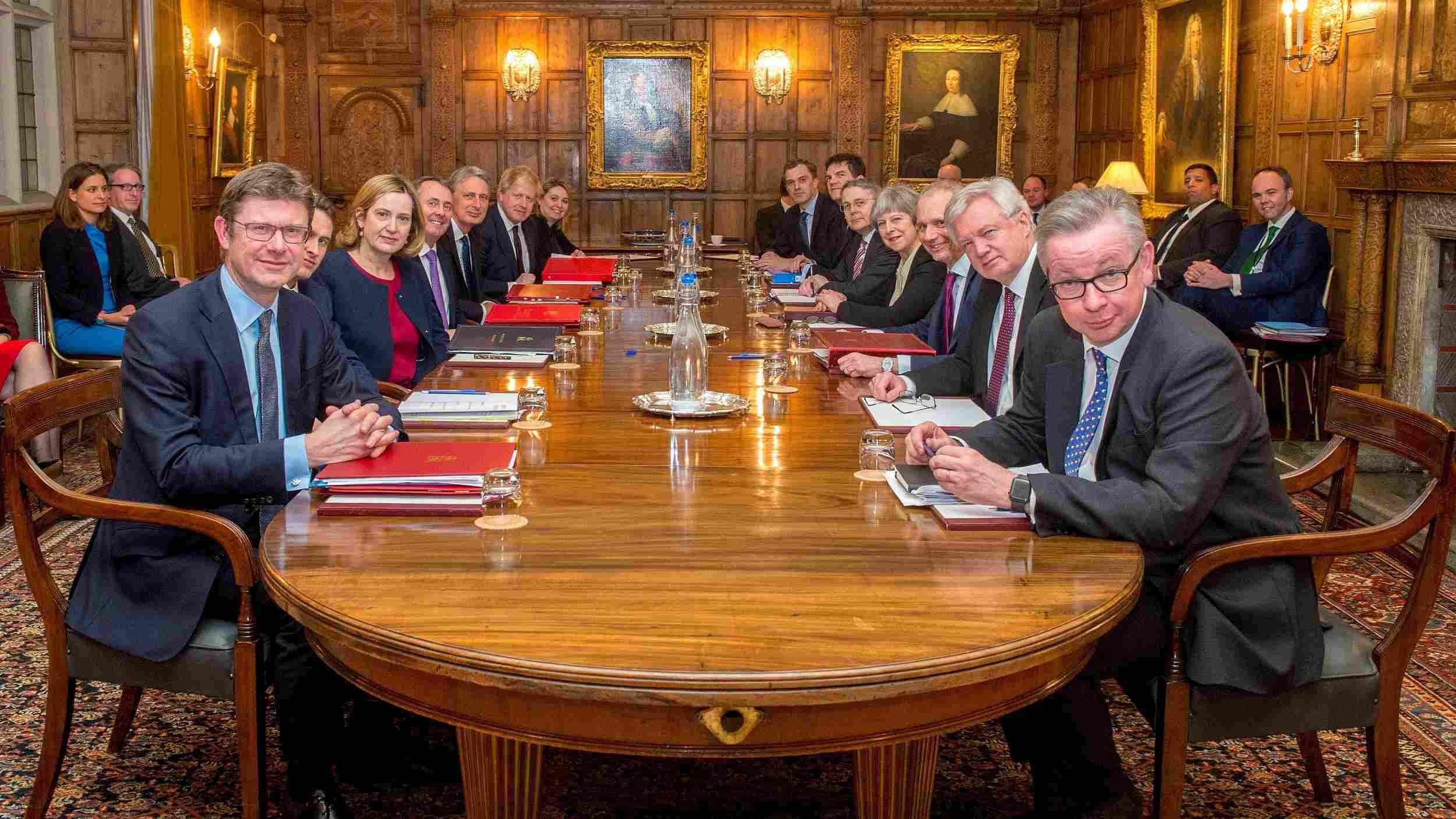
Britain's Prime Minister Theresa May and top members of her cabinet pose for a photograph at the prime minister's rural country residence, Chequers on February 22, 2018. /VCG Photo
Britain's Prime Minister Theresa May and top members of her cabinet pose for a photograph at the prime minister's rural country residence, Chequers on February 22, 2018. /VCG Photo
The decisions made during Friday's meeting – if a compromise can be found – will also be of huge consequence to Britain's future trading relationship with non-European countries.
Britain, which remains the world's fifth largest economy according to the International Monetary Fund, is eager to strike bilateral deals with countries around the world. There has also been speculation it may be willing to sign up to multilateral trading agreements.
If a deal on Friday is struck that prevents this – for example by locking the UK into the EU's common external tariffs – Britain's post-Brexit relationship with the rest of the world with be very different to the global, independent image promoted over the past two years.
8155km