
Business
11:03, 07-Jul-2018
Trump's credibility is collapsing
Updated
09:30, 10-Jul-2018
 ["china"]
Share







Copied
03:32
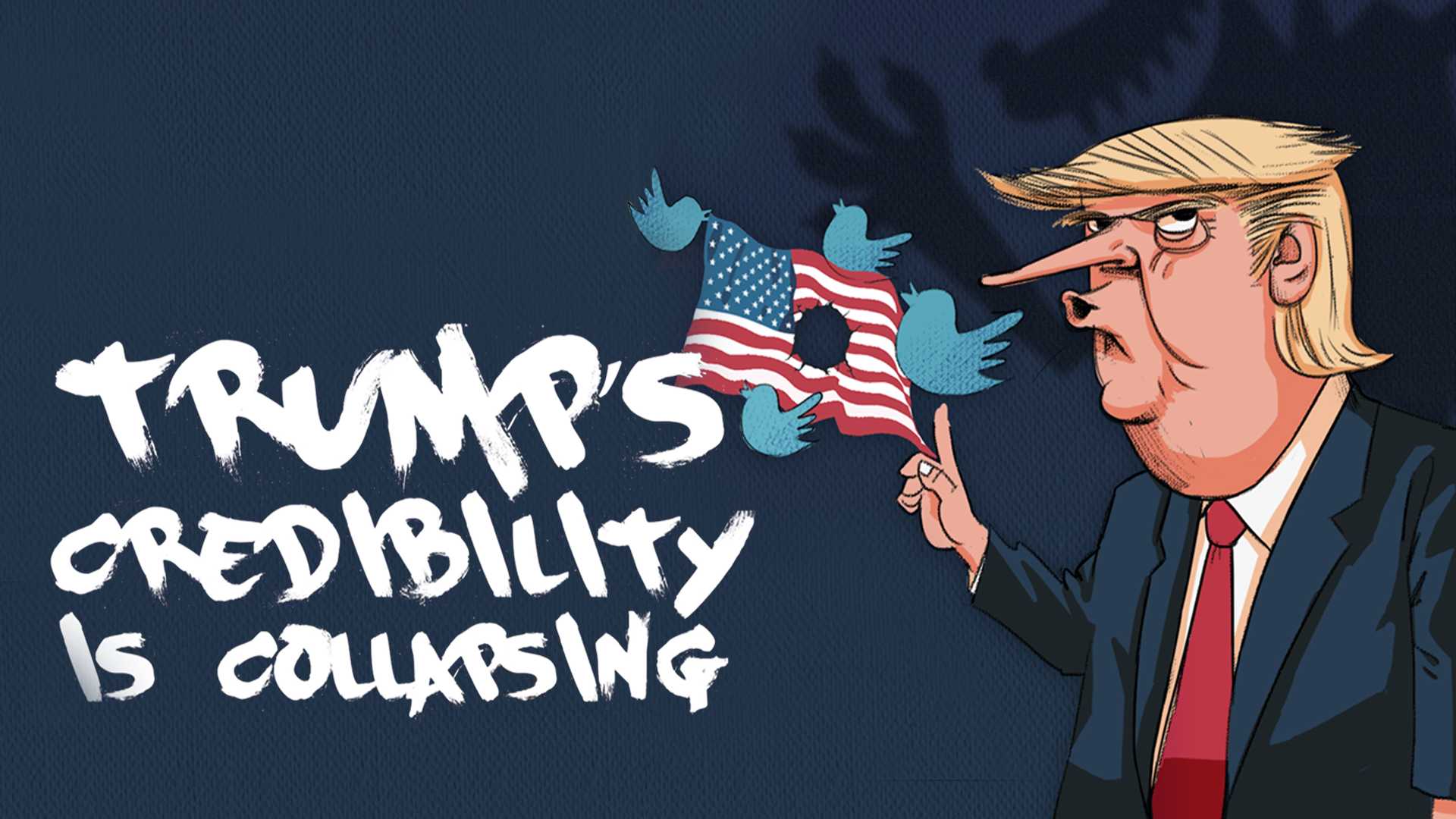
Donald Trump's credibility as US president has been questioned domestically and internationally since before his election – as he punches holes in the values the world believed the US stood for, tweet by tweet, it is lying in tatters.
The imposition of trade tariffs on China and the European Union, to name but two Trump targets, has left observers scratching their heads. The US withdrawal from the Paris climate deal was followed by an exit from the Iran nuclear deal, from UNESCO and from the UNCHR.
In the past week the White House was forced to deny that the US plans to quit the WTO, in the week ahead Trump will again be quizzed about his commitment to NATO.
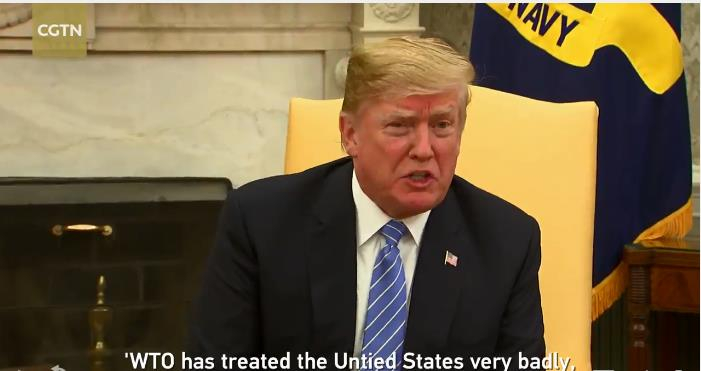
US President Donald Trump made the comment when he met with Dutch Prime Minister Mark Rutte on July 2, 2018. /CGTN Photo
US President Donald Trump made the comment when he met with Dutch Prime Minister Mark Rutte on July 2, 2018. /CGTN Photo
Can we trust the guy in the White House?
Politicians in countries like Britain and Canada who once saw the US as a close ally are now left wondering: Can we trust the guy in the White House?
At home, Trump has moved the window of acceptability with his outbursts at rallies and on Twitter. Internationally, nowhere is Trump’s credibility lower than on trade.
The man who became a household name in the US by mixing business and show business, who has enjoyed the fruits of globalization, now aims to turn the clock back 50 years to an era of commerce that has long gone.
Imposing tariffs on longstanding allies is illogical at best. Imposing tariffs on China is simply self-defeating. With the world’s two largest economies in trade conflict, companies and consumers across the globe will suffer.

The Harley-Davidson motorcycle company announced that it will shift production of some of its bikes overseas in order to avoid retaliatory tariffs by the EU in response to Trump's tariffs on steel and aluminum imported from the EU. /VCG Photo
The Harley-Davidson motorcycle company announced that it will shift production of some of its bikes overseas in order to avoid retaliatory tariffs by the EU in response to Trump's tariffs on steel and aluminum imported from the EU. /VCG Photo
The modern, globalized economy is built on supply chains that span multiple countries. Increasing tariffs on goods from one country will also hit others. Indeed, the tariffs imposed by the Trump administration on Friday will directly harm US companies the president says he wants to protect.
The US Chamber of Commerce, the largest business group in the country, is normally a reliable ally of a Republican president. This week it warned that tariffs put gains made in the US economy at risk.
“For every beneficiary, there are at least a dozen or two dozen companies on the other side of the equation that suffer,” John Murphy, senior vice president at the chamber, told NPR.
US industry has benefited from tax cuts under the Trump administration, but his credibility with the business community is in a ditch over tariffs.
Can isolationism 'Make America Great Again'?
Trump wants to “Make America Great Again,” and no one can argue against a leader working in his country’s interests. But the US president’s methods are simply not credible in the modern era.
The US tariffs ignore the realities of the 21st-century trading system and the complexities of today’s interconnected world. A 2011 Federal Reserve Bank of San Francisco study cited by the New York Times showed that for each dollar spent on an item labeled “Made in China,” 55 cents went to services produced in the US.

US President Trump holds a campaign-style "Make America Great Again" rally in Great Falls, Montana, on July 5, 2018. /VCG Photo
US President Trump holds a campaign-style "Make America Great Again" rally in Great Falls, Montana, on July 5, 2018. /VCG Photo
Tariffs will raise costs for businesses, result in job losses, and increase prices for consumers. Over time, business and investment confidence will inevitably be hit, with negative consequences for the world economy.
And there is no clear end game for Trump. China, the EU, Canada, Mexico and Russia have stood their ground and played by the rules, fighting back with retaliatory tariffs and complaints to the WTO. If the US president was hoping his targets would roll over, he will be disappointed.
US strength was built on multilateralism, engagement, and a rules-based order. Around the world, peace and prosperity have been boosted by free trade. To seek to become “great again” through unilateralism and isolationism may play well with Trump’s supporters, but to the watching world, those who will also feel the consequences, it simply isn’t credible.
(Cartoon designers: Gao Hongmei, Li Jingjie)